
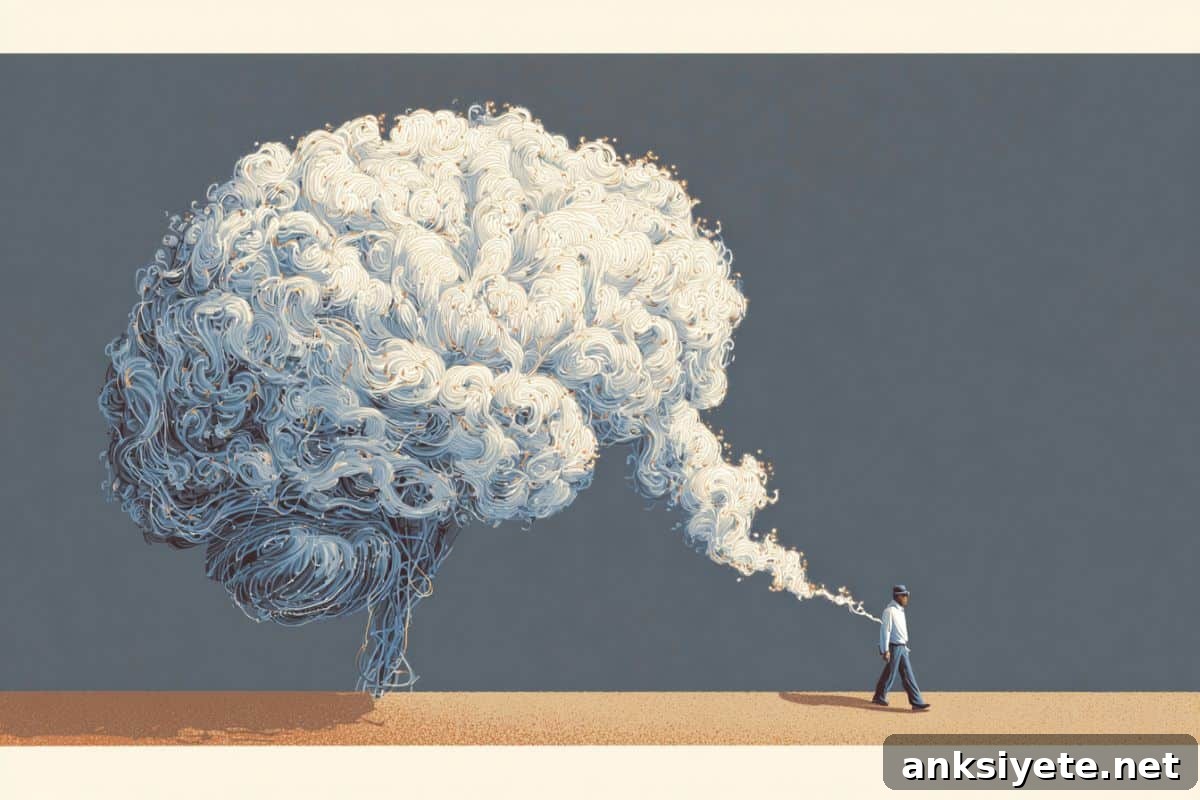
Summary: Quitting smoking is often a biological struggle between an overactive reward system and a weakened self-control center in the brain. A new clinical trial shows that a noninvasive brain stimulation method, repetitive transcranial magnetic stimulation (rTMS), can rebalance these circuits and reduce cigarette use.
By stimulating the brain’s control center, researchers achieved an average reduction of 11 cigarettes per day among participants — outperforming strategies aimed directly at suppressing cravings.
Key Research Findings
- Targeting self-control: Stimulating the dorsolateral prefrontal cortex (DLPFC), the brain region linked to restraint and decision-making, proved most effective for reducing smoking.
- Top-down regulation: Strengthening the prefrontal control system reduced activity in reward-related regions such as the orbitofrontal cortex, demonstrating a top-down effect on craving circuits.
- Substantial reduction: Participants receiving DLPFC stimulation cut smoking by more than 11 cigarettes per day on average, a significantly larger decrease than in the placebo or reward-suppression groups.
- Biological and behavioral proof: Reductions in smoking were accompanied by lower self-reported cravings and decreased carbon monoxide levels, a key biomarker of tobacco exposure.
- Precision approach: The trial used brain imaging to personalize stimulation targets and dosing for each participant, reflecting a precision-medicine strategy for addiction treatment.
Source: Medical University of South Carolina
For many people who smoke, quitting is not simply a matter of willpower. Addiction represents a tug-of-war inside the brain between reward-driven urges and executive control.
A recent randomized, double-blind clinical trial reported in the Journal of Psychiatric Research investigated whether rTMS could shift that balance. Researchers at MUSC Hollings Cancer Center used personalized, image-guided rTMS to stimulate specific cortical targets involved in tobacco use disorder (TUD) and measured both behavioral and neural outcomes.
A brain-based approach to a persistent problem
Cigarette smoking remains a leading cause of preventable illness and death, and sustained quitting is difficult: long-term success rates with current medication and counseling remain low for many smokers. Addiction reflects not only habit and environment but also dysregulated brain circuitry — an overactive reward system and an underperforming control network.
Lead investigator Xingbao Li, M.D., explained that addiction can tilt brain systems out of balance: reward and craving circuits become hyperactive while networks that support restraint and decision-making weaken. This trial tested whether rTMS could restore that balance by either enhancing executive control or dampening reward signaling.
Two targeted strategies were compared:
- Strengthening self-control by delivering excitatory high-frequency rTMS to the left dorsolateral prefrontal cortex (L-DLPFC), a hub for executive function and inhibitory control.
- Reducing reward signaling by applying inhibitory low-frequency rTMS to the left medial orbitofrontal cortex (L-mOFC), which is involved in craving and reward valuation.
Adult smokers motivated to quit were randomly assigned to one of the active groups or to a sham (placebo-like) condition. Each participant underwent 15 rTMS sessions across three weeks, with individualized targeting guided by functional MRI and electric field dosing to ensure precise stimulation.
“This is precision medicine for the brain,” Dr. Li said, emphasizing that the team tailored stimulation to each participant’s neuroanatomy and functional connectivity to maximize potential benefit.
Helping the brain reclaim control
The results highlighted a clear difference between the two approaches. Participants who received 10 Hz excitatory rTMS over the L-DLPFC reduced their cigarette consumption by an average of more than 11 cigarettes per day. That reduction was significantly greater than the changes seen after sham stimulation or after 1 Hz inhibitory rTMS targeting the orbitofrontal cortex.
DLPFC stimulation also produced meaningful decreases in self-reported craving and in exhaled carbon monoxide levels, biological evidence of reduced tobacco intake. These improvements persisted for at least one month after treatment in the trial sample. In contrast, the OFC-targeted, reward-suppressing approach did not yield comparable behavioral or biomarker improvements.
Functional brain imaging provided a mechanistic explanation: participants treated with DLPFC stimulation showed increased activity in prefrontal control regions alongside decreased activity in reward-related areas. Furthermore, the magnitude of brain activity changes correlated with the extent of smoking reduction, linking neural modulation to behavior change.
Collectively, these findings suggest that strengthening executive control circuits to regulate reward processing — a top-down strategy — is more effective for reducing smoking than attempting to dampen reward signals directly.
Clinical implications for patients and treatment
These results have practical importance. Some smokers cannot tolerate pharmacotherapy, others relapse repeatedly, and many patients, including those with cancer, struggle to quit despite urgent need. Integrating brain-based interventions like rTMS into existing tobacco treatment programs could offer an additional, noninvasive option that targets the neural basis of addiction.
At MUSC Hollings, tobacco treatment services already combine counseling, medication, and behavioral strategies. Personalized rTMS may complement these services by directly enhancing the brain’s capacity for self-control, especially for individuals who have not benefited from conventional approaches.
This study was an early-phase trial with a modest sample size and was not designed to determine definitive quit rates. Larger and longer trials are in progress to confirm these findings and to establish optimal treatment protocols and durability of effect. For now, this research identifies DLPFC-targeted rTMS as the most promising direction to pursue in future trials.
“We compared strategies and identified a clear winner,” Dr. Li said. “The next step is to confirm these effects in larger studies and to refine how best to integrate brain stimulation with other cessation supports.”
Frequently asked questions
Q: Why is strengthening control better than trying to stop cravings?
A: Enhancing the brain’s control systems (like the DLPFC) helps regulate the reward circuits naturally. When self-control networks are stronger, urges become easier to resist than when the focus is only on silencing craving signals.
Q: Is rTMS painful or like electroconvulsive therapy (ECT)?
A: No. rTMS is noninvasive and uses magnetic pulses to stimulate cortical neurons, akin to the magnetic fields used in MRI. It does not require anesthesia and does not induce the generalized seizures associated with older ECT procedures.
Q: Is this treatment widely available now?
A: rTMS is FDA-approved for depression and some smoking cessation protocols, but this personalized, image-guided approach is still being evaluated in larger trials to confirm long-term quit rates and best practices. It represents a promising option for patients who cannot use or do not respond to medications.
Editorial notes
- This article was edited by a Neuroscience News editor.
- The journal paper was reviewed in full for accuracy.
- Additional context and clarification were provided by the reporting team.
About this research
Author: Leslie Cantu
Source: Medical University of South Carolina
Contact: Leslie Cantu – Medical University of South Carolina
Image: The image is credited to Neuroscience News
Original research: “DLPFC rTMS is more effective than sham or orbitofrontal stimulation for smoking cessation and alters frontal brain activity: A double-blind, sham-controlled randomized clinical trial.” DOI: 10.1016/j.jpsychires.2026.02.053
Abstract
Objective: Repetitive transcranial magnetic stimulation (rTMS) shows promise for smoking cessation, but its underlying neural mechanisms are unclear. This trial compared excitatory rTMS aimed at enhancing executive control with inhibitory rTMS aimed at suppressing reward-related activity.
Methods: In a double-blind, sham-controlled study, treatment-seeking individuals with tobacco use disorder were randomized to 15 sessions of personalized, fMRI-guided rTMS: (1) sham, (2) excitatory 10 Hz rTMS over left DLPFC (3,000 pulses/session), or (3) inhibitory 1 Hz rTMS over left mOFC (900 pulses/session). Outcomes included cigarettes per day and changes in BOLD activity on fMRI.
Results: Of 46 enrolled participants, 35 completed the study. The 10 Hz L-DLPFC group showed a significantly greater reduction in cigarettes per day than the 1 Hz L-mOFC and sham groups (−11.14 vs. −4.92 and −6.43, respectively). L-DLPFC stimulation increased prefrontal activity and decreased orbitofrontal activity, with larger brain changes associated with greater smoking reductions.
Conclusions: Enhancing executive control via 10 Hz rTMS to the left DLPFC reduced smoking more effectively than suppressing reward circuitry with 1 Hz rTMS over the left mOFC. Strengthening prefrontal regulation of reward processing appears to be a key mechanism by which rTMS supports smoking reduction.
Trial registration: clinicaltrials.gov Identifier: NCT04903028.