
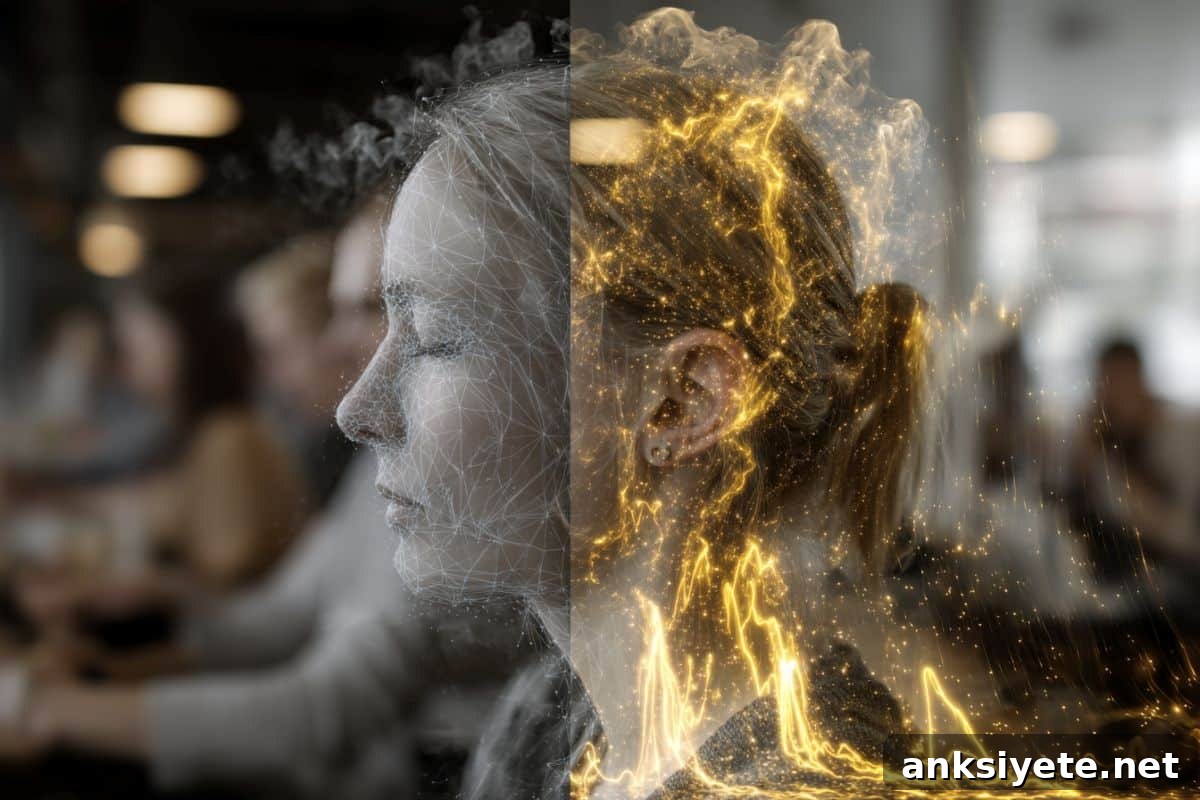
Summary: Many people instinctively close their eyes to hear faint sounds more clearly. New research shows that in noisy environments this habit can be counterproductive: closing your eyes can push the brain into a mode that over-filters incoming sounds, making it harder to detect the very signals you’re trying to hear.
Using electroencephalography (EEG) to monitor brain activity, researchers found that eye closure drives the cortex toward a state called “neural criticality,” which reduces sensitivity to subtle auditory cues in noisy soundscapes. By contrast, visual engagement—especially watching a dynamic video that matches the sound—helps the auditory system remain tuned to external signals and improves detection performance.
Key findings
- Noise paradox: Closing your eyes can help in very quiet settings, but in real-world noisy environments (cafes, streets, crowded rooms) it often worsens your ability to detect faint sounds.
- Neural criticality and over-filtering: Eye closure promotes an inward-focused brain state that aggressively filters incoming information. This generalized suppression affects both background noise and the target sound, reducing detectability.
- Visual anchoring: Watching a dynamic visual that corresponds to the sound (for example, seeing lips move while hearing a voice or a drumstick hit while hearing a drum) notably improves hearing sensitivity compared with eyes-closed or blank-screen conditions.
- Attention versus multisensory integration: Simply keeping your eyes open helps prevent the brain from entering the over-filtering state, but the largest benefit occurs when audio and visual signals are synchronized, allowing the brain to predict timing and boost signal extraction.
- Experimental conditions: Participants completed detection tasks under four visual contexts: eyes closed, eyes open looking at a blank screen, viewing a still image related to the sound, and viewing a dynamic video that matched the sound.
Source: AIP
It’s a common belief that shutting your eyes frees cognitive resources for hearing. The new study—published in JASA through AIP Publishing and led by researchers at Shanghai Jiao Tong University—tested that assumption specifically in noisy environments. Volunteer participants listened to target sounds delivered through headphones while a constant background of pink noise played. They adjusted sound levels until the targets were just barely detectable over the noise.
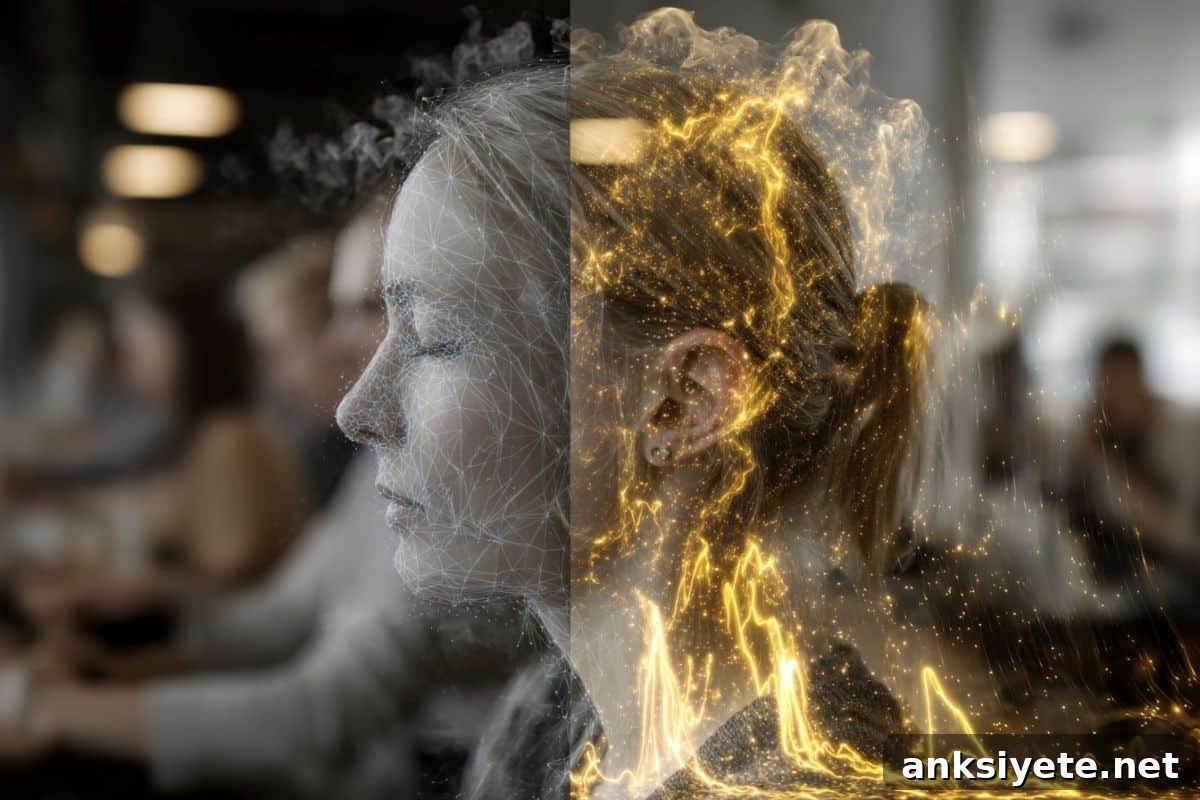
Testing proceeded across the four visual scenarios. The researchers observed that closing the eyes raised detection thresholds—making sounds harder to hear—while dynamic visual stimulation that matched the audio lowered thresholds and improved performance. According to lead author Yu Huang, “Contrary to popular belief, closing one’s eyes can impair detection of sounds in noisy settings. Conversely, seeing a matching dynamic visual stream significantly enhances hearing sensitivity.”
EEG recordings revealed the neural mechanism behind this effect. Eye closure correlated with changes in cortical dynamics—described as movement toward neural criticality—where neural activity patterns become less permissive, effectively turning up the brain’s internal “squelch” and filtering out low-intensity signals. When visual input was present, especially dynamic and congruent with the audio, the cortex stayed in a regime more favorable to extracting external auditory signals from background noise.
The researchers emphasize that these findings are specific to noisy environments. In quiet settings, closing the eyes can still be beneficial for focusing on faint sounds. But because modern life often places us in complex, noisy soundscapes, keeping the eyes open—and when possible using coordinated visual cues—may generally be a better strategy for detecting subtle auditory signals.
The team plans further studies to probe how mismatched audio-visual pairings affect detection: for example, what happens when the visual stimulus does not correspond to the sound? As Huang explains, the next step is to determine whether the improvement comes from merely having visual input available or from precise multisensory alignment that supports predictive timing and target selection. Distinguishing general attentional effects from true multisensory integration will clarify how vision and hearing cooperate in realistic listening situations.
Key questions answered
A: Not always—context matters. In quiet environments closing your eyes can help. In noisy settings it tends to push the brain inward and increases over-filtering, reducing your ability to separate a faint target from background noise.
A: Keeping your eyes open is generally helpful, but a matching dynamic visual provides the strongest boost because it helps the brain predict when target sounds will occur and align sensory processing accordingly.
A: Think of neural criticality as the brain’s balance point between being too reactive and too stable. Eye closure in noisy contexts appears to push neural activity toward a regime that suppresses subtle inputs—like turning up a radio’s squelch—whereas visual engagement keeps the system permissive enough to detect quieter signals.
Editorial notes
- This article was edited by a Neuroscience News editor.
- The journal paper was reviewed in full for accuracy.
- Additional explanatory context was added by editorial staff.
About this research on auditory and visual interaction
Author: Hannah Daniel
Source: AIP
Contact: Hannah Daniel – AIP
Image credit: Neuroscience News
Original research: Visual engagement modulates cortical criticality and auditory target detection thresholds in noisy soundscapes. Authors: Ke Ni, Yu Huang, Yi Wei, and Xu Zhang. Journal of the Acoustical Society of America. DOI: 10.1121/10.0042380. The study provides open-access data on how visual context affects auditory detection under realistic noise conditions.
Abstract
Visual engagement modulates cortical criticality and auditory target detection thresholds in noisy soundscapes
Previous experiments have suggested eye closure can enhance auditory attention, but effects on detecting target sounds masked by noise were not known. This study measured detection thresholds for several everyday sounds (canoe paddle, drum, lark chirping, train, and keyboard) masked by 70 dB(A) pink noise under four visual conditions: eyes closed, blank visual field, static related image, and dynamic related video. Compared with the blank visual baseline, eye closure raised detection thresholds by about 1.32 dB on average, while static and dynamic relevant visual stimulation lowered thresholds by approximately 1.60 dB and 2.98 dB respectively. EEG recordings showed a 22.3%–45.2% reduction in avalanche critical index under eye closure relative to the blank condition, indicating a shift in neural dynamics toward a more stable, less responsive state. The authors propose a framework explaining how visual engagement improves auditory target detection in noisy environments while visual disengagement can optimize auditory segregation in quiet contexts, advancing understanding of multisensory effects on perception in complex soundscapes.