
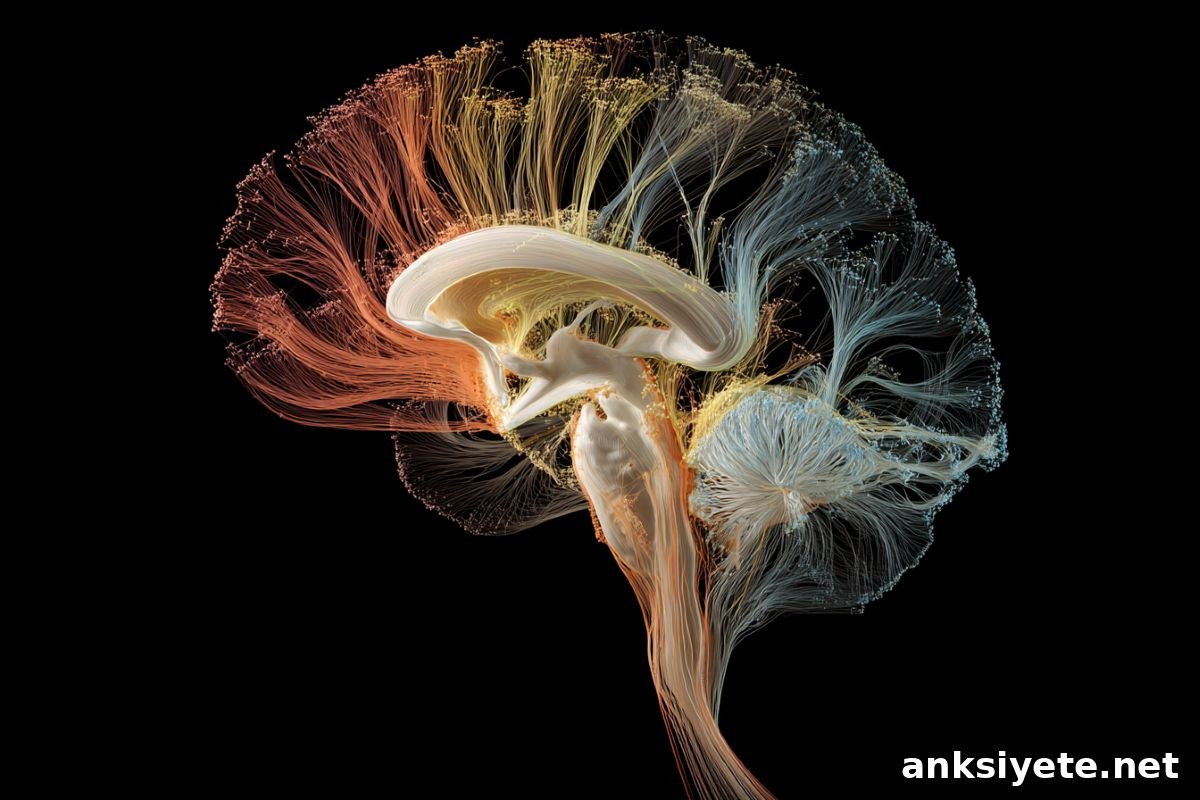
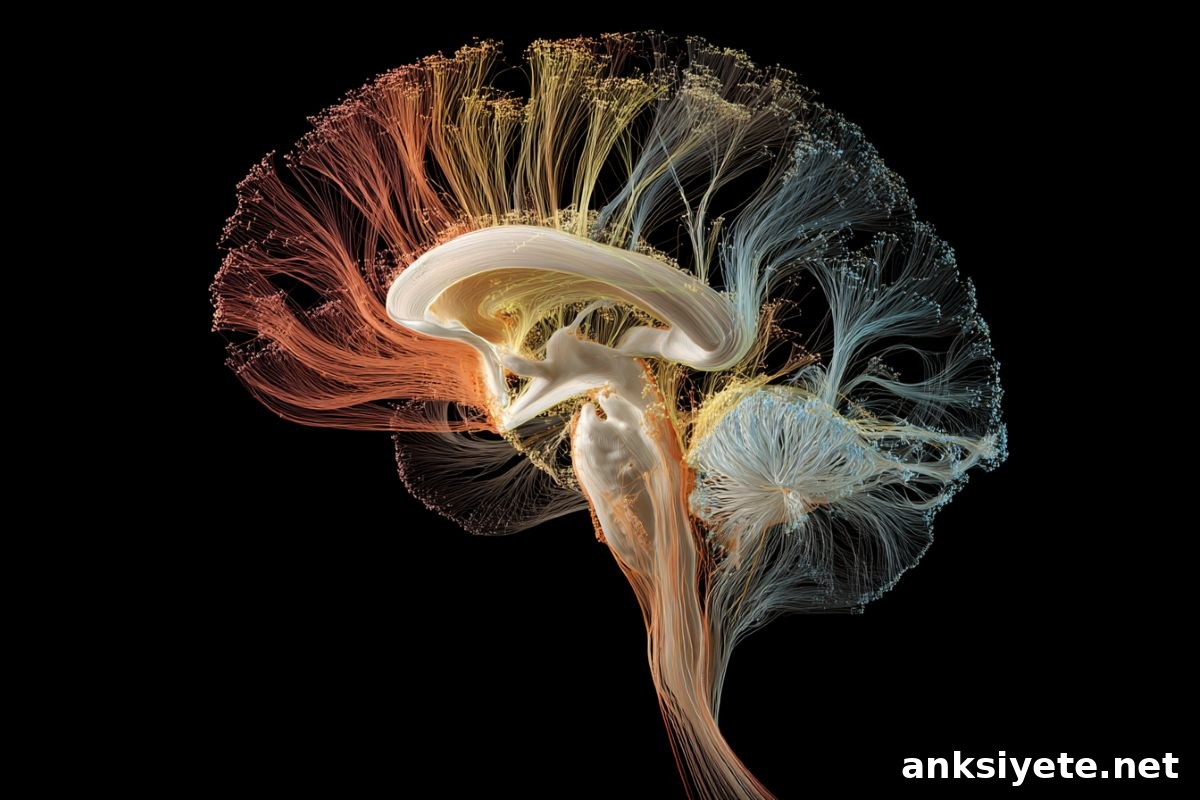
Summary: Working memory acts as a mental scratchpad, allowing us to hold and manipulate information in real time. A new study identifies a precise molecular pathway centered on the protein Munc13-1 that functions as a gatekeeper for this process.
The research shows that working memory requires synapses to transiently strengthen their connections through calcium-dependent signaling. When this molecular mechanism is impaired, the brain loses its ability to update and prioritize information, producing the repetitive or looping errors often observed in neurodevelopmental and neurodegenerative conditions.
Key Facts
- The Munc13-1 Protein: Munc13-1 controls vesicle priming—the preparation of neurotransmitter-filled vesicles so they can be released from one neuron to the next.
- Synaptic Strengthening: The study focuses on two transient strengthening processes: short-term facilitation (STF) and post-tetanic potentiation (PTP), brief periods in which a synapse becomes markedly more efficient at transmitting signals.
- Calcium Sensors: Munc13-1 senses calcium through two complementary mechanisms: its C2B domain, which mediates calcium–phospholipid signaling, and a separate calmodulin-binding pathway.
- The Maze Test: Mice engineered with a Munc13-1 mutation that prevents phospholipid binding performed poorly on a spatial working memory task, repeatedly revisiting maze locations that had already been cleared of rewards—a hallmark of disrupted working memory.
- Clinical Link: Variants in the human gene UNC13A (encoding Munc13-1) are associated with intellectual disabilities and other neurological symptoms, underscoring the clinical relevance of this pathway for human neurodevelopment.
Source: University of Barcelona
Working memory is essential for everyday tasks that require temporarily retaining and manipulating information—understanding a sentence while reading it, solving problems, or planning immediate actions. These abilities rely on neural circuits that can briefly hold and update data, a process that is commonly impaired in several brain disorders.
A study published in Cell Reports identifies a molecular mechanism in the hippocampus that is critical for this short-term storage and updating of information.
The research was led by Francisco José López-Murcia at the University of Barcelona (UBneuro) in collaboration with the group of Nils Brose at the Max Planck Institute for Multidisciplinary Sciences (MPI-NAT) in Göttingen, Germany.
How synapses prepare for neural transmission
Neuronal communication is not uniform: many circuits use brief bursts of activity to temporarily boost synaptic efficacy, improving the flow of information during critical moments. Two well-studied transient enhancements are short-term facilitation and post-tetanic potentiation (PTP). These forms of plasticity are especially prominent at mossy fiber synapses in the hippocampus, which are thought to contribute to working memory.
At the molecular level, the team examined Munc13-1, a protein essential for vesicle priming at presynaptic active zones. Their data show that Munc13-1 must be regulated directly by calcium through two complementary pathways: calcium–phospholipid signaling via the C2B domain and calcium–calmodulin signaling via a distinct calmodulin-binding region.
Analyzing Munc13-1’s molecular sensors
Using genetically modified mice in which one or both calcium-sensing pathways of Munc13-1 were disrupted, the researchers recorded synaptic responses at hippocampal mossy fiber synapses under stimulation patterns that mimic physiological activity. When Munc13-1 could not properly detect calcium, synapses lost much of their capacity for transient strengthening during repeated activity.
Disruption of the calcium–phospholipid signaling increased the threshold needed to induce PTP and reduced its magnitude, indicating that this pathway is particularly important for triggering robust short-term increases in synaptic transmission.
A maze of errors: when memory fails at the synapse
To link synaptic changes to behavior, the team tested mice in an eight-arm radial maze, a standard spatial working memory assay. Mice carrying the Munc13-1 mutation that prevents calcium-mediated phospholipid binding exhibited clear working memory deficits, repeatedly returning to reward locations they had already visited. These behavioral errors mirror the failure to transiently store and update information within neural circuits.
The findings support the idea that working memory depends not only on sustained neuronal activity but also on brief, activity-dependent increases in synaptic strength that temporarily hold information within networks.
By pinpointing a specific molecular mechanism that couples short-term synaptic strengthening to working memory performance, this study advances our understanding of how the brain rapidly stores and updates information during ongoing behavior.
Earlier clinical studies have found variants in the human UNC13A gene that alter multiple Munc13-1 domains, including those examined here, in individuals with intellectual disability and other neurological symptoms. The new results emphasize the fundamental role of Munc13-1 in healthy brain function and its potential relevance to neurodevelopmental disorders.
Key Questions Answered:
A: Not exactly. Working memory is active, short-term retention and manipulation of information—like the page you currently have open while reading. This study shows that keeping that information active requires transient physical strengthening of synapses each time relevant signals pass through the circuit.
A: Synapses become functionally rigid. Normally, repeated use should transiently increase a synapse’s efficiency. Without Munc13-1 sensing calcium properly, synapses remain at baseline, preventing the brain from prioritizing or briefly holding important incoming information.
A: Identifying the specific calcium sensor—the C2B domain—provides a concrete molecular target. Future work could explore pharmacological approaches that enhance or mimic this calcium-binding mechanism, potentially supporting synaptic strengthening in conditions where those transient bursts are diminished.
Editorial Notes:
- This article was edited by a Neuroscience News editor.
- The journal paper was reviewed in full.
- Additional context was added by editorial staff.
About this memory and neuroscience research news
Author: Rosa Martínez
Source: University of Barcelona
Contact: Rosa Martínez – University of Barcelona
Image: Image credit: Neuroscience News
Original Research: Open access. “Ca2+-phospholipid-dependent regulation of Munc13-1 is essential for post-tetanic potentiation at mossy fiber synapses and supports working memory” by Francisco José López-Murcia, Dilja Krueger-Burg, Sally Wenger, Tania López-Hernández, Noa Lipstein, Holger Taschenberger, and Nils Brose. Cell Reports. DOI: 10.1016/j.celrep.2026.117029
Abstract
Ca2+-phospholipid-dependent regulation of Munc13-1 is essential for post-tetanic potentiation at mossy fiber synapses and supports working memory
Hippocampal mossy fiber (hMF) to CA3 pyramidal cell synapses are believed to support working memory formation through presynaptic short-term facilitation (STF) and post-tetanic potentiation (PTP). However, the molecular mechanisms behind these transient enhancements have been unclear.
The study demonstrates that Munc13-1-mediated priming of synaptic vesicles at active zones governs hMF STF and PTP in response to Ca2+-phospholipid and Ca2+-calmodulin signaling.
Knockin mice expressing Munc13-1 variants insensitive to either signaling pathway show pronounced deficits in STF and PTP, and blockade of Ca2+-phospholipid–Munc13-1 signaling markedly raises the threshold for PTP induction.
Because these synaptic impairments coincide with working memory deficits—particularly in mice with the Ca2+-phospholipid–insensitive Munc13-1 variant—the authors conclude that Ca2+-dependent regulation of Munc13-1–mediated vesicle priming is a key determinant of hMF short-term plasticity and working memory formation.