
Neuroscientists at Wayne State University School of Medicine have produced the first new insights in years into the neural origins of hot flashes in menopausal women. Their findings shed light on brain activity that precedes and accompanies these sudden, temporary episodes of body warmth, flushing, and sweating, and may eventually inform targeted treatments for menopause-related hot flashes.
The study, titled “Temporal Sequencing of Brain Activations During Naturally Occurring Thermoregulatory Events,” was led by Robert Freedman, Ph.D., professor of psychiatry and behavioral neurosciences and founder of the Behavioral Medicine Laboratory, in collaboration with Vaibhav Diwadkar, Ph.D., associate professor of psychiatry and behavioral neurosciences. The paper appears in the June issue of Cerebral Cortex.
Hot flashes are distinct from externally induced thermal responses because they originate internally, which makes them difficult to study with in vivo neuroimaging. “Most laboratory studies use thermal stimuli applied to the skin, but hot flashes are internally generated and pose unique methodological challenges,” said Freedman. To capture naturally occurring hot flashes, participants lay inside an MRI scanner while body-size heating pads raised their core temperature for extended periods, sometimes up to two hours, until a hot flash occurred. The women who volunteered for this study tolerated the protocol with exceptional cooperation.
Over the course of a single year, the team scanned 20 healthy, symptomatic postmenopausal women aged 47 to 58 who reported experiencing six or more hot flashes per day. Scanning took place at the Vaitkevicius Imaging Center in Detroit’s Harper University Hospital. To objectively identify hot flash onsets while participants were in the MRI, researchers monitored skin conductance, an electrical measure sensitive to sweating. Each woman was connected to a low-current circuit across the chest; sudden increases in skin conductance signaled the start of a hot flash and marked the precise time windows used to analyze the concurrently acquired functional MRI (fMRI) data.
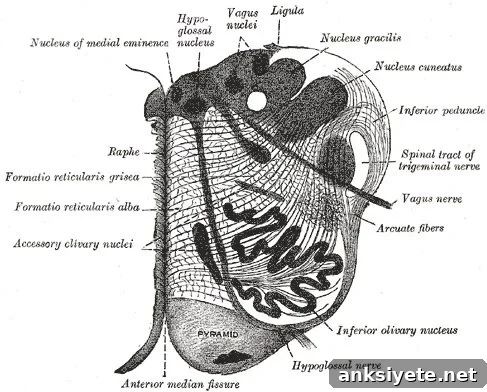
Researchers focused analysis on brain regions known or suspected to play roles in thermoregulation and subjective sensation. Subregions of the brainstem, such as the medulla and dorsal raphe, are implicated in basic thermoregulatory control, while forebrain regions like the insula are associated with the conscious perception of internal bodily states. The study revealed that activity in some brainstem areas began to rise before physiological signs of a hot flash, whereas activity in the insula tended to increase after the onset—consistent with its role in the subjective experience of an internal event.
“The observation that brainstem activity increases before women report or experience a hot flash is a striking finding,” said Diwadkar. “The fact that insular activity rises later provides new insight into how basic regulatory signals from lower brain regions are converted into the conscious feeling of warmth and flushing.” These temporal sequencing results point to plausible neural origins for hot flashes localized to specific brain regions and represent one of the first demonstrations of such sequencing using in vivo neuroimaging.
The research team is now applying network-based modeling to the fMRI data to examine how these regions interact dynamically during thermoregulatory events. Such connectivity analyses aim to clarify the causal and functional relationships between brainstem structures and forebrain areas during hot flashes, which could refine mechanistic understanding and suggest targets for therapeutic intervention.
In parallel, the investigators are exploring whether established or novel pharmacotherapies for menopausal symptoms alter regional brain responses during hot flashes. Integrating neuroimaging with treatment studies could help determine whether effective therapies act by modulating brainstem triggers, insular perception, or the interactions between these regions.
Notes on funding and research support
This study was supported by a National Institutes of Health Merit award (R37-AG05233), additional National Institute of Mental Health funding (MH68680), and the State of Michigan’s Joseph A. Young Sr. Fund award to the Department of Psychiatry and Behavioral Neurosciences.
Contact: Julie O’Connor – Wayne State University
Source: Wayne State University press release (original reporting on the study).
Image source: Diagram of the medulla credited to Gray’s Anatomy (public domain).
Original research: “Temporal Sequencing of Brain Activations During Naturally Occurring Thermoregulatory Events” by Vaibhav A. Diwadkar, Eric R. Murphy, and Robert R. Freedman, published in Cerebral Cortex (online June 19, 2013; DOI noted in the original publication).