
Summary: A Yale-led study identifies an unexpected connection between chronic constipation and genital herpes infection.
Source: Yale
A new study led by researchers at Yale reveals a surprising link between genital herpes infection and severe intestinal dysfunction. Published June 8 in Cell Host & Microbe, the work sheds light on how herpes simplex virus type 1 (HSV-1) can affect the enteric nervous system and may help explain some unexplained chronic gastrointestinal disorders.
Clinicians and patients have long reported puzzling symptoms—such as constipation and urinary retention—in people with herpes, but the biological mechanism was unclear. To investigate, Akiko Iwasaki, professor of immunobiology and a Howard Hughes Medical Institute investigator, and her colleagues used a mouse model of HSV-1, the virus that is a common cause of genital herpes in the United States.
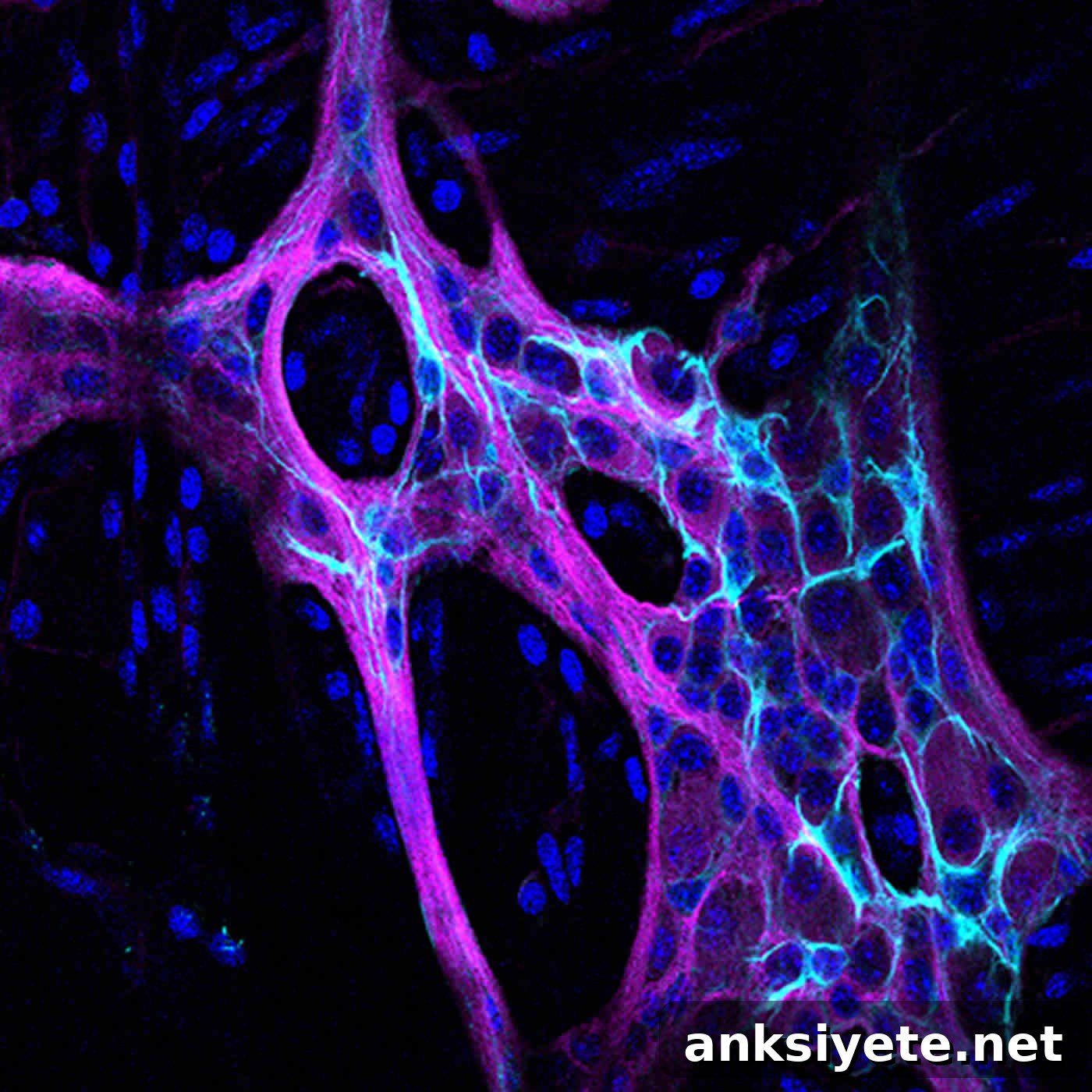
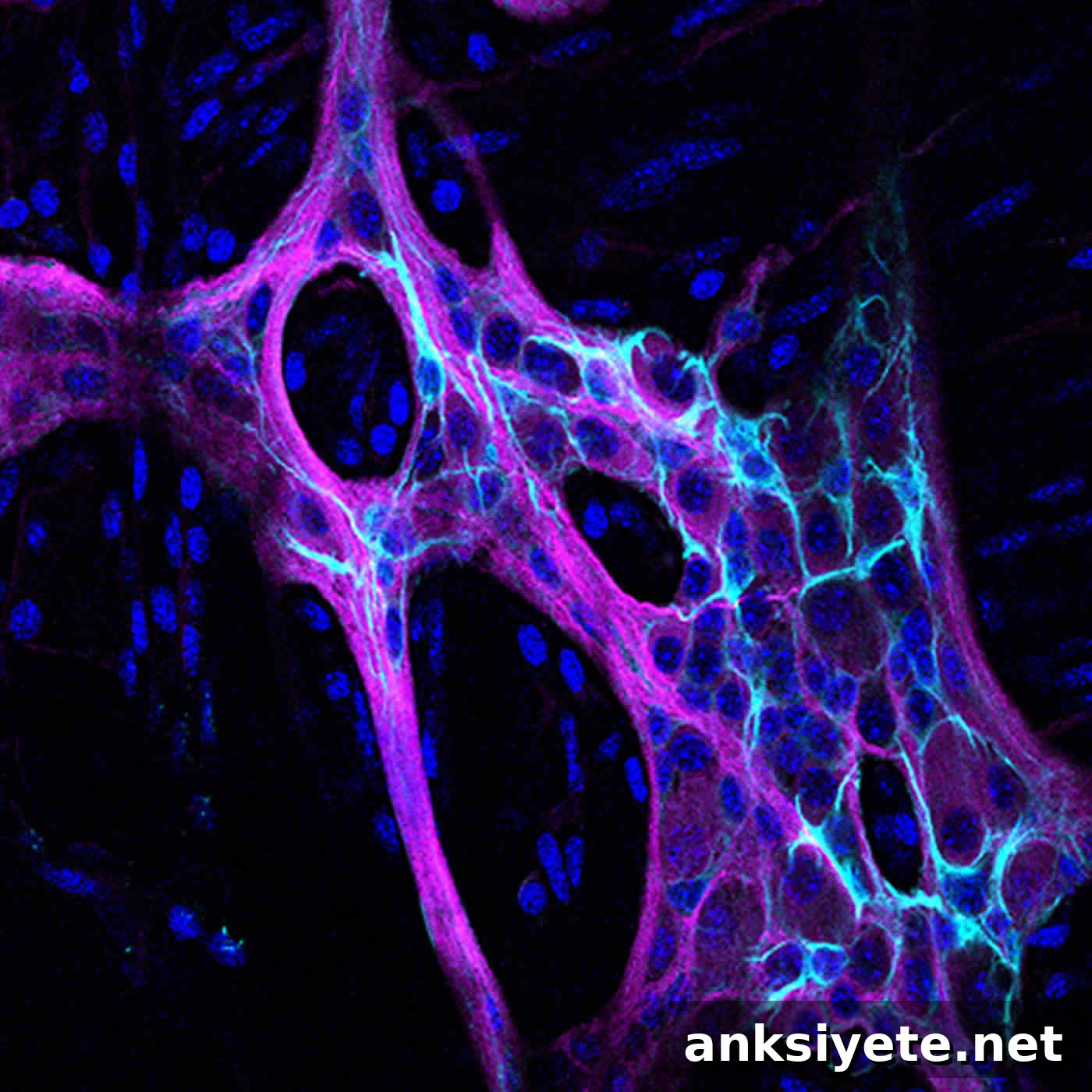
The team found that HSV-1 can travel from genital tissues into sensory nerves and then through the spinal cord to reach neurons in the colon. Once in the colon’s enteric nervous system (ENS), the virus replicates and triggers an inflammatory response that destroys enteric neurons. Loss of these neurons impairs peristalsis—the coordinated contractions that move food—producing severe fecal retention, an enlarged colon, and life-threatening disease in the mouse model.
“The key finding is an unexpected infection in neurons of the colon wall following genital HSV-1 infection,” Iwasaki said. The study suggests that members of the herpesvirus family—including Epstein-Barr virus, varicella-zoster (chickenpox) virus, and cytomegalovirus—have been detected in the colon neurons of people with otherwise unexplained chronic constipation. When clinicians cannot identify a cause for chronic intestinal motility disorders, viral infection of the ENS may be one factor to consider.
The research team includes William Khoury-Hanold, Brian Yordy, Philip Kong, Yong Kong, William Ge, Klara Szigeti-Buck, Alexandra Ralevski, Tamas L. Horvath, and Akiko Iwasaki.
Funding: The study was supported by the Howard Hughes Medical Institute and the National Institutes of Health.
Source: Ziba Kashef, Yale
Image source: William Khoury-Hanold (NeuroscienceNews image credit)
Original research: “Viral Spread to Enteric Neurons Links Genital HSV-1 Infection to Toxic Megacolon and Lethality,” Cell Host & Microbe, published online June 8, 2016. DOI: 10.1016/j.chom.2016.05.008
Abstract
Viral Spread to Enteric Neurons Links Genital HSV-1 Infection to Toxic Megacolon and Lethality
Highlights
• HSV-1-associated lethality in mice correlates with severe fecal and urinary retention
• HSV-1 spreads from peripheral sensory neurons to the enteric nervous system (ENS) in the colon
• Viral replication in the ENS provokes inflammation and recruits neutrophils
• Neutrophil-mediated destruction of enteric neurons leads to loss of peristalsis and lethality
Summary
Herpes simplex virus type 1 (HSV-1) typically infects epithelial cells of the oral or genital mucosa and then establishes infection in the peripheral sensory nervous system. How HSV-1 spreads beyond sensory pathways to cause broader disease manifestations has been unclear. Using a mouse model of genital HSV-1, researchers observed that lethal outcomes were linked to severe urinary and fecal retention without evidence of brain infection. Instead, HSV-1 traveled via dorsal root ganglia to autonomic ganglia of the enteric nervous system in the colon. Infection of the ENS produced robust viral gene expression, inflammatory responses, and recruitment of neutrophils that destroyed enteric neurons. The resulting permanent loss of peristalsis caused toxic megacolon. Importantly, treating affected mice with laxatives rescued them from lethal outcomes after genital HSV-1 infection. These findings reveal an unexpected disease mechanism in which enteric nervous system infection by HSV-1 drives severe intestinal dysfunction.
Reference: Khoury-Hanold W., Yordy B., Kong P., Kong Y., Ge W., Szigeti-Buck K., Ralevski A., Horvath T.L., and Iwasaki A. Viral Spread to Enteric Neurons Links Genital HSV-1 Infection to Toxic Megacolon and Lethality. Cell Host & Microbe (2016). DOI: 10.1016/j.chom.2016.05.008