
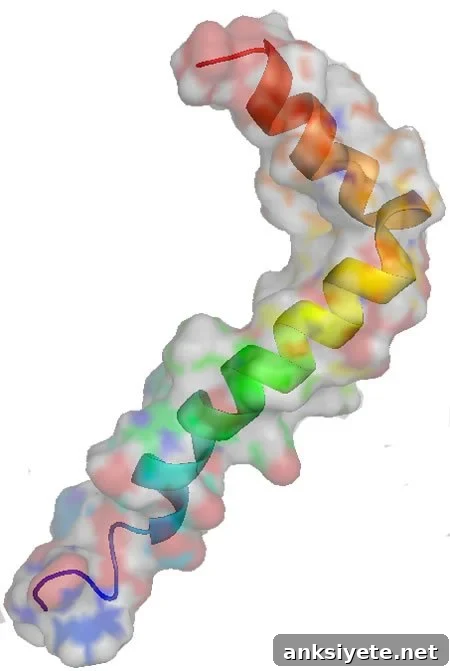
Researchers at Karolinska Institutet have found that amyloid-β peptides — long assumed to be primarily toxic and central to Alzheimer’s disease — also serve a normal biological role that affects cholinergic signaling in the brain. The new findings, published in the journal Brain, offer a plausible explanation for why cholinergic pathways are among the first to suffer dysfunction during the early stages of Alzheimer’s disease.
Most prior work on amyloid-β has focused on its potential neurotoxic effects and its role in forming plaques. Yet the earliest and most selective deficits in Alzheimer’s patients typically involve cholinergic neurotransmission mediated by acetylcholine, and the reason for this selective vulnerability has remained unclear. The Karolinska team’s study provides evidence that amyloid-β participates directly in regulating acetylcholine balance by forming stable molecular complexes that alter the activity of cholinergic enzymes.
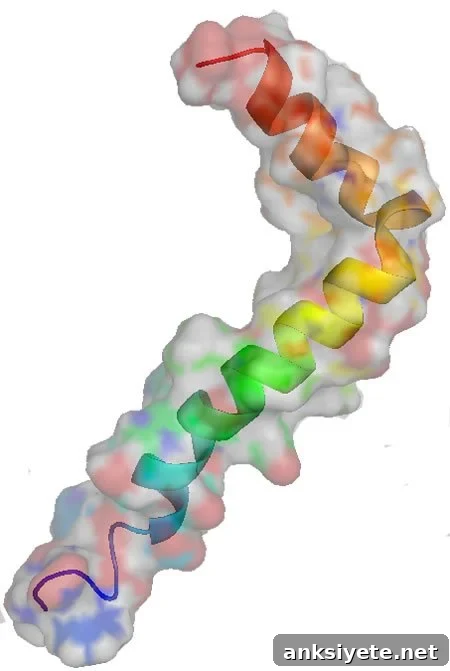
The investigators discovered that amyloid-β associates with cholinesterase enzymes to form soluble complexes they term BAβACs (BChE/AChE/Aβ/ApoE complex). These assemblies include both acetylcholinesterase (AChE) and butyrylcholinesterase (BChE), enzymes responsible for breaking down acetylcholine at synapses and at junctions between neurons and glial cells. When amyloid-β binds into these complexes, it acts as an allosteric modulator that increases the enzymatic activity of the cholinesterases.
“Binding of amyloid‑β to these enzymes makes them hyperactive, accelerating acetylcholine breakdown,” explains Dr. Taher Darreh-Shori of Karolinska Institutet’s Department of Neurobiology, Care Sciences and Society. “Faster acetylcholine degradation can alter the functional state of neuroglial cells such as astrocytes and oligodendrocytes, which may contribute to early cholinergic deficits seen in Alzheimer’s disease.”
Role of apolipoprotein E (ApoE), especially ApoE4
The team also identified a key influence from apolipoprotein E (ApoE), in particular the ApoE4 isoform, which is the most well-established genetic risk factor for sporadic Alzheimer’s disease. While ApoE has long been linked to amyloid accumulation, this study suggests an additional mechanism: ApoE binds and stabilizes soluble amyloid‑β, promoting the formation and persistence of the reactive BAβAC complexes.
According to Dr. Darreh-Shori, “ApoE appears to keep amyloid‑β in a soluble, ApoE‑bound form that facilitates accumulation of BAβACs. Higher ApoE levels — or certain ApoE isoforms such as ApoE4 — may therefore have a pathological impact by shifting this mechanism toward excessive cholinergic enzyme activation and consequent degradation of cholinergic pathways.”
The researchers plan further work to compare BAβAC composition and activity between brains from Alzheimer’s patients and healthy controls, and to test whether these complexes’ effects can be neutralized or reversed. Such follow-up studies could point to new biomarker strategies or therapeutic targets that aim to preserve cholinergic signaling.
Funding: The study received support from several foundations, including the Åhlén Foundation, the Dementia Foundation of the Swedish Dementia Association, the Olle Engkvist Foundation and the Åke Wiberg Foundation.
Source: Katarina Sternudd, Karolinska Institutet
Image credit: Boku wa Kage (image used for illustration; licensed CC BY‑SA 3.0)
Original research: Rajnish Kumar; Agneta Nordberg; Taher Darreh‑Shori. “Amyloid‑β peptides act as allosteric modulators of cholinergic signaling through formation of soluble BAβACs.” Brain. Published online November 2, 2015. DOI: 10.1093/brain/awv318.
Abstract (summary)
The study proposes that amyloid‑β peptides are not solely pathological byproducts but also fulfill at least one native physiological role as an allosteric regulator of cholinesterase enzymes. Amyloid‑β is produced and released in an activity‑dependent manner into the brain’s interstitial fluids, yet its normal functions have been poorly defined. Here, the authors show that amyloid‑β interacts with butyrylcholinesterase and apolipoprotein‑E to form highly stable, soluble complexes (BAβACs) that markedly increase the acetylcholine‑hydrolyzing capacity of cholinesterases in a concentration‑dependent fashion.
Biochemical separation techniques and enzymological analyses demonstrated that these complexes are soluble and enzymatically hyperactive. Computational (in silico) modeling identified a likely allosteric interaction site on butyrylcholinesterase, suggesting that amyloid‑β docking at the mouth of the catalytic tunnel facilitates increased acetylcholine entry and accelerates catalysis. The work also supports prior observations that apolipoprotein‑E — and especially the ε4 isoform — can act as a strong endogenous inhibitor of amyloid‑β fibrillization, preserving amyloid‑β in soluble forms that promote BAβAC formation.
Collectively, the findings indicate that one physiological function of amyloid‑β is to modulate the intrinsic catalytic efficiency of cholinesterases and thereby regulate synaptic and extrasynaptic cholinergic signaling. Altered ApoE levels or isoforms may disrupt this balance and contribute to pathological processes in Alzheimer’s disease.
“Amyloid‑β peptides act as allosteric modulators of cholinergic signaling through formation of soluble BAβACs” by Rajnish Kumar; Agneta Nordberg; and Taher Darreh‑Shori. Brain. Published online November 2, 2015. DOI: 10.1093/brain/awv318.