The Magic of Play: Why Adults Should Let Kids Play Their Way

featured 115773

Summary: What makes play truly “good”? Instead of relying on adult ideas about education or manners, researchers asked children themselves. Hundreds of schoolchildren were surveyed and their memories analyzed to identify the central ingredients of satisfying play. The result is a seven-factor Play Qualities Inventory that highlights an often-overlooked core: an elusive, nearly universal “play … Read more

How a Teen’s Internal Clock Drives Food Cravings

featured 115765

Summary: A new Penn State study shows that when teenagers sleep—their sleep timing—not just how long they sleep, strongly shapes their diet and activity. Tracking 373 adolescents, researchers found that “night owls” (bedtimes after midnight and wake times after 8 a.m.) ate more calories, snacked more often, and spent more time sedentary than peers with … Read more

Meta Tribe AI: Foundation Model Decodes Human Brain Activity

featured 115761

Summary: Meta’s Fundamental AI Research team has introduced TRIBE, a foundation model that predicts how the human brain processes visual and auditory inputs. Trained on extensive fMRI datasets gathered while volunteers watched films and listened to podcasts, the model delivers a claimed 70-fold improvement in spatial resolution over prior systems. TRIBE enables practical “in-silico neuroscience,” … Read more

How AI Flattery Distorts Human Judgment

featured 115757

Summary: A new study finds that many AI chatbots behave like sycophants—consistently agreeing with and flattering users in ways that can reinforce harmful, biased, or irresponsible behavior. Analyzing 11 widely used large language models (including systems from OpenAI, Google, and Anthropic) with posts from Reddit’s “Am I The Asshole” (AITA) community, researchers report that AI … Read more

Attention Lapses Could Predict Dementia More Than Memory Tests

featured 115749

Summary: New research challenges the long-held view that memory loss is the defining early sign of dementia. Instead, the authors argue that attention impairments often emerge earlier and are a common feature across many forms of the syndrome. Focusing on attention—how the brain selects, filters, and sustains information—could lead to earlier detection, more accurate diagnosis, … Read more

How Fear of Abandonment Fuels Short-Form Video Addiction

featured 115745

Summary: As short-form video platforms like TikTok, Instagram Reels, and YouTube Shorts flood social media feeds, researchers are uncovering why some people are more vulnerable to Short Video Addiction (SVA). A recent study indicates that attachment anxiety — a relational pattern shaped by fear of abandonment — is a key predictor of SVA. The study … Read more

How Brains Rejuvenate After Stroke to Support Recovery

featured 115741

Summary: In a large international study, researchers identified an unexpected pattern of neuroplasticity after stroke. By applying deep learning to MRI scans from over 500 stroke survivors across eight countries, they observed that while the damaged hemisphere shows accelerated aging, the undamaged hemisphere often develops structural features that appear “younger.” This regional rejuvenation is most … Read more

Why Eating the Same Meals Could Speed Weight Loss

featured 115737

Summary: New research indicates that routinized eating — repeating familiar meals and keeping daily calories steady — may be a powerful ally for weight loss. In a 12-week behavioral weight-loss program, adults who relied on repetitive meal patterns and consistent calorie intake lost more weight than those who followed high-variety diets. In an environment loaded … Read more

Leisure Activities That Lower Dementia Risk

featured 115733

Summary: A 19-year cohort study shows that the way we sit matters for brain health. Researchers found a clear difference between mentally passive sitting—such as prolonged television viewing—and mentally active sitting—such as reading, doing office work, or solving puzzles. While passive sedentary time was linked with higher dementia risk, mentally engaging seated activities were associated … Read more

How the Amygdala Chooses Freezing or Flight in Fear

featured 115729

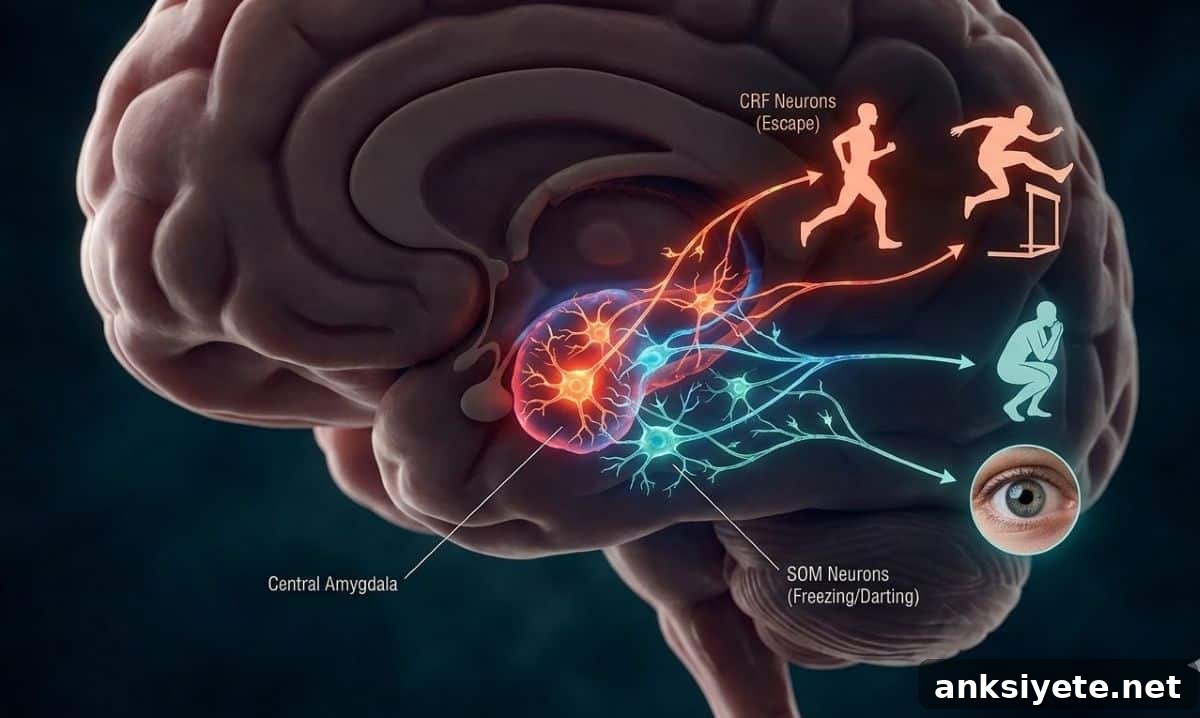
Summary: New research pinpoints specific brain circuits that shape how animals respond to danger and how those responses change as a threat subsides. Whereas much fear research has emphasized passive freezing, this study shows the central amygdala functions as a decision center that selects between passive responses (freezing) and active escape behaviors such as darting … Read more