
Scientists at the Salk Institute have identified the developmental origin of a crucial class of spinal interneurons that enable coordinated limb movement, a discovery that could inform future therapies for spinal cord injury and motor impairments.
The spinal cord contains neural circuits capable of generating rhythmic movement patterns largely without continuous conscious control. These circuits, often referred to as central pattern generators, coordinate repetitive actions such as walking so animals can perform them while attending to other tasks. Within these networks, specific sets of neurons determine the timing of stepping for each limb and set the tempo for walking or running.
Led by Salk professor Martyn Goulding, the research team has for the first time identified the cells that secure a key output of this locomotor circuit: the alternation between opposing muscle groups that produces smooth bending at joints, known as flexor-extensor alternation. The study, published in Neuron, pinpoints the interneuron classes responsible for synchronizing activation and inhibition across antagonistic muscles to produce coordinated limb movements.
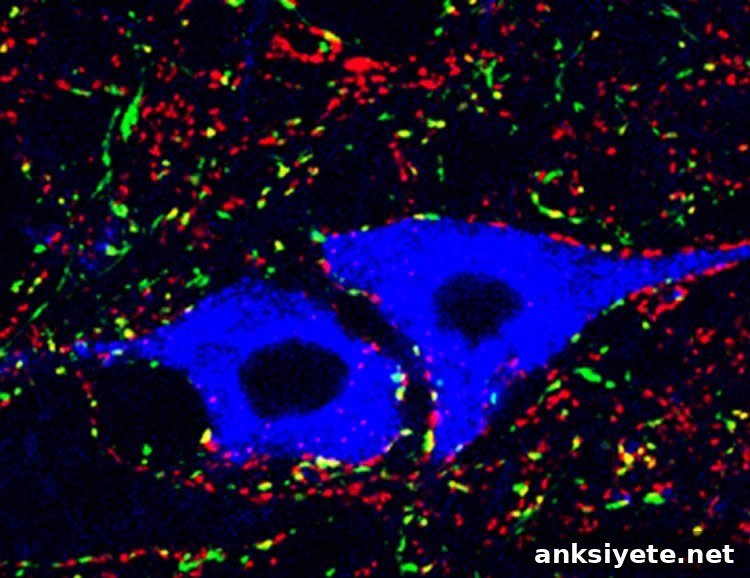
Motor output from the spinal cord is assembled from several major interneuron classes that relay information between descending brain inputs and motor neurons that drive muscles. Goulding’s earlier work implicated one interneuron class, the V1 interneurons, as an important component of the flexor-extensor circuitry. Surprisingly, removing V1 neurons alone did not abolish the alternating pattern, which suggested that additional interneuron types contribute to this essential motor function.
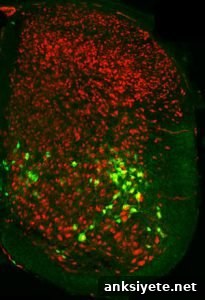
To search for other contributors, the researchers screened for interneuron classes with properties similar to V1 neurons and turned their attention to a previously uncharacterized group called V2b interneurons. Using an experimental preparation that permits direct monitoring of locomotor activity in isolated spinal cord tissue, the team selectively inactivated V2b interneurons together with V1 interneurons. Under those conditions, the normally alternating flexor and extensor signals became synchronized, demonstrating that both V1 and V2b interneurons are required to produce the push-pull pattern of activity needed for normal limb movement.
When both interneuron types were silenced in newborn mice, the animals exhibited a tetanus-like response: limbs became locked in a static posture because the balance between excitation and inhibition across opposing muscles was lost. This result highlights how the coordinated interplay of inhibitory and excitatory inputs is essential for producing the rhythmic, alternating actions underlying locomotion.
The findings provide direct experimental evidence supporting a hypothesis first proposed more than a century ago by Nobel Prize–winning neurophysiologist Charles Sherrington. He speculated that specialized “switching” cells in the spinal cord enable the alternation between flexor and extensor muscle groups required for limbed locomotion. By identifying V1 and V2b interneurons as the cellular basis for this switching function, the Salk team has clarified a core element of the spinal locomotor circuit.
“Our whole motor system is built around flexor-extension; this is the cornerstone component of movement,” says Martyn Goulding, holder of Salk’s Frederick W. and Joanna J. Mitchell Chair. “If you really want to understand how animals move you need to understand the contribution of these switching cells.”
Beyond advancing basic knowledge of spinal circuit organization, this work has practical implications. A clearer understanding of how flexor-extensor alternation is generated at the cellular level will improve efforts to design interventions that restore or mimic spinal cord signals after injury or in disease states. For example, therapies that aim to reactivate spinal circuits or reproduce descending brain signals will benefit from knowing which interneurons to target to reinstate the appropriate balance of excitation and inhibition that produces coordinated stepping.
Notes about this neuroscience research
Contact: Chris Emery – Salk Institute
Source: Salk Institute press release
Image Source: Images credited to Salk Institute for Biological Studies and adapted from the press release
Original Research: Abstract for “V1 and V2b Interneurons Secure the Alternating Flexor-Extensor Motor Activity Mice Require for Limbed Locomotion” by Jingming Zhang, Guillermo Lanuza, Olivier Britz, Zhi Wang, Valerie Siembab, Tomoko Velasquez, Ying Zhang, Francisco Alvarez, Eric Frank, and Martyn Goulding in Neuron. Published online April 2, 2014. doi:10.1016/j.neuron.2014.02.013