
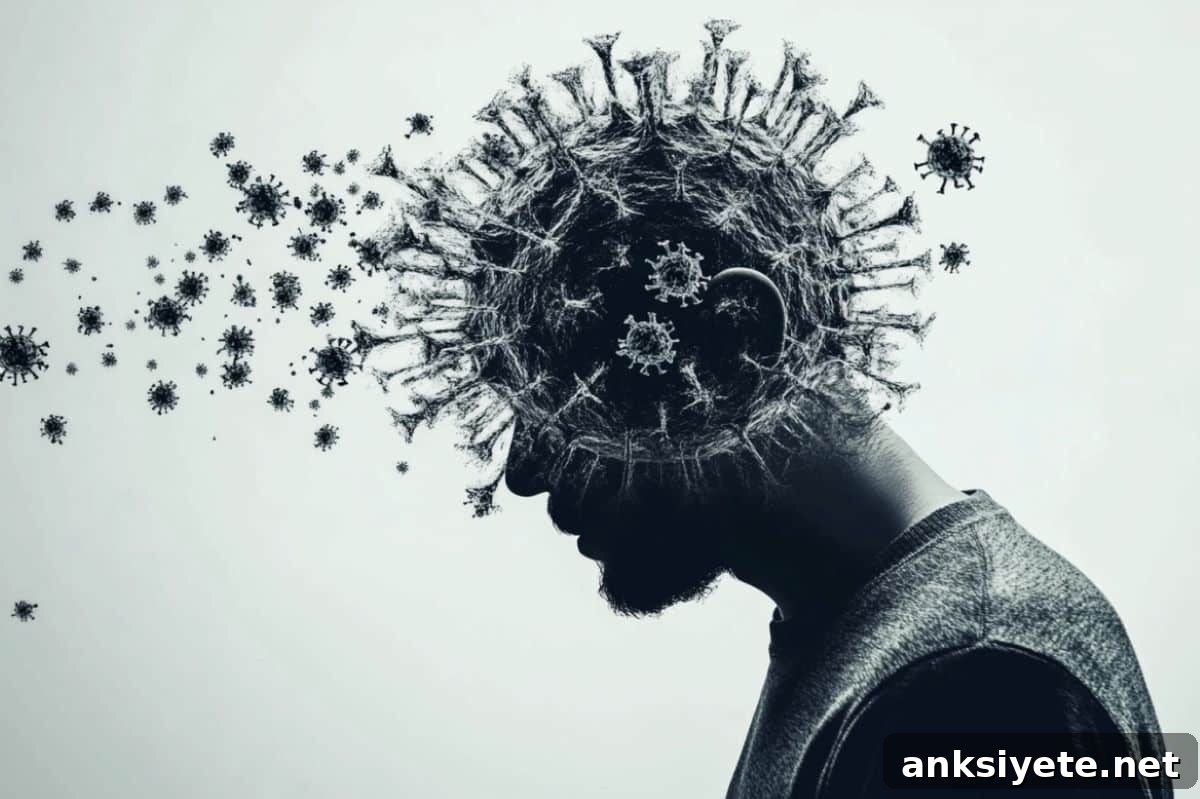
Summary: In a carefully controlled human challenge study, healthy young adults who contracted COVID-19 showed small but measurable declines in memory and cognitive performance that persisted for up to a year. These changes were identified using sensitive computerized testing under clinical conditions. Importantly, all scores remained within expected normal ranges and none of the participants reported persistent subjective cognitive symptoms such as brain fog.
The results suggest that even mild SARS-CoV-2 infection can produce subtle, lasting effects on specific cognitive domains—particularly memory and executive functions—and underline the value of sensitive testing in revealing changes that may not be noticed by those affected. Further research is needed to understand underlying mechanisms and to compare these effects with other respiratory infections like influenza or RSV.
Key facts:
- Small, statistically detectable cognitive changes in memory and problem-solving were observed after mild COVID-19 and could persist up to 12 months.
- These effects were measured using sensitive, baseline-corrected tests rather than relying on self-reported symptoms.
- Participants did not report long-term cognitive symptoms; measured differences remained within normal clinical ranges.
Source: Imperial College London
Summary of the study
A new analysis from Imperial College London’s human challenge study examined how SARS-CoV-2 infection affected cognition in healthy volunteers. The research, published in eClinicalMedicine, compared performance on a battery of computerized cognitive tasks before and after controlled inoculation. Eighteen of 36 volunteers became infected; most experienced mild illness, and one was asymptomatic. Across subsequent testing up to one year, those who became infected scored slightly lower on global cognitive measures after adjusting for their individual baselines.
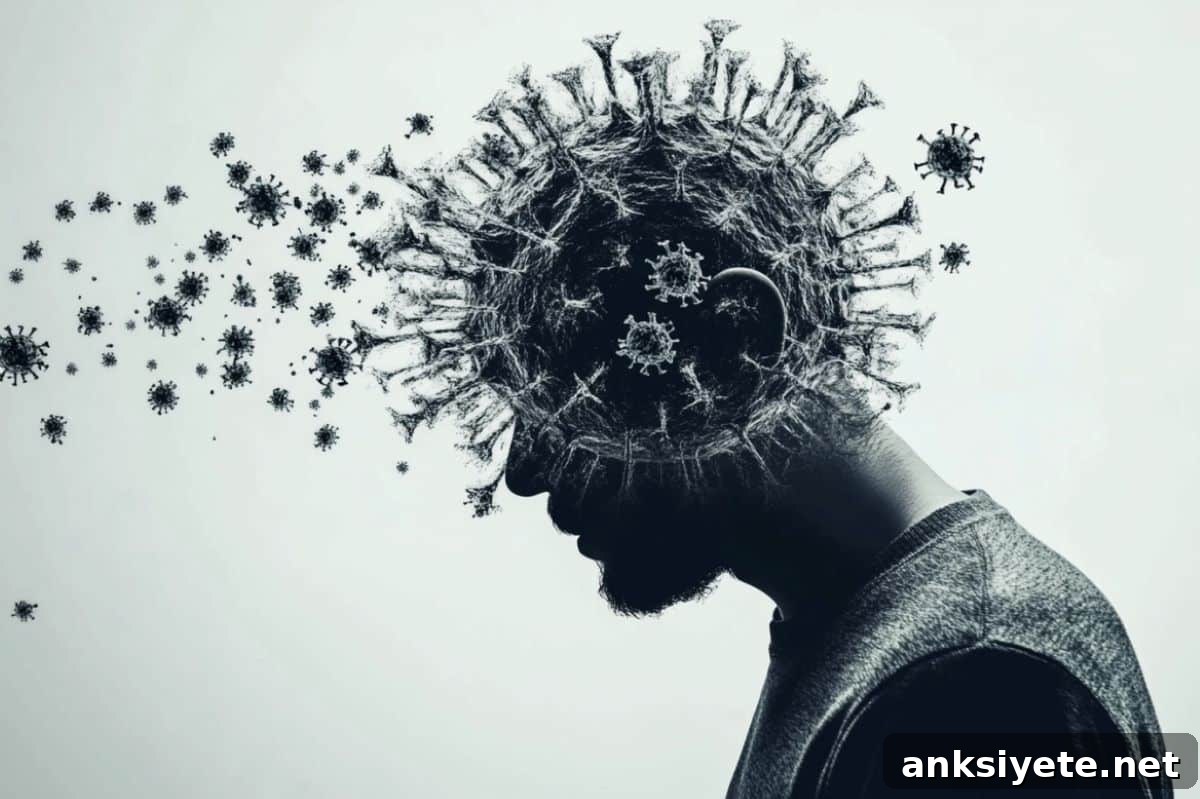
Researchers applied the Cognitron platform to test multiple cognitive domains — memory, planning, language and problem solving — at baseline, during quarantine, and at follow-up visits up to 360 days. Because each participant served as their own baseline and testing conditions were tightly controlled, the study was able to detect subtle within-person changes that are often missed in broader observational studies.
Senior author Professor Adam Hampshire (Department of Brain Sciences, Imperial College London, now at King’s College London) noted that prior large-scale studies often rely on self-report or varied testing conditions, which can obscure small shifts in cognition. In contrast, the challenge study design and sensitive measures revealed reproducible differences in cognitive performance even in otherwise healthy individuals with mild infection.
COVID-19 and cognition
Previous population studies have linked COVID-19 with lingering cognitive effects. For example, large-scale analyses have reported subtle deficits in cognitive and memory tasks detectable a year or more after infection. The current human challenge analysis supports those findings in a controlled experimental setting, showing that mild, wildtype SARS-CoV-2 infection can be followed by modest reductions in performance, particularly in memory and executive function.
During the trial, volunteers were inoculated between March 2021 and July 2022. They underwent daily physiological monitoring and repeated computer-based assessments while quarantined at the clinical site and during scheduled follow-ups at 30, 90, 180, 270 and 360 days. Statistical modeling compared baseline-corrected global cognitive composite scores and individual task scores between infected and inoculated-but-uninfected participants.
Analysis found a significant main effect of group, with infected volunteers showing lower baseline-corrected global cognitive scores both during acute infection and across follow-up (mean difference across time points = −0.8631, 95% CI = −1.3613, −0.3766; repeated measures ANOVA F(1,34) = 7.58, p = 0.009). Memory and executive function tasks contributed most to the group differences. Sensitivity analyses accounting for factors such as task learning, community respiratory infections, and treatment preserved the core finding. No participant reported ongoing subjective cognitive complaints.
The authors emphasize that these observed differences were small, and the study has limitations, including a modest sample size and a participant pool dominated by white males, which limits generalizability. Nevertheless, the study demonstrates that controlled human challenge designs combined with precise cognitive measures can detect subtle effects of respiratory infection on brain function.
Future work should investigate biological mechanisms linking respiratory infection and cognition, examine whether similar patterns occur with other pathogens such as influenza or RSV, and explore interventions that could prevent or reduce these subtle cognitive changes when they do arise.
About this Long-COVID and memory research news
Author: Ryan O’Hare
Source: Imperial College London
Contact: Ryan O’Hare – Imperial College London
Image: The image is credited to Neuroscience News
Original Research: Open access. “Changes in memory and cognition during the SARS-CoV-2 human challenge study” by William Trender et al., EClinicalMedicine
Abstract
Changes in memory and cognition during the SARS-CoV-2 human challenge study
Background
Patient-reported and cross-sectional evidence links COVID-19 with persistent cognitive difficulties, but variation in baseline abilities, virus variants, vaccination, treatments and other factors has made it hard to establish causality, duration and which cognitive domains are affected.
Methods
Thirty-four young, healthy, seronegative volunteers were inoculated with wildtype SARS-CoV-2 under controlled conditions. Participants completed daily physiological measures and computerized cognitive tasks during quarantine and at follow-up visits at 30, 90, 180, 270 and 360 days. Linear models compared baseline-corrected global composite scores and individual task outcomes between infected and inoculated-but-uninfected groups. The study was registered under ClinicalTrials.gov identifier NCT04865237 and took place between March 2021 and July 2022.
Findings
Eighteen volunteers met qPCR criteria for sustained viral load; one was asymptomatic and the remainder had mild illness. Infected volunteers showed statistically lower baseline-corrected global cognitive scores than uninfected volunteers both during acute infection and across follow-up (mean difference over all time points = −0.8631, 95% CI = −1.3613, −0.3766), with a significant group effect in repeated measures analysis. Memory and executive function tasks showed the largest differences. Sensitivity analyses controlling for potential confounders replicated these findings. No volunteers reported persistent subjective cognitive symptoms.
Interpretation
These results support larger cross-sectional findings that mild wildtype SARS-CoV-2 infection can be followed by small, domain-specific changes in cognition and memory that can persist for at least a year. The clinical significance, underlying mechanisms and broader applicability of these small changes remain to be clarified.
Funding
This study was funded through the UK Vaccine Taskforce of the Department for Business, Energy and Industrial Strategy (BEIS) of Her Majesty’s Government.