
Summary: Vanderbilt researchers have mapped a signaling circuit in the brain that appears to be linked to autism spectrum disorder (ASD).
Source: Vanderbilt University.
Vanderbilt University scientists have delineated part of the neural signaling “wiring” in the striatum that may contribute to behaviors associated with autism spectrum disorder.
Published recently in Biological Psychiatry, the study identifies how disruption of endocannabinoid signaling in a specific striatal pathway produces social deficits and repetitive behaviors in mice—findings that point toward a potential new direction for therapeutic research in ASD.
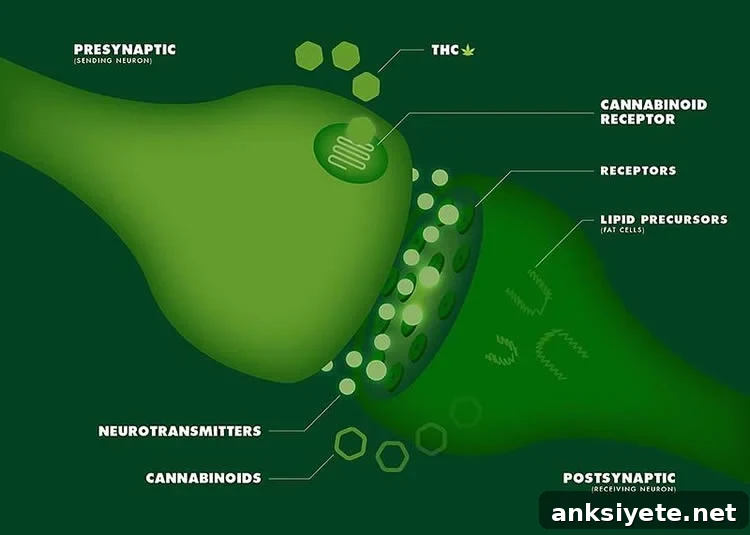
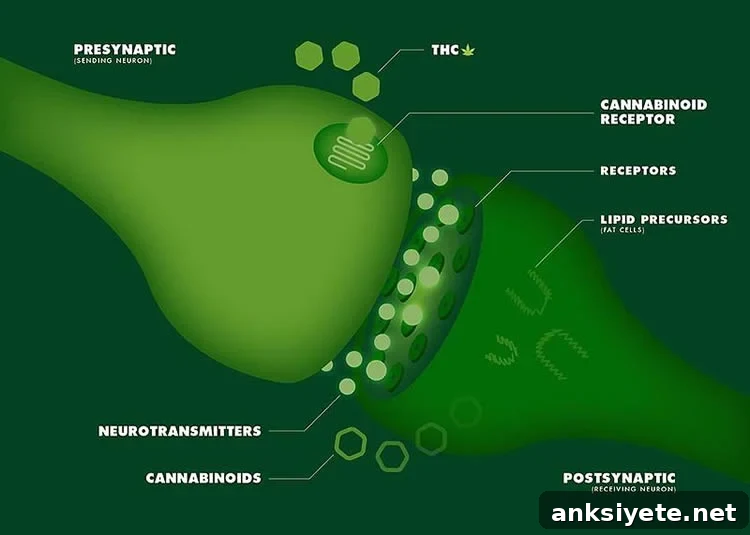
The research centers on the endocannabinoid system, which regulates synaptic activity across the brain and has known links to mood, anxiety and stress disorders. Endocannabinoids are lipid signaling molecules produced by neurons that activate the same receptor family targeted by the active compounds in marijuana.
The striatum, a brain region that coordinates decision-making, motivation and reinforcement, controls voluntary actions by routing signals through two main pathways. The direct pathway functions like an accelerator to promote intended actions, while the indirect pathway operates like a brake to suppress unwanted or competing actions. Neurons carrying sensory, emotional and cognitive information converge on these pathways to modulate behavior.
Endocannabinoids act as retrograde modulators: they are released by postsynaptic neurons to reduce incoming synaptic input from presynaptic terminals, essentially serving as a dimmer switch that fine-tunes circuit activity. The most abundant endocannabinoid in the brain is 2-arachidonoylglycerol (2-AG), which is produced by the enzyme diacylglycerol lipase alpha (DGLα).
To investigate how 2-AG influences information flow through striatal circuits, the Vanderbilt team used conditional knockout mice to remove the DGLα gene selectively from neurons of either the direct or the indirect pathway. By comparing these targeted deletions, the researchers could isolate the behavioral and physiological consequences of disrupting 2-AG production in each pathway.
When DGLα was deleted from neurons of the direct pathway but left intact in the indirect pathway, mice developed clear behavioral changes: diminished social interaction and excessive self-grooming. These behaviors are considered mouse correlates of two core ASD features in humans—social deficits and repetitive behaviors—according to the study’s authors.
Physiological analyses showed that loss of 2-AG in direct-pathway medium spiny neurons increased excitatory glutamatergic drive onto those cells, consistent with a reduction in retrograde feedback inhibition normally mediated by 2-AG. In contrast, deleting DGLα from indirect-pathway neurons produced no measurable behavioral changes in the assays used.
Subregional investigations revealed further specificity: disrupting DGLα in dorsal (back) regions of the striatum produced social interaction deficits, while deletion in ventral (front) parts of the striatum provoked repetitive grooming. These results suggest that different striatal subregions contribute distinctly to social and repetitive behavioral domains—insights that refine our understanding of striatal circuit organization in ASD-related phenotypes.
Human studies have also reported altered 2-AG signaling in some cases of ASD, aligning with the mouse data and supporting the idea that impaired endocannabinoid function could contribute to an imbalance between the striatal “accelerator” and “brake” pathways. While translating these findings to human therapies will require substantial additional work, the results point to endocannabinoid signaling as a promising target for future research into ASD interventions.
Funding: The study was supported in part by National Institutes of Health grants MH107765, MH106192, NS078291, DA021696 and AA000416. Contributions also came from the laboratories of Danny Winder, PhD, and Sachin Patel, MD, PhD.
Source: Bill Snyder – Vanderbilt University
Publisher: Organized by NeuroscienceNews.com.
Image Source: Image credited to VICE media.
Role of striatal direct pathway 2-arachidonoylglycerol signaling in sociability and repetitive behavior
Background
Endocannabinoid signaling critically regulates synaptic transmission within the striatum, a region implicated as a central node of dysfunction in autism spectrum disorder. Previous studies have observed deficits in signaling mediated by the endocannabinoid 2-arachidonoyl glycerol (2-AG) in mouse models of ASD, but the causal impact of striatal 2-AG deficiency on ASD-relevant behaviors had not been directly tested.
Methods
Using conditional knockout mice, the investigators deleted the primary 2-AG synthetic enzyme, diacylglycerol lipase alpha (DGLα), from either D1-dopamine receptor–expressing medium spiny neurons (direct pathway) or A2a-adenosine receptor–expressing medium spiny neurons (indirect pathway). They then assessed electrophysiological, biochemical and behavioral consequences. Viral-mediated, region-specific deletion of DGLα was used to examine the roles of ventral versus dorsal striatal subregions.
Results
Selective loss of DGLα in direct-pathway MSNs produced social interaction deficits, excessive grooming and reduced exploration of new environments. Deletion from indirect-pathway MSNs had no detectable behavioral effect in the measures used. Loss of 2-AG in direct MSNs increased glutamatergic input consistent with reduced retrograde inhibition. Region-specific deletions showed that dorsal striatal loss impaired social behavior, while ventral striatal loss drove repetitive grooming.
Conclusions
These data support a role for 2-AG deficiency in social deficits and repetitive behaviors and highlight 2-AG signaling in striatal direct pathway neurons as a key regulator of these ASD-relevant phenotypes.