
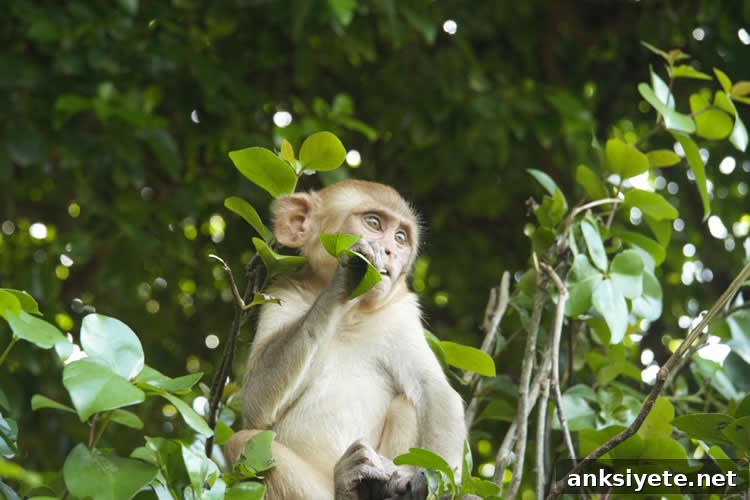
Summary: Researchers report that neurons in the posterior cingulate cortex increase activity before animals change behavior.
Source: University of Pennsylvania.
Have you ever found yourself repeating the same routine and wondered what prompts you to break out of it?
Researchers from the University of Pennsylvania, Yale University, Columbia University and Duke University have identified neural activity in the posterior cingulate cortex (PCC) that predicts when an animal will abandon a routine and explore alternatives. Their results, published in the journal Neuron, show that neurons in this central brain region ramp up firing and peak just before a change in behavior, suggesting a causal role in initiating exploration.
“The circuits that allow us to focus on a specific task—especially tasks that lead to reward—are well known,” said Michael Platt, the James S. Riepe University Professor in Penn’s psychology, neuroscience and marketing departments. “These systems evolved early in the history of life on Earth.” What has been less clear, he added, is which brain mechanisms trigger a deliberate break from a familiar routine, particularly when doing so involves risk.
The research team used two behavioral tasks to probe this question. In the first, called the patch-leaving task, rhesus macaques chose between continuing to harvest a diminishing juice reward from a current location or traveling to a new “patch” that required more time and energy but could yield a larger reward. Platt compared this to berry picking: it makes sense to keep harvesting a nearby tree until the harvest quality drops, at which point it becomes worthwhile to move to another tree.
The second task, referred to as the traveling-salesman task, modeled efficient routine behavior. In that experiment, monkeys could visit six locations, two of which contained rewards (one larger, one smaller). Reward locations were randomized across trials. The optimal strategy is to visit locations in a circular sequence—an efficient, habitual pattern observed in many animals such as bumblebees. Occasionally, however, the monkeys deviated from the routine to explore other locations, and the investigators sought to understand why and when those deviations occurred.
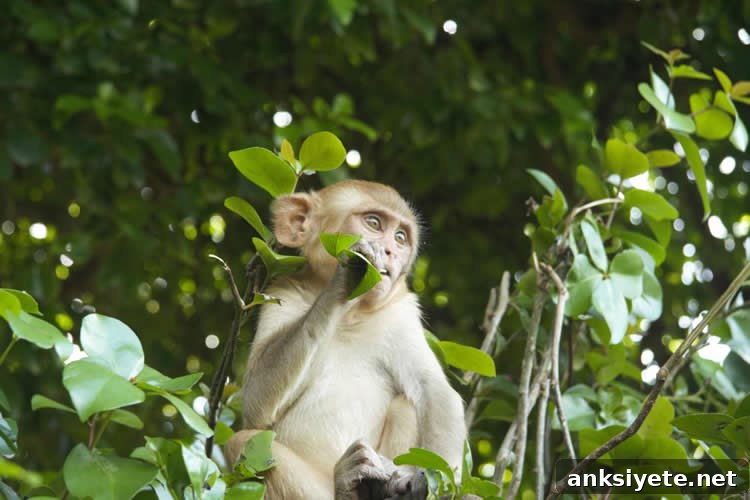
While the animals performed both tasks, the team recorded neuronal activity in the posterior cingulate cortex. They observed that PCC neurons showed a gradual rise in activity that peaked immediately before the animals disengaged from the current strategy and switched to another option. This temporal relationship provides correlational evidence that PCC activity contributes to initiating exploratory behavior rather than merely reflecting it.
Platt noted the evidence is consistent with a causal role: “If you increase activity in the area exogenously—via stimulation—animals break off from their routine and become more exploratory. Conversely, suppressing activity tends to make them hyper-focused on a single option and less likely to change.” While these manipulations are described conceptually, the observed neural signals align with the idea that PCC dynamics bias decisions toward exploration when the current choice becomes less advantageous.
These findings have implications beyond neuroscience. In business and innovation contexts, for example, interventions that transiently increase PCC-related activity—through noninvasive brain stimulation, task design that encourages distraction, or environments that prevent rigid routines from forming—might foster creativity and strategic exploration. “People with higher PCC activity tend to mind-wander more and often show greater creativity,” Platt said. “This suggests that the capacity for creative thinking evolved partly to improve foraging and adaptive behavior in changing environments.”
Funding: This research was supported by the National Eye Institute of the National Institutes of Health (Grant R01 EY013496) and the Duke Institute for Brain Sciences. Collaborators included David Barack (Columbia University) and Steve Chang (Yale University).
Source: Michele Berger, University of Pennsylvania. Publisher: Organized by NeuroscienceNews.com. Image credit: Michele Berger.
Original research: “Posterior Cingulate Neurons Dynamically Signal Decisions to Disengage during Foraging” by David L. Barack, Steve W.C. Chang, and Michael L. Platt, published in Neuron.
Posterior Cingulate Neurons Dynamically Signal Decisions to Disengage during Foraging
Highlights
- Foraging salience drives monkeys’ choices to switch strategies in two distinct tasks.
- Neuronal activity in the posterior cingulate cortex predicted strategy switches in both tasks.
- PCC neurons signaled salience more strongly in poor foraging contexts than in rich ones.
Summary
Foraging requires balancing systematic exploitation with strategic disengagement and exploration. Primates’ foraging behavior depends on memory, value comparison, planning, and decision-making. Across two foraging paradigms, neurons in the primate posterior cingulate cortex signaled decision salience—the difference between current thresholds and net harvested reward—which motivated disengagement from an existing strategy. Salience signals were stronger in contexts with low harvest rates, suggesting that poor resource environments recruit PCC mechanisms that promote strategic switching and exploration.
Feel free to share this neuroscience news.