
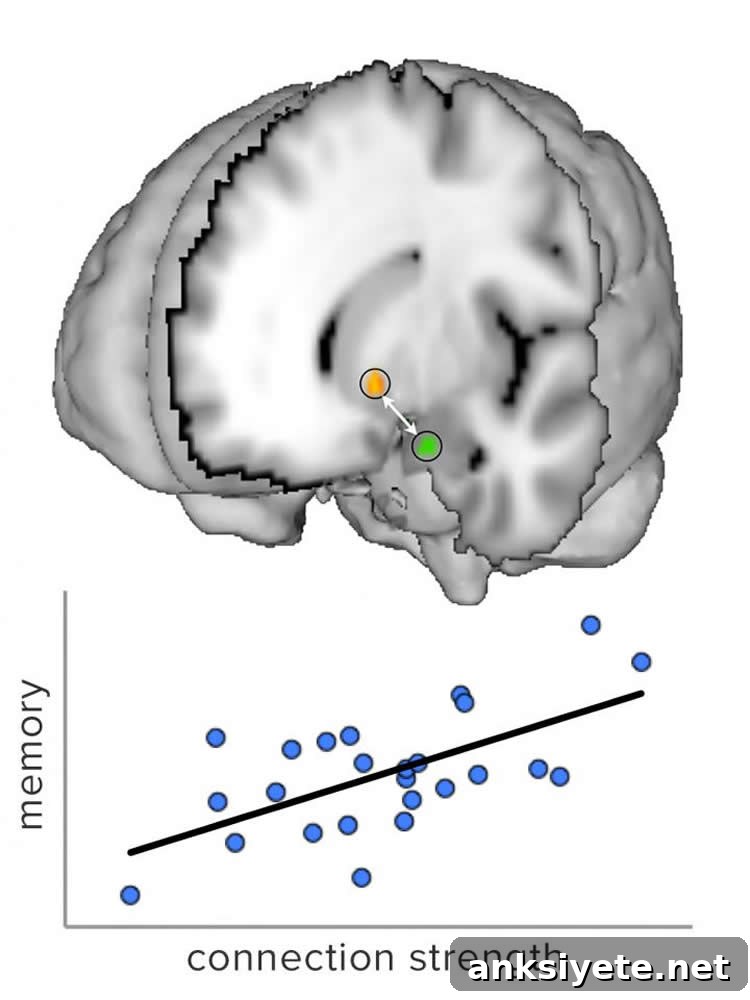
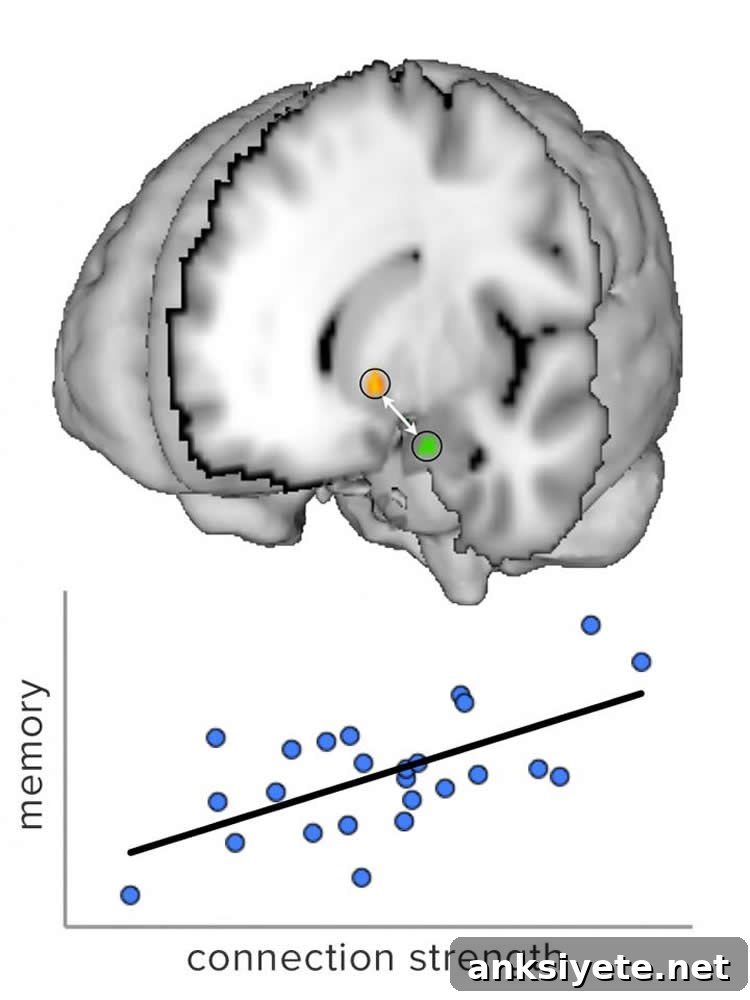
Summary: New research shows the coordinated activity of the striatum and hippocampus enhances adolescents’ learning and memory formation.
Source: Zuckerman Institute.
Columbia-led study links adolescent memory performance with reward-driven learning and specific brain connectivity.
Researchers have identified a distinctive characteristic of the adolescent brain that appears to support learning and the formation of lasting memories: synchronized activity between two brain regions, the striatum and the hippocampus. Unlike adults, adolescents show a pattern of coordinated neural responses during reward-based learning that seems to strengthen the way they encode incidental information. Rather than viewing teens’ reward-seeking tendencies solely as risky or problematic, these findings suggest that heightened sensitivity to reward during adolescence may serve an adaptive function for learning and development.
The study recruited 41 adolescents and 31 adults and focused on the striatum, a brain region widely implicated in planning, decision making and especially reinforcement learning — the process of making predictions, receiving feedback, and updating future choices based on that feedback. Researchers expected that adolescents’ well-documented sensitivity to reward would be reflected in stronger striatal responses during learning tasks.
“Reinforcement learning is essentially making a guess, being told whether it was right or wrong, and using that feedback to improve the next guess,” explained Juliet Davidow, PhD, the study’s first author. In a typical example, if you correctly predict an outcome and receive positive feedback, the striatum registers a reward signal that helps reinforce the successful response so it is more likely to be repeated.
Participants completed a series of learning tasks while researchers recorded brain activity using functional magnetic resonance imaging (fMRI). The team included experts in adolescent brain imaging to ensure careful interpretation of developmental differences. Based on behavior, adolescents did outperform adults on measures of reinforcement learning, consistent with the idea that teens show a stronger drive toward reward.
Surprisingly, however, fMRI responses in the striatum did not differ significantly between adolescents and adults. Instead, the most striking difference emerged in the hippocampus — the brain’s principal structure for episodic memory. Adolescents showed increased hippocampal engagement during reward-based learning, and this hippocampal activity was tightly coordinated with striatal signals. In other words, the hippocampus and striatum appeared to work together in teens in a way not observed in adults.
To probe how this network influences memory, the researchers interspersed irrelevant pictures of everyday objects into the learning tasks. These images carried no predictive value for task performance; they were simply incidental visual stimuli. When tested later, both groups remembered some of the objects, but only in adolescents was memory for those incidental objects reliably linked to the reinforcement learning context. That relationship corresponded with stronger functional connectivity between the hippocampus and the striatum during the learning trials.
“This does not mean that adolescents have uniformly better memory than adults,” said Daphna Shohamy, PhD, senior investigator on the study. “Rather, it highlights a qualitatively different way the adolescent brain encodes experience: by linking reward signals and memory systems, teens may form richer, more contextually integrated memories during a formative period of life.”
The authors suggest that heightened hippocampal-striatal coupling could explain why adolescence is a particularly potent time for forming lasting memories, especially those tied to rewarding or salient experiences. As teens gain independence and encounter new social and environmental demands, a brain tuned to fuse reward information with episodic detail may facilitate faster learning and adaptation.
The paper is titled: “An upside to reward sensitivity: The hippocampus supports enhanced reinforcement learning in adolescence.” Additional coauthors include Karin Foerde, PhD, among others.
Funding: This research was supported by the National Science Foundation (grants DGE-11-44155, BCS 0963750 and Career Award 0955494).
The authors report no financial or other conflicts of interest.
Source: Anne Holden, Zuckerman Institute.
Image Source: Image credit to Juliet Davidow / Shohamy Lab, Columbia University Mortimer B. Zuckerman Mind Brain Behavior Institute.
Original Research: The study appears in Neuron.
MLA: Zuckerman Institute. “Study Reveals How Teens Learn Differently From Adults.” NeuroscienceNews, 5 October 2016.
APA: Zuckerman Institute. (2016, October 5). Study Reveals How Teens Learn Differently From Adults. NeuroscienceNews.
Chicago: Zuckerman Institute. “Study Reveals How Teens Learn Differently From Adults.” Published October 5, 2016.