
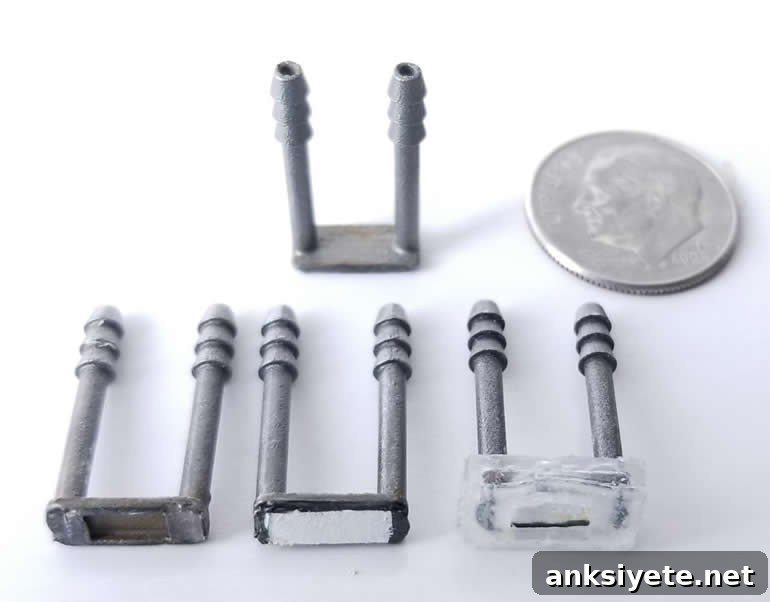
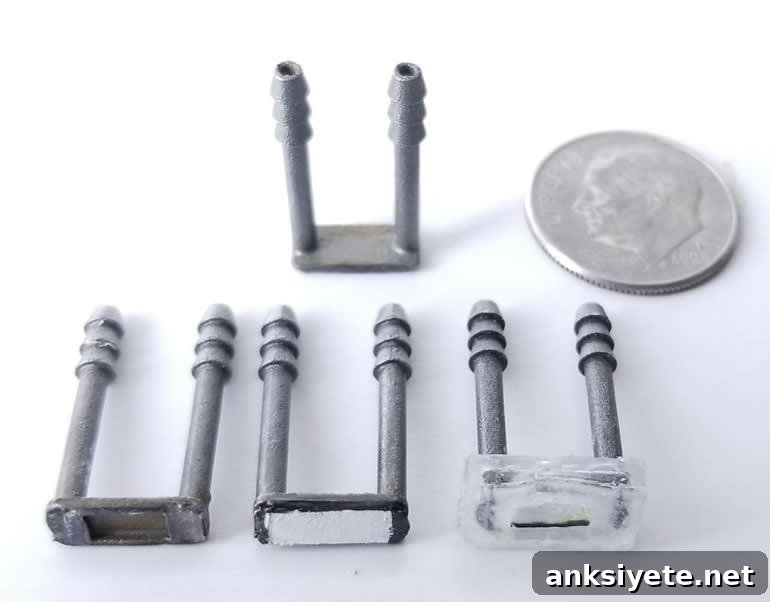
Summary: A new implantable osmotic transport device removes excess fluid from the injured spinal cord to reduce swelling in rat models of spinal cord injury (SCI).
Source: UCR
Spinal cord injuries often trigger rapid swelling that compresses tissue, restricts blood flow and worsens damage to motor, sensory and autonomic functions. Quickly limiting this edema in the minutes and hours after injury is critical to reducing secondary, long-term deficits. Current clinical options are limited—steroid therapy with methylprednisolone offers only modest benefits—so new approaches are needed.
In an open-access study published in Frontiers in Bioengineering and Biotechnology, researchers led by Victor G. J. Rodgers of the Marlan and Rosemary Bourns College of Engineering at UC Riverside and Devin Binder of the UCR School of Medicine describe an implantable osmotic transport device (OTD) that gently draws fluid out of the injured spinal cord in rat models. The team reports that the device reduced tissue water content and suggests the approach could be scaled and adapted for eventual clinical testing.
The OTD is built from a tangential flow module paired with a semipermeable membrane and a hydrogel contact layer. The hydrogel rests on the exposed dura at the injury site and transmits osmotic forces across the membrane. On the device side of the membrane, artificial cerebrospinal fluid supplemented with the protein albumin acts as an osmolyte that draws water across the membrane from the spinal cord. Both the osmolyte solution and the extracted water collect in a small chamber and are recirculated through the device, allowing continuous removal of excess fluid while the osmolyte concentration remains sufficient to sustain osmotic transport.
The investigators note that small changes in tissue water percentage can produce substantial swelling in central nervous system tissue. Prior work by the group demonstrated that an osmotic device could remove enough water to prevent brain swelling and improve neurological outcomes when fluid was removed quickly after injury. Applying that concept to the spinal cord, the current study tested whether a surgically mounted OTD could reduce edema after a severe contusion injury in rats.
In this study, severe contusion injuries (250 kD) were produced at the T8 spinal level in rats. The team applied the OTD immediately after injury and conducted four-hour experiments to evaluate early effects. A three-hour treatment that began one hour after injury produced a statistically significant reduction in spinal cord edema compared with untreated injured controls. Separately, the researchers measured the natural time course of edema following the same injury model and found that tissue water content peaked at about 72 hours post-injury and that edema progression continued over the first days to weeks following contusion, with measurements extended up to 28 days.
A basic mathematical interpretation presented by the authors suggests that even a modest reduction in tissue water content could be enough to relieve mechanical compression on local blood vessels and reestablish cerebrospinal fluid flow in the subarachnoid space and central canal. Restoring perfusion and CSF flow during that critical early period could reduce ischemia and limit secondary injury cascades, improving the chances for functional recovery.
The research team plans further optimization and longer-duration experiments in rats to refine device performance, assess durability and determine the optimal timing and duration of therapy. These preclinical steps are intended to support eventual translation to larger-animal models and, ultimately, human trials.
In parallel work, Rodgers and biomedical sciences professor Byron Ford are developing a related implantable device aimed at brain injuries and severe stroke. That device would both drain excess fluid and locally deliver neuregulin-1, a naturally occurring signaling molecule that supports communication and growth in brain and heart tissues, with the goal of reducing injury and improving recovery after large strokes.
About this neurology research article
Source:
UCR
Contacts:
Holly Ober – UCR
Image Source:
The image is credited to Victor Rodgers/UC Riverside.
Original Research: Open access
“Implantable Osmotic Transport Device Can Reduce Edema After Severe Contusion Spinal Cord Injury” by Victor G. J. Rodgers et al., Frontiers in Bioengineering and Biotechnology.
Abstract
Implantable Osmotic Transport Device Can Reduce Edema After Severe Contusion Spinal Cord Injury
Recent findings indicate that severe contusion to the spinal cord can produce edema that pushes tissue against the surrounding dura mater even after decompressive laminectomy. This compression likely disrupts cerebrospinal fluid flow in the subarachnoid space and central canal and can collapse local vasculature, worsening ischemia and secondary injury. To address this problem, the authors developed a surgically mounted osmotic transport device that rests on the dura and can osmotically remove excess fluid at the injury site. In 4-hour experiments following severe contusion at T8 in rats, a three-hour OTD treatment begun one hour after injury significantly reduced spinal cord edema compared to injured controls. A first-order mathematical interpretation suggests that this level of edema reduction could relieve vascular compression and help restore CSF flow. In addition, measurements over 28 days after injury showed that edema peaks at approximately 72 hours. These preliminary results support the concept that a continuously operating OTD deployed during the critical period of edema progression may substantially improve outcomes after contusion spinal cord injury.