
Summary: A new flexible, breathable magnetic skin enables people with severe quadriplegia to navigate their environment and control devices using facial expressions.
Source: KAUST
Researchers at KAUST have developed an integrated assistive system that combines flexible magnetic skins, smart glasses, a smart wheelchair, and connected devices to give people with severe quadriplegia greater independence. The system translates subtle facial movements into reliable commands for mobility and environmental control, working both indoors and outdoors.
Most existing assistive technologies for people with quadriplegia depend on head or neck motion and therefore are unsuitable for individuals with the most severe injuries, who may have very limited head movement or difficulty speaking. Alternative approaches—such as camera tracking, tongue-based control, voice assistants, or invasive neural interfaces—often present trade-offs: limited gesture sets, poor performance outdoors, the need for constant attention, or surgical procedures.
“Many current solutions limit a user’s freedom,” says Abdullah Almansouri, a Ph.D. student at KAUST. “We wanted an approach that is comfortable, simple to use, and reliable both at home and outside so users can move and interact independently.”
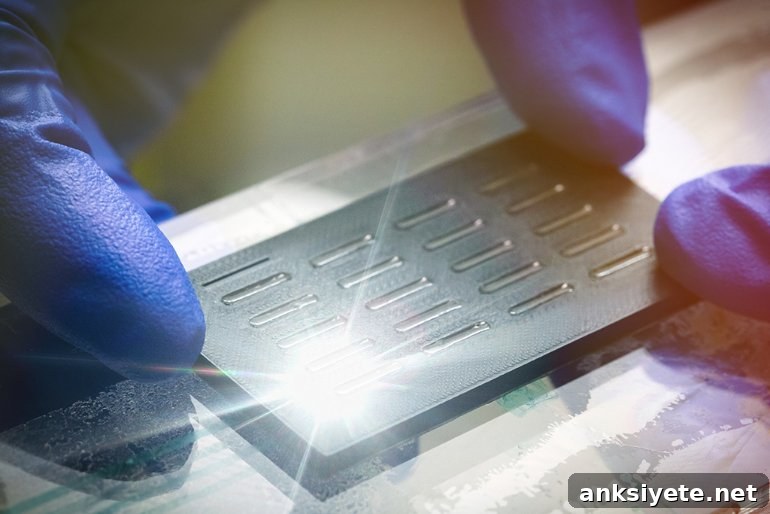
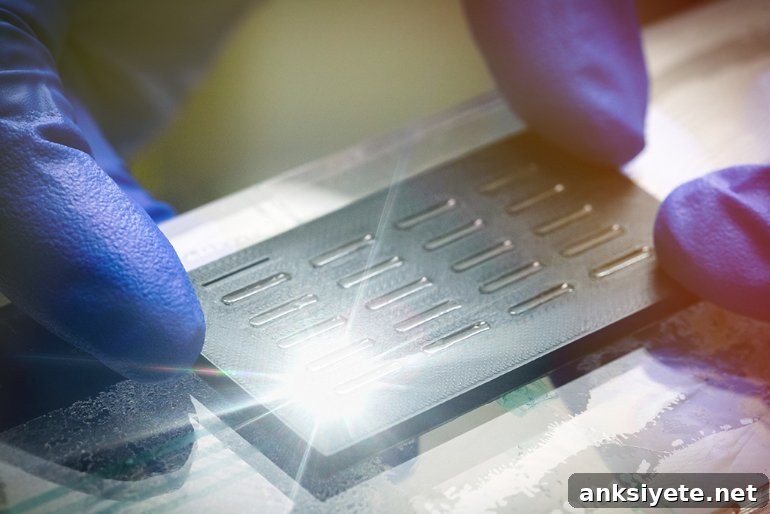
The system developed by the team centers on soft magnetic skins—thin, stretchable, breathable patches that adhere to the face like tattoos. Three such magnetic skins are positioned between the eyebrows and along each side of the nose. Small facial gestures—raising or lowering the eyebrows, shifting the nose left or right—move these magnetic patches and create distinct magnetic field patterns.
Magnetic field sensors mounted on smart glasses detect the changes in the magnetic fields caused by facial motion and convert them into electrical signals. A head unit on the smart wheelchair processes these signals and maps them to specific commands—such as steering, stopping, operating elevator controls, activating pedestrian crossings, turning lights on or off, or interacting with a computer cursor.
The team designed the system to support a broad set of gestures: it currently recognizes 13 distinct facial movements, each mapped to a different action. Communication between the components uses short-range wireless technologies such as Bluetooth and infrared, enabling both line-of-sight outdoor use and indoor control without being tethered to particular devices.
“We aimed for a system that’s easy to wear, difficult to trigger accidentally, and that lets the technology handle complexity so users can simply wear the glasses and magnetic skins to manage their surroundings,” Almansouri explains.
In preliminary trials with three able-bodied volunteers, participants required less than 15 minutes of training to use the system independently. The tests showed high reliability, with the lowest recorded success rate at 93 percent across tasks.
Khaled Salama, professor of electrical and computer engineering at KAUST’s Advanced Membranes and Porous Materials Center, highlights the broader potential: “This combination of advanced sensors and machine learning can significantly improve quality of life and could be transformative across many assistive and human–machine interaction applications.”
About this neurotech research news
Source: KAUST
Contact: Press Office – KAUST
Image: The image is credited to KAUST; Anastasia Serin
Original Research: Closed access. “An assistive magnetic skin system: Enabling technology for quadriplegics” by Almansouri, A.S., Upadhyaya, L., Nunes, S.P., Salama, K.N., Kosel, J., Advanced Engineering Materials.
Abstract
An assistive magnetic skin system: Enabling technology for quadriplegics
Severe quadriplegia can leave individuals unable to control limbs, hands, or essential head and neck movements, and may impair speech. Advances in wearable artificial skins and the Internet of Things make practical, comfortable assistive solutions more achievable. This work presents a comprehensive assistive magnetic skin system that enables people with quadriplegia—including those with very limited motion—to navigate independently and control their environment using facial expressions. The approach uses magnetic tattoos—flexible, stretchable, breathable, and biocompatible magnetic skin patches—placed on the face. Magnetic field sensors embedded in eyeglasses detect the position of these patches and translate facial movements into control commands. When combined with smart glasses, a smart wheelchair, and connected smart devices, users can move along paths, trigger pedestrian signals, operate elevators, manage indoor systems, and interact with electronic devices without being tethered to specific gadgets. The system is designed to function outdoors as well as indoors and to provide reliable, low-effort control for users with severe mobility limitations.