
Summary: New findings clarify how learning to read reshapes brain circuits and highlight implications for reading disorders like dyslexia.
Source: Max Planck Institute.
Reading is a recent cultural invention in human history and could not have been hard-wired into our genes. To acquire literacy, the brain repurposes regions originally evolved to recognize complex visual patterns—such as faces—to translate written symbols into language. In this process, parts of the visual system become functional interfaces linking vision and language.
“Until now, it was generally believed that literacy-related changes were confined to the cerebral cortex, which is highly adaptable,” says Falk Huettig, project leader at the Max Planck Institute for Psycholinguistics. Researchers from the Max Planck Institutes, together with colleagues at the Centre of Bio-Medical Research (CBMR) in Lucknow and the University of Hyderabad, examined how the adult brain changes when completely illiterate adults learn to read and write. Contrary to prior assumptions, their results show that learning to read triggers reorganization that extends into deep brain structures in the thalamus and brainstem. In other words, a cultural invention that is only a few thousand years old engages neural systems that are evolutionarily ancient and shared across mammals.
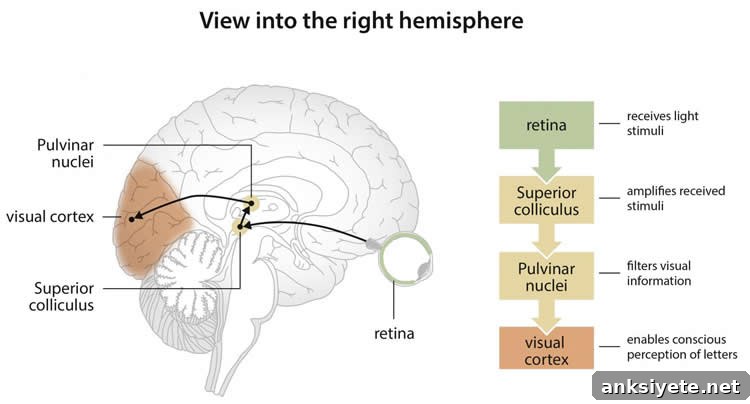
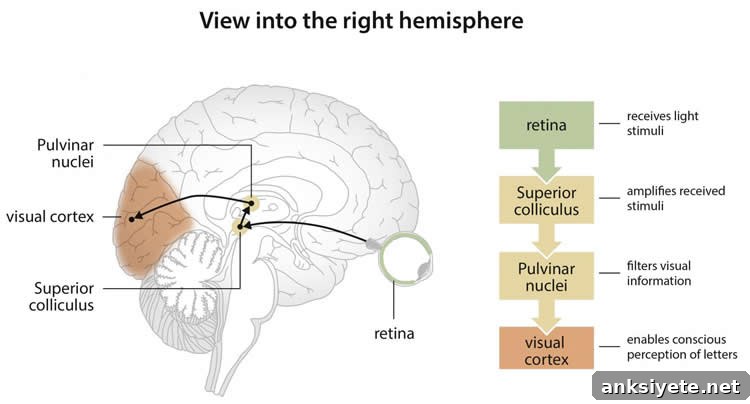
“We observed that the superior colliculi in the brainstem and the pulvinar nucleus of the thalamus adjust the timing of their activity to better align with the visual cortex,” explains Michael Skeide, a researcher at the Max Planck Institute for Human Cognitive and Brain Sciences (MPI CBS) in Leipzig and first author of the study, recently published in Science Advances. These subcortical structures help the visual cortex filter salient information from dense visual input even before conscious perception. Importantly, participants whose neural timing became more synchronized between these areas demonstrated greater gains in reading skill. “We therefore propose that as learners become more proficient, these systems increasingly fine-tune their communication, which helps experienced readers navigate text more efficiently,” Skeide adds.
Large-scale study with adult illiterates in India
The interdisciplinary team conducted the study in India, where illiteracy rates remain substantial in parts of the population. Most study participants were women in their thirties who had had little or no formal schooling. At the study’s outset, the majority could not read a single written word in their native Hindi. Hindi uses the Devanagari script, which encodes syllables and complex characters rather than single letters, offering a valuable test case for how the brain adapts to a script with distinct visual demands.
After six months of intensive reading instruction, many participants reached skill levels comparable to those of first graders. “This gain is remarkable,” Huettig notes. “While adults often struggle to learn a new spoken language, learning to read turned out to be surprisingly achievable for the adult brain. The mature brain demonstrates notable flexibility.” The research team deliberately recruited volunteers from the same social class in two villages in northern India to reduce socioeconomic confounds. Brain scans were performed in the city of Lucknow, which required participants to travel for the imaging sessions.
A new perspective on dyslexia
Beyond its implications for adult literacy, the study informs theories about reading disorders such as dyslexia. Prior hypotheses have linked dyslexia to dysfunctions in thalamic structures. The present findings indicate that only a few months of literacy training can substantially modify thalamic function. This raises the possibility that thalamic differences observed in people with dyslexia might reflect differences in visual experience and training rather than innate defects. In other words, abnormal thalamic activity could be a consequence of reduced visual-linguistic practice rather than a primary cause—unless such differences are demonstrable before any formal schooling.
“To determine whether thalamic abnormalities are a root cause of dyslexia, studies need to measure brain activity before children start learning to read and then follow them longitudinally,” Huettig emphasizes. Long-term, prospective research that tracks children from the pre-reading stage through literacy acquisition is required to disentangle cause from effect in developmental reading disorders.
Source: Charlotte Horn – Max Planck Institute
Image Source: Image credited to Max Planck Institute for Human Cognitive Brain Sciences.
Original Research: Full open-access research titled “Learning to read alters cortico-subcortical cross-talk in the visual system of illiterates” by Michael A. Skeide et al., published in Science Advances on May 24, 2017.
Max Planck Institute, “Learning to Read in Your 30s Profoundly Transforms the Brain.” NeuroscienceNews. 25 May 2017.
Abstract
Learning to read alters cortico-subcortical cross-talk in the visual system of illiterates
Previous work has shown that learning to read reorganizes the developing cortex. In this longitudinal resting-state functional MRI study of illiterate adults, six months of literacy training produced measurable neuroplastic changes in the mature brain. Literacy-related neuroplasticity was not limited to cortical regions: training increased functional connectivity between occipital (visual) cortex and subcortical structures in the midbrain and thalamus. Individual increases in connectivity correlated with individual gains in decoding skill. These results expand current neurobiological models of normal and impaired literacy acquisition by demonstrating that subcortical systems adapt during adult literacy learning.
“Learning to read alters cortico-subcortical cross-talk in the visual system of illiterates” by Michael A. Skeide, Uttam Kumar, Ramesh K. Mishra, Viveka N. Tripathi, Anupam Guleria, Jay P. Singh, Frank Eisner and Falk Huettig in Science Advances. Published online May 24, 2017. DOI: 10.1126/sciadv.1602612