
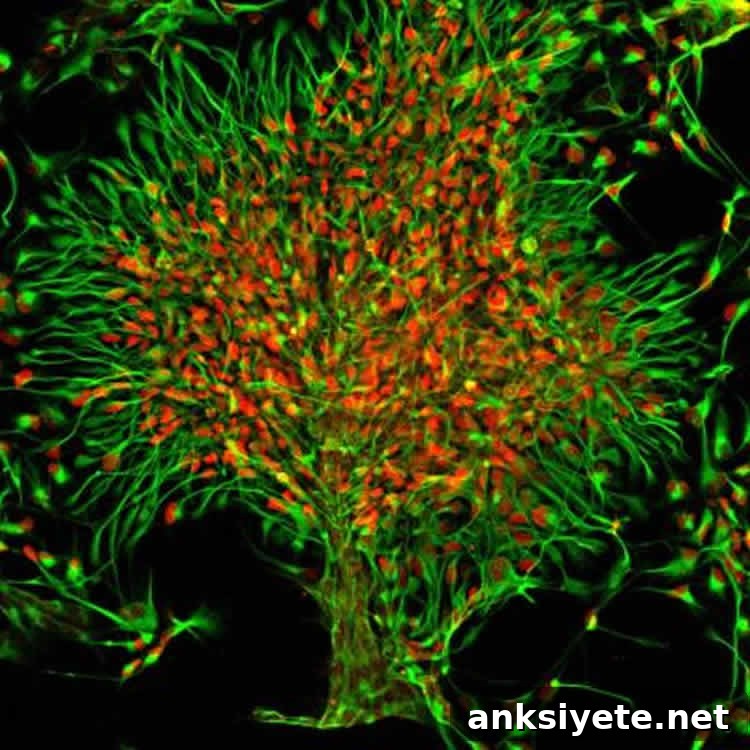
Summary: Researchers have developed a new approach that makes it easier to compare early neuronal development in humans and nonhuman primates. The findings provide fresh insight into how the human brain evolved.
Source: Salk Institute.
What makes us human? Although our DNA is very similar to that of chimpanzees and bonobos, clear behavioral and cognitive differences remain. Scientists at the Salk Institute, together with colleagues in the anthropology department at UC San Diego, have created a new experimental strategy to compare early neuronal development across species. Published in eLife on February 7, 2019, this work introduces a practical tool for comparative brain research and for exploring the cellular basis of human-specific traits.
Two central processes shape brain development: neuronal maturation and neuronal migration. Maturation refers to the growth and increasing connectivity of neurons as they form circuits, while migration describes the relocation of neurons to specific positions within the developing brain. The research team set out to systematically compare how these processes unfold in human neurons versus those of closely related primates.
To do this, the Gage laboratory applied induced pluripotent stem cell (iPSC) technology. They reprogrammed skin cells from humans, chimpanzees and bonobos into pluripotent cells and then guided those cells—using viral vectors and carefully designed chemical treatments—into neural progenitor cells, a versatile cell type that can give rise to many neuronal subtypes. These primate-derived neural progenitor lines can be expanded and maintained indefinitely, creating an ethical and reproducible platform for studying live neuronal development without relying on tissue from endangered species.
“This approach opens a practical and ethical path to study human evolution at the cellular level,” says Carol Marchetto, a senior staff scientist at the Salk Laboratory of Genetics and a co-first author. “By sharing these cell lines with the research community, we hope to accelerate discoveries about how primate brains develop and diverge.”
The team first compared gene expression programs tied to neuronal movement across species and then examined intrinsic migration behaviors of the derived neurons. They identified 52 genes associated with migration that show differing activity patterns between species. In culture, chimpanzee and bonobo neurons displayed brief phases of rapid migration, while human neurons migrated more slowly.
To assess neuronal behavior in a developing brain environment, the researchers transplanted human and chimpanzee neural progenitor cells into the developing cortex of neonatal rodents. This in vivo setting provided anatomical cues and a supportive environment for the grafted cells to migrate and mature. The investigators followed the grafted neurons for up to 19 weeks, measuring migration distance, cell morphology, dendritic growth, and soma size.
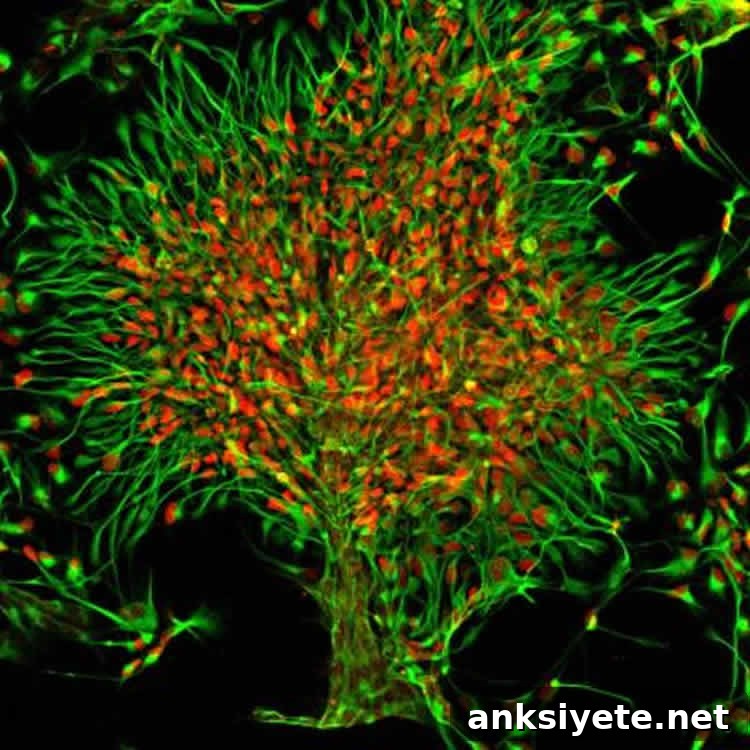
Quantitative analysis revealed clear differences. After two weeks, chimpanzee neurons had migrated farther and occupied about 76% more area than human neurons. Human neurons, however, developed more slowly and ultimately extended longer dendritic processes compared with chimpanzee neurons. The slower growth and extended maturation of human neurons may permit prolonged periods for circuit refinement and additional developmental milestones—features that could contribute to distinctive aspects of human cognition and behavior.
Beyond documenting species-specific developmental timelines, the platform enables researchers to probe the molecular mechanisms that underlie these differences. The authors intend to expand this work by developing induced pluripotent stem cell lines from more primate species and constructing a comparative evolutionary map of neuronal maturation. Such a resource could help pinpoint gene regulatory changes that shifted developmental timing in the human lineage and that might influence brain organization, cognition, and disease vulnerability.
“We currently have limited cellular-level knowledge about how brains evolved across primates,” says Rusty Gage, Salk President and a senior author of the study. “This experimental system provides a scalable way to compare species and will help the field explore the cellular roots of cognitive differences and neurological disease risk.”
Other contributors to the study include Krishna Vadodaria, Sara B. Linker, Iñigo Narvaiza, Renata Santos, Ahmet M. Denli, Ana P.D. Mendes, Ruth Oefner, Jonathan Cook, Lauren McHenry, Jaeson M. Grasmick, Kelly Heard, Callie Fredlender, Lynne Randolph-Moore, Rijul Kshirsagar, Rea Xenitopoulos, Grace Chou and Nasun Hah from the Salk Institute for Biological Studies; Branka Hrvoj-Mihic, Katerina Semendeferi and Alysson R. Muotri from the University of California San Diego; Bilal E. Kerman from Istanbul Medipol University; Diana X. Yu from the University of Utah; and Krishnan Padmanabhan from the University of Rochester.
Funding: This work was supported by grants from the National Institutes of Health, the Leona M. and Harry B. Helmsley Charitable Trust, the California Institute for Regenerative Medicine, and the Brain and Behavior Research Foundation.
Abstract
Species-specific maturation profiles of human, chimpanzee and bonobo neural cells
Comparative analyses of neuronal phenotypes among closely related species can reveal cellular changes that occurred during evolution. Traditional studies of post-mortem nonhuman primate brains are limited and may miss key developmental signatures. Using induced pluripotent stem cell technology and grafting experiments in the developing mouse cortex, this study compares migration and maturation of cortical pyramidal neurons derived from human, chimpanzee and bonobo cells. Results show distinct migration patterns and timing differences across species both in vitro and in vivo, pointing to heterochronic shifts in human neurons. The described strategy establishes a foundation for further comparative studies to uncover cellular differences that shape cognition and species-specific neurological disease susceptibility.