
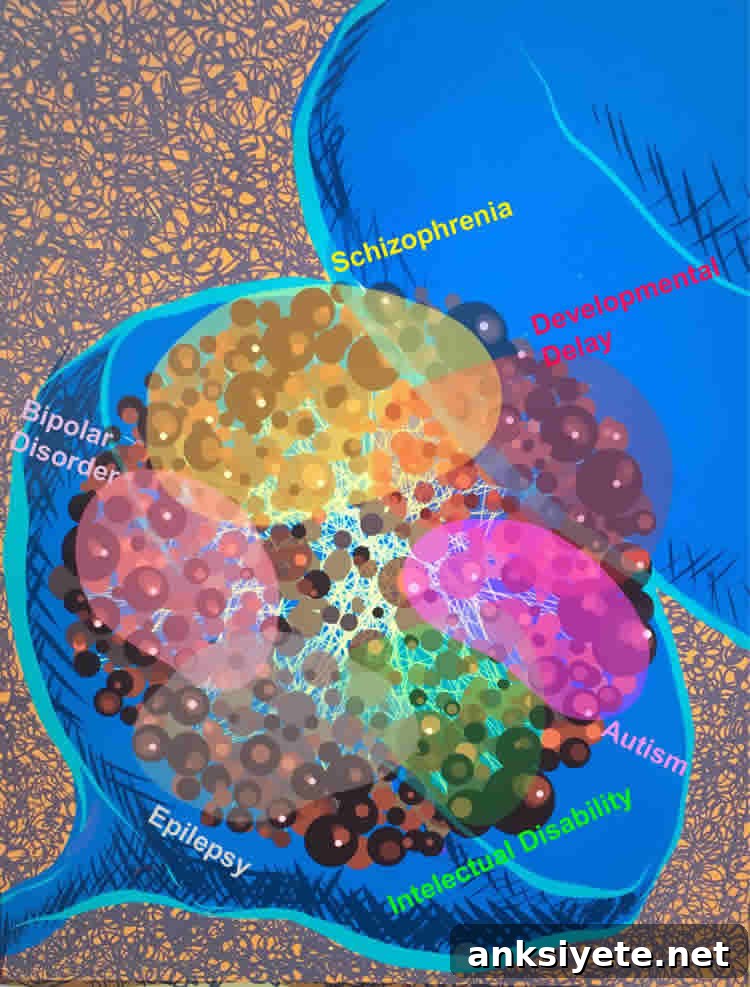
Summary: Researchers have produced a new map that reveals how proteins associate across brain networks. The map is integrated into a software platform that lets scientists visualize where disease-related risk factors operate within those networks.
Source: USC.
A new study of protein interactions provides a foundation for developing treatments that target dysfunctional pathways in the brain.
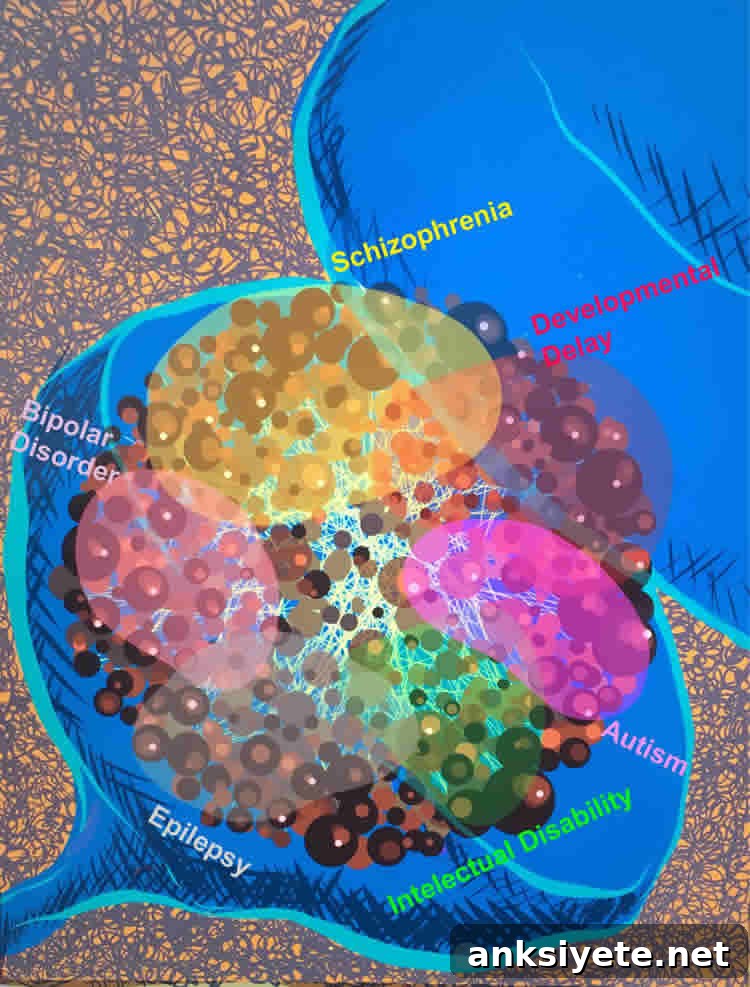
Complex brain disorders such as autism, bipolar disorder and schizophrenia rarely stem from a single genetic mutation. Marcelo P. Coba, a neuroscientist at the Keck School of Medicine of USC, emphasizes that these conditions emerge from disturbances in networks of interacting proteins rather than from one “culprit” gene.
To give researchers a clearer, network-level view, Coba and colleagues built the first comprehensive map of postsynaptic protein associations across the brain. This map is designed to guide drug development toward interventions that act precisely on malfunctioning pathways instead of broadly affecting many systems.
“The drugs we have now are not working for these brain disorders,” said Coba, senior author of the study and an assistant professor of psychiatry at the Zilkha Neurogenetic Institute. “Scientists have not developed a new drug target for complex brain diseases in nearly 60 years. The protein map software my colleagues and I created can help researchers identify and prioritize more specific therapeutic targets.”
The study, published in Nature Neuroscience, mapped 2,876 protein interactions and determined where those protein networks are located in the brain, how they communicate, and at what stages of development they become active. The team integrated these findings into a user-friendly software platform that enables visualization and prioritization of disease risk factors within synaptic protein networks.
Many genetic studies search for individual genes labeled as “risk factors.” But Coba points out that each risk factor often accounts for only a small fraction of cases. A single mutated gene might explain perhaps a couple of percentage points of a disorder’s occurrence; the broader impact arises from how that mutated protein affects its interactions in a network.
Coba uses an airport analogy to explain the concept. If flights at one major airport are grounded, the disruption ripples through schedules and connections at many other airports—the problem is not isolated to a single terminal. Similarly, proteins encoded by genes interact in complex networks. A mutation that alters one protein’s behavior may disrupt multiple connections, producing cascading effects that destabilize synaptic signaling and contribute to neurodevelopmental and psychiatric disorders.
By mapping these interactions across space and time, the research team can identify key network nodes—highly connected proteins—whose disruption has outsized effects. Such nodes become high-priority candidates for therapeutic targeting because interventions aimed at them could restore network function more effectively than broad, non-specific treatments.
The researchers packaged their data into a platform called the Synaptic Protein/Pathways Resource (SyPPRes). SyPPRes enables scientists to explore where disease-associated proteins sit within postsynaptic interaction networks, examine their developmental timing, and prioritize candidates for further functional study. The platform supports visualization of spatiotemporal protein distributions and highlights clusters enriched for risk factors tied to specific disorders.
The study isolated 2,876 proteins across 41 in vivo interactomes using immunopurification, proteomics and bioinformatics. The team characterized protein domain composition, correlated protein presence with gene expression, and charted how proteins integrate into the postsynaptic density over development. They identified clusters enriched for risk factors for schizophrenia, autism spectrum disorders, developmental delay and intellectual disability at embryonic and adult stages in mice, and showed that mutations in highly connected nodes alter protein–protein interactions and macromolecular complex composition.
Funding: The research was supported by the National Institute of Child Health and Human Development (MH104603-01), the National Institutes of Health (MH108728), and the Simons Foundation Autism Research Initiative (248429 and 345034). Seventy percent of the study’s funding originated from federal sources.
Source: Zen Vuong, USC. Image credit: Steven Park.
Spatiotemporal profile of postsynaptic interactomes integrates components of complex brain disorders
The postsynaptic density (PSD) contains a collection of scaffold proteins used for assembling synaptic signaling complexes. However, it is not known how the core-scaffold machinery associates in protein-interaction networks or how proteins encoded by genes involved in complex brain disorders are distributed through spatiotemporal protein complexes. Here using immunopurification, proteomics and bioinformatics, we isolated 2,876 proteins across 41 in vivo interactomes and determined their protein domain composition, correlation to gene expression levels and developmental integration to the PSD. We defined clusters for enrichment of schizophrenia, autism spectrum disorders, developmental delay and intellectual disability risk factors at embryonic day 14 and adult PSD in mice. Mutations in highly connected nodes alter protein–protein interactions modulating macromolecular complexes enriched in disease risk candidates. These results were integrated into a software platform, Synaptic Protein/Pathways Resource (SyPPRes), enabling the prioritization of disease risk factors and their placement within synaptic protein interaction networks.