
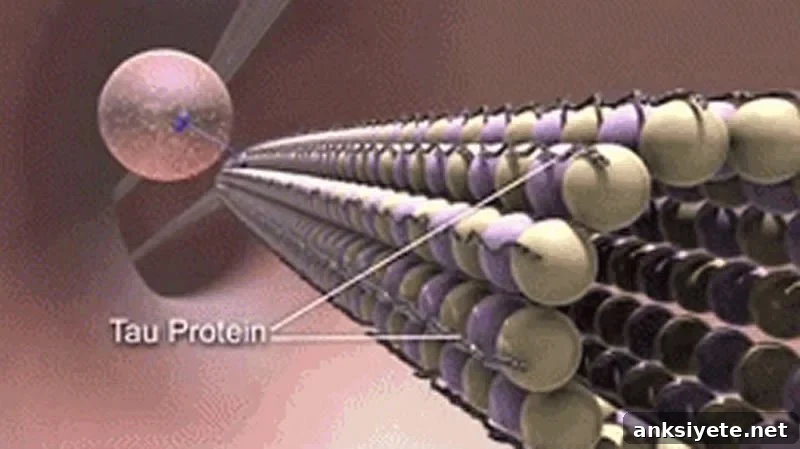
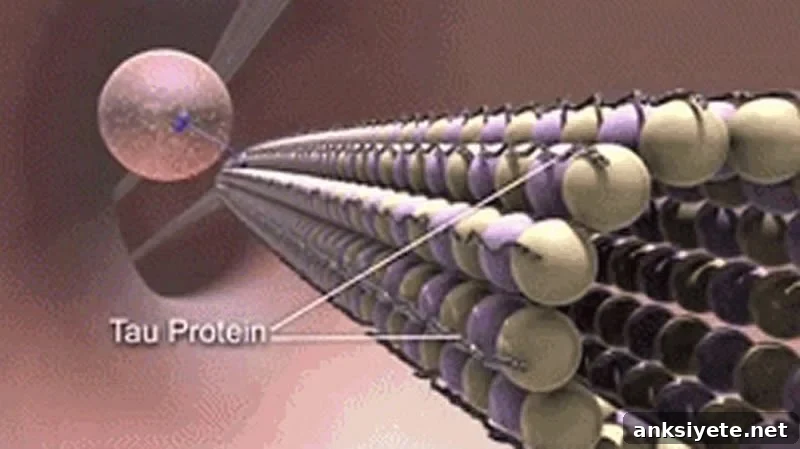
Summary: Lowering levels of the Alzheimer’s-associated protein tau prevents autism-like behaviors and seizures in multiple mouse models, and it suppresses related brain abnormalities linked to some forms of autism.
Source: Gladstone Institute
Autism spectrum disorders (ASD) vary widely in symptoms and severity, but they share three core features: difficulties with social interaction, communication challenges, and repetitive behaviors. There are currently no medications that reliably treat these core symptoms, creating a strong need for new therapeutic approaches.
Researchers at the Gladstone Institutes report in Neuron that genetically reducing the protein tau blocks the emergence of autism-like behaviors in two different mouse models that represent distinct causes of autism. In these same models, tau reduction also prevented seizures—an important finding because seizures affect about 30 percent of people with autism.
“Our results indicate that lowering tau could be a promising therapeutic strategy for some forms of autism,” said Lennart Mucke, MD, founding director of the Gladstone Institute of Neurological Disease and senior author of the study.
Tau is best known for its role in Alzheimer’s disease and other neurodegenerative disorders, but prior to this work it had not been associated with autism.
“This study uncovers an unexpected link between neurodegenerative disorders of aging and developmental brain disorders of childhood,” added Mucke, who is also a professor of neurology and neuroscience at the University of California, San Francisco.
Making the Leap from Alzheimer’s to Autism
The investigation grew out of previous work exploring connections between Alzheimer’s disease and epilepsy. Earlier studies from Mucke’s lab had shown that lowering tau reduced epileptic activity and cognitive deficits in mouse models of Alzheimer’s disease and in models of Dravet syndrome, a severe childhood epilepsy that frequently includes autism-like features.
Chao Tai, PhD, first author on the new paper, wondered whether tau reduction might also block the autism-related behaviors that often accompany Dravet syndrome. To test this idea, the team examined a mouse model of Dravet syndrome after deleting one or both copies of the gene that produces tau.
They found that partial or complete loss of tau prevented the development of core autism-like features in these mice. Notably, even a 50 percent reduction in tau produced substantial improvements in social behavior, communication, and repetitive actions.
Because autism has many genetic causes, the researchers extended their experiments to a second mouse model driven by a different mutation associated with autism. Tau reduction again strongly suppressed autism-like behaviors in this separate model, demonstrating that the effect was not limited to a single genetic cause.
“The autism-like behaviors were again strongly suppressed by tau reduction.”
In both models, lowering tau also prevented seizures and two additional abnormalities frequently seen in some forms of autism: megalencephaly, an abnormal enlargement of the brain, and overactivation of the PI3K–Akt–mTOR signaling pathway, which controls cell growth and metabolism.
At the molecular level, the authors identified one likely mechanism: tau reduction increases the activity of PTEN, a potent negative regulator of PI3K signaling. The team found that tau binds to PTEN through tau’s proline-rich domain and that lowering tau disinhibits PTEN, thereby reducing PI3K–Akt–mTOR overactivation.
Addressing a Dire Need for Novel Treatments
These findings position tau reduction as a candidate strategy capable of addressing both neurological and behavioral features that co-occur in some patients with autism and epilepsy. “Tau reduction appears to be the first approach that can prevent both autism-like behaviors and epilepsy in the same models,” Mucke said.
Chao Tai noted the public health importance: “Autism is common, affecting roughly one in 60 children, and our results may help guide the development of better therapies.”
However, the authors caution that tau reduction is unlikely to be effective for every form of autism. Because many autism-causing alterations occur during early brain development—often before a clinical diagnosis—further studies are needed to determine whether lowering tau can reverse existing symptoms or whether it is most effective as a preventative intervention. Ongoing experiments in animal models aim to define optimal timing and dosing for tau-lowering interventions.
Mucke and colleagues are actively developing and testing small-molecule compounds that either reduce tau levels or enhance PTEN activity. Several tau-lowering strategies are already under clinical investigation for Alzheimer’s disease, and results from those trials may provide valuable safety and efficacy information relevant to autism research.
Funding: This research was supported by the National Institutes of Health and the Tau Consortium.
Additional authors include Che-Wei Chang, Gui-Qiu Yu, Isabel Lopez, Xinxing Yu, Xin Wang, and Weikun Guo from the Gladstone Institutes.
Source:
Gladstone Institute
Media contact:
Megan McDevitt – Gladstone Institute
Image source:
The image is in the public domain.
Original research: Closed access. Article title: “Tau Reduction Prevents Key Features of Autism in Mouse Models.” Neuron. DOI: 10.1016/j.neuron.2020.01.038.
Abstract (condensed)
Tau Reduction Prevents Key Features of Autism in Mouse Models
Highlights:
- Tau reduction prevents autism-like behaviors in Scn1a RX/+ and Cntnap2 −/− mouse models.
- Tau reduction prevents PI3K overactivation and megalencephaly associated with these models.
- Tau interacts with PTEN via its proline-rich domain and suppresses PTEN activity.
- PTEN disinhibition is a key mediator of the beneficial effects of tau reduction.
Summary: Autism involves repetitive behaviors, social deficits, and communication challenges. Treatments are limited. The study shows that genetically lowering tau prevents autism-like behaviors in two distinct mouse models. Both models also exhibit epilepsy, enlarged brains, and hyperactivation of the PI3K/Akt/mTOR pathway—abnormalities that were prevented or substantially reduced by partial or complete removal of tau. Mechanistically, decreased tau enhances PTEN activity, a negative regulator of PI3K signaling, and tau binds PTEN through the proline-rich domain. These results suggest tau plays a permissive role in the development of certain forms of autism and identify tau reduction as a potential therapeutic avenue for some disorders that produce autism.