
UCI study reveals how they alleviate ‘chemobrain’ after cancer treatments.
Researchers at the University of California, Irvine report encouraging preclinical results showing that human neural stem cell transplantation can reverse learning and memory deficits caused by chemotherapy, a condition commonly known as “chemobrain.” This work demonstrates that stem cell interventions delivered after treatment can restore cognitive abilities in animal models, and it outlines mechanisms by which the therapy may repair and protect brain tissue damaged by cancer drugs.
In controlled rodent experiments, investigators administered a course of chemotherapy and then, one week after completing treatment, transplanted human neural stem cells into the animals’ brains. Behavioral assessments conducted one month later revealed that animals receiving the stem cell grafts recovered a broad range of cognitive functions, while animals that did not receive stem cells continued to show clear impairments in learning and memory on standardized tests.
Chemotherapy is an essential weapon against many cancers, but a substantial fraction of survivors experience lingering cognitive problems after treatment. Symptoms—often grouped under the term chemobrain—can include memory lapses, difficulty concentrating, reduced processing speed and other deficits. Estimates suggest that as many as 75 percent of survivors may experience some form of cognitive dysfunction following chemotherapy, a burden that can be particularly harmful for pediatric patients because it can affect developmental outcomes, academic performance and long-term quality of life.
Lead investigator Charles Limoli, professor of radiation oncology at UC Irvine, emphasized that these findings are the first compelling evidence that human neural stem cell transplantation can reverse chemotherapy-induced damage to healthy brain tissue. The results were published in the February 15 issue of Cancer Research, a journal of the American Association for Cancer Research.
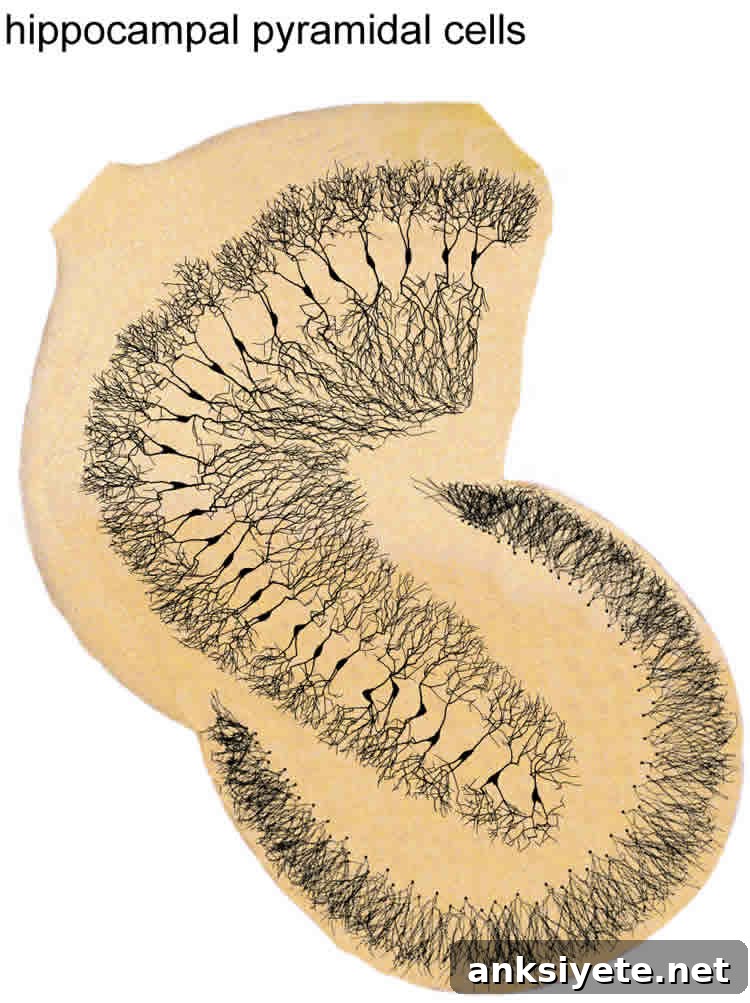
The study focused on the hippocampus, a brain region essential for learning, memory formation and spatial navigation. Many chemotherapeutic agents trigger inflammation in the hippocampus, which can lead to the loss of neurons and supporting cells. In addition to cell loss, these agents disrupt the delicate architecture of neurons—the dendrites and axons that make up their branches—and reduce the density and complexity of dendritic spines, the tiny protrusions that form synapses and enable neurons to communicate with each other. Limoli likens this structural damage to a tree pruned down to its trunk and major branches, leaving far fewer leaves to carry out normal function.
In the UCI experiments, transplanted adult human neural stem cells migrated throughout the hippocampus, survived in the host tissue and differentiated into multiple neural cell types. Beyond replacing lost cells, the grafted cells secreted neurotrophic factors—molecules known to support neuron survival, growth and synaptic repair. These secreted factors appear to promote structural recovery of damaged neurons, including restoration of dendritic spines and improvements in synaptic integrity, and they also seem to shield existing host neurons from further damage.
The investigators observed that engrafted stem cells not only assisted in repair but also exerted protective effects on remaining host cells, reducing neuron loss and helping to preserve or rebuild the finer structural elements that underlie neural connectivity. These combined actions—replacement, trophic support and neuroprotection—help explain how stem cell transplantation led to measurable recovery of cognitive performance in treated animals.
Limoli and colleagues caution that while the preclinical results are promising, further work is required before similar therapies could be offered to patients. Key next steps include additional safety and efficacy studies, optimization of cell delivery and dose, and careful assessment of long-term outcomes. The team suggests that, pending continued progress and regulatory approval, clinical trials designed to evaluate safety in humans could become feasible in the coming years.
The study was conducted by Munjal Acharya, Lori-Ann Christie, Vahan Martirosian, Nicole N. Chmielewski, Nevine Hanna, Katherine Tran, Alicia Liao and Vipan Parihar of UC Irvine, with Charles L. Limoli serving as senior author. Funding support included National Institutes of Health grant R01 NS074388581 and assistance from UC Irvine’s Institute for Clinical & Translational Science.
Contact: Tom Vasich – UC Irvine
Source: UC Irvine press release
Image Source: Image credit to Hermann Cuntz, Friedrich Forstner, Alexander Borst, Michael Häusser; adapted from a PLOS Computational Biology figure.
Original Research: Abstract for “Stem Cell Transplantation Reverses Chemotherapy-Induced Cognitive Dysfunction” by Munjal M. Acharya et al., Cancer Research. Published online February 15, 2015. doi:10.1158/0008-5472.CAN-14-2237