
Summary: Researchers report that visual features which modulate the optokinetic reflex are encoded in the retina.
Source: LMU.
Contrast affects the optokinetic reflex—the mechanism that helps us keep the landscape in focus while riding a moving train—and LMU researchers now show that the retinal circuitry encodes the visual features that modulate this ability.
When we look out of a moving train window, our eye muscles constantly adjust to stabilize the gaze so the passing landscape remains clear. This involuntary response, known as the optokinetic reflex (OKR), enables an observer to estimate relative scene velocity and to minimize retinal image slip. New experiments from a team led by LMU neurobiologist Professor Hans Straka show that specific visual image properties of the environment strongly influence how effectively the OKR stabilizes vision. In particular, the level and polarity of contrast determine how well moving scenes are perceived. These findings are reported in the Journal of Experimental Biology.
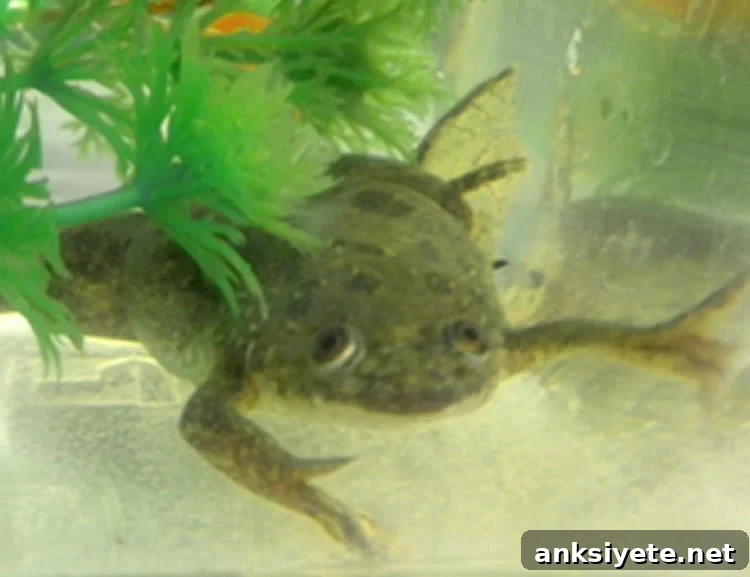
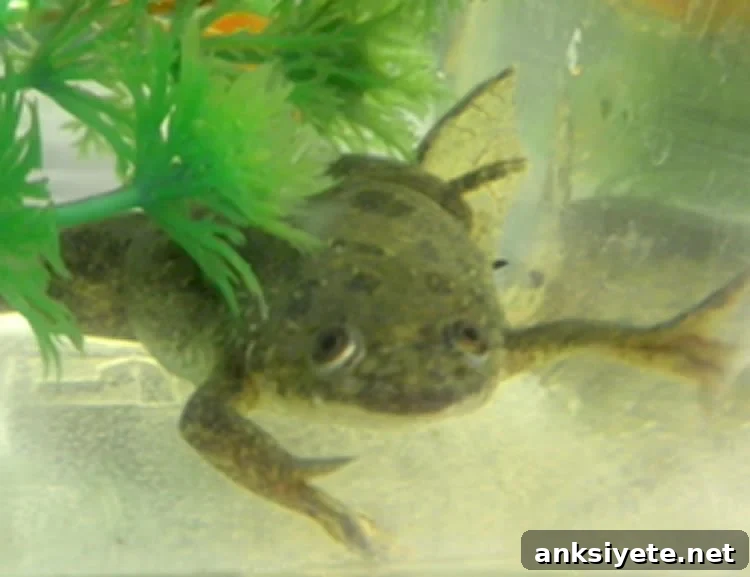
All vertebrates express optokinetic reflexes that fine-tune involuntary eye movements and preserve visual stability during motion. The OKR depends on rapid visual processing and an accurate estimate of scene velocity across a range of lighting conditions. To explore how parameters such as pattern structure, illumination, and contrast polarity affect this system, Straka and colleagues studied the African clawed frog, Xenopus laevis, a well-established neurobiological model. Using high-resolution video recordings of tadpole eye movements, they presented large-field motion stimuli consisting of dot patterns that moved back and forth.
The researchers observed that tadpoles executed larger-amplitude eye movements when the moving pattern consisted of white dots on a black background than when the same pattern used black dots on a white background. In other words, contrast polarity—bright objects against a darker background versus dark objects against a brighter background—had a pronounced effect on OKR performance. The fine details of contour shape or pattern structure, however, did not change this outcome.
To determine where this difference arises, the team measured activity in the optic nerve, which carries visual signals from the retina to brain centers that mediate eye movements. The optic nerve recordings revealed that white dots on a dark background produced higher-amplitude nerve impulse rates than did black dots on a bright background. These neural differences indicate that the disparity in motion perception is encoded at the level of the retina rather than being created later in the brain.
Importantly, the brain appears not to construct this contrast-dependent difference; rather, it relays the retinal impulse patterns directly to the motor pathways that control the eye muscles. As Straka explains, the retina’s stronger signaling for bright objects on darker backgrounds enhances the ability to track those objects, while the converse—dark objects on bright backgrounds—results in less effective tracking under the tested conditions.
The team suggests an ecological rationale for this bias. Tadpoles live in relatively turbid water and commonly feed on food items that appear brighter than their surroundings. The retinal preference for bright elements against dark backgrounds may therefore be an adaptive specialization linked to tadpole lifestyle and feeding ecology.
By contrast, adult frogs typically swim nearer the surface and feed at or above the water surface, where visual conditions differ. The researchers now hypothesize that during metamorphosis the retinal circuitry may be reorganized so that adult Xenopus become better at perceiving dark patterns against a brighter background. Ongoing experiments aim to test whether the relative efficiencies of pattern recognition and the associated retinal connectivity change during the transition from tadpole to adult frog.
“If adult frogs prove better at detecting dark patterns against bright backgrounds, it would demonstrate that modes of pattern recognition are tuned to the animal’s ecological niche and way of life,” Straka concludes.
Source: LMU
Publisher: NeuroscienceNews.com (organized content)
Image source: Image credited to AG Straka.
Original research: Gravot, C. M.; Knorr, A. G.; Glasauer, S.; Straka, H. “It’s not all black and white: visual scene parameters influence optokinetic reflex performance in Xenopus laevis tadpoles.” Journal of Experimental Biology. Published online November 2017. doi:10.1242/jeb.167700
Suggested citation formats available from the original publisher (MLA, APA, Chicago). Please consult the Journal of Experimental Biology for the definitive citation and the full research article.
Abstract
It’s not all black and white: visual scene parameters influence optokinetic reflex performance in Xenopus laevis tadpoles
The maintenance of visual acuity during active and passive motion depends on gaze-stabilizing reflexes that minimize retinal image slip. For the optokinetic reflex (OKR), large-field motion of the visual surround is the primary stimulus that drives eye movements. Properties of the moving visual environment influence motion perception and the estimation of image velocity. Using semi-intact preparations of mid-larval Xenopus laevis tadpoles, the authors examined how contrast polarity, intensity, contour shape and different motion patterns affect OKR performance and multi-unit optic nerve activity in response to large-field motion. At high contrast intensities, OKR amplitude was significantly greater for positive contrast scenes (bright dots on a dark background) compared with negative contrast scenes (dark dots on a bright background). This effect held for luminance-matched stimulus pairs and was independent of contour shape. The relative biases in OKR performance closely matched the pattern of optic nerve discharge evoked by the same stimuli. Additional recordings showed that retinal ganglion cell multi-unit responses to a single moving edge were strongly influenced by local light intensity, suggesting that the contrast-polarity bias in OKR performance arises directly from retinal motion-processing mechanisms and their connectivity.