
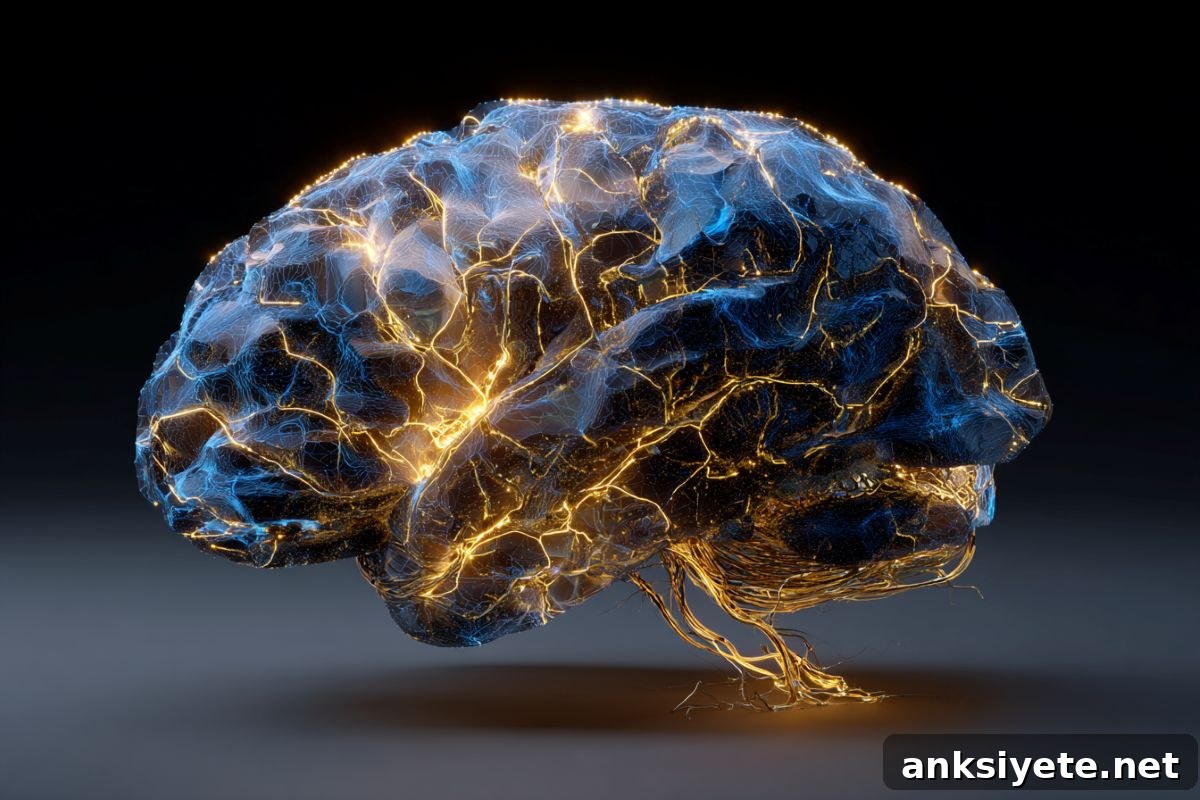
Summary: Every thought carries an energy cost. Neurons need an immediate burst of fuel to fire, and as we age the brain’s ability to manage that energy—its metabolic efficiency—can decline. A five-year, $3.3 million NIH-funded project will develop the first whole-brain theory describing how metabolic limitations contribute to cognitive decline and the early stages of Alzheimer’s disease.
Moving beyond a sole focus on amyloid plaques, the research team applies advanced multiscale modeling—from single-cell mouse experiments to human MRI—to identify how metabolites such as glucose, lactate, and creatine can predict Alzheimer’s risk long before clinical symptoms emerge.
Key Facts
- Metabolic Cost Theory: Neuronal signaling is tightly coupled to energy consumption. When the brain can no longer adapt its metabolism to meet the demands of aging, cognitive abilities start to fail.
- Beyond Amyloid: Rather than focusing only on protein aggregates, this work investigates neurometabolic coupling—the interactions between blood flow, oxygen delivery, and nutrient use across brain networks.
- Multiscale Modeling: The project integrates data across three biological levels:
- Microscopic: Measurements of red blood cell velocity and lactate dynamics at the cellular level in mice.
- Mesoscopic: Wide-field imaging of mitochondrial activity propagating through cortical networks.
- Macroscopic: Whole-brain functional connectivity analyzed in human cohorts using MRI.
- Bridging Species: A core aim is to close the gap between insights from mouse models and human disease by locating shared metabolic vulnerabilities that translate across species.
- Predictive Screening: The long-term objective is to develop a metabolic screening approach that identifies individuals at risk years or decades before memory loss becomes apparent.
Source: University of Pittsburgh
Like a lightbulb glowing the instant you flip a switch, every neuronal spike consumes energy. Bistra Iordanova, an expert in brain function, has long asked a simple but underexplored question: how does the brain’s energetic cost shape aging and cognitive decline?
“I’ve amassed extensive data on cerebral blood flow and neuronal activity,” Iordanova explains. “As I added measurements of glucose, lactate, creatine and other metabolites across aging subjects, the dataset became too complex for simple linear models. Traditional dimensionality-reduction methods didn’t capture the layered dynamics we were seeing.”
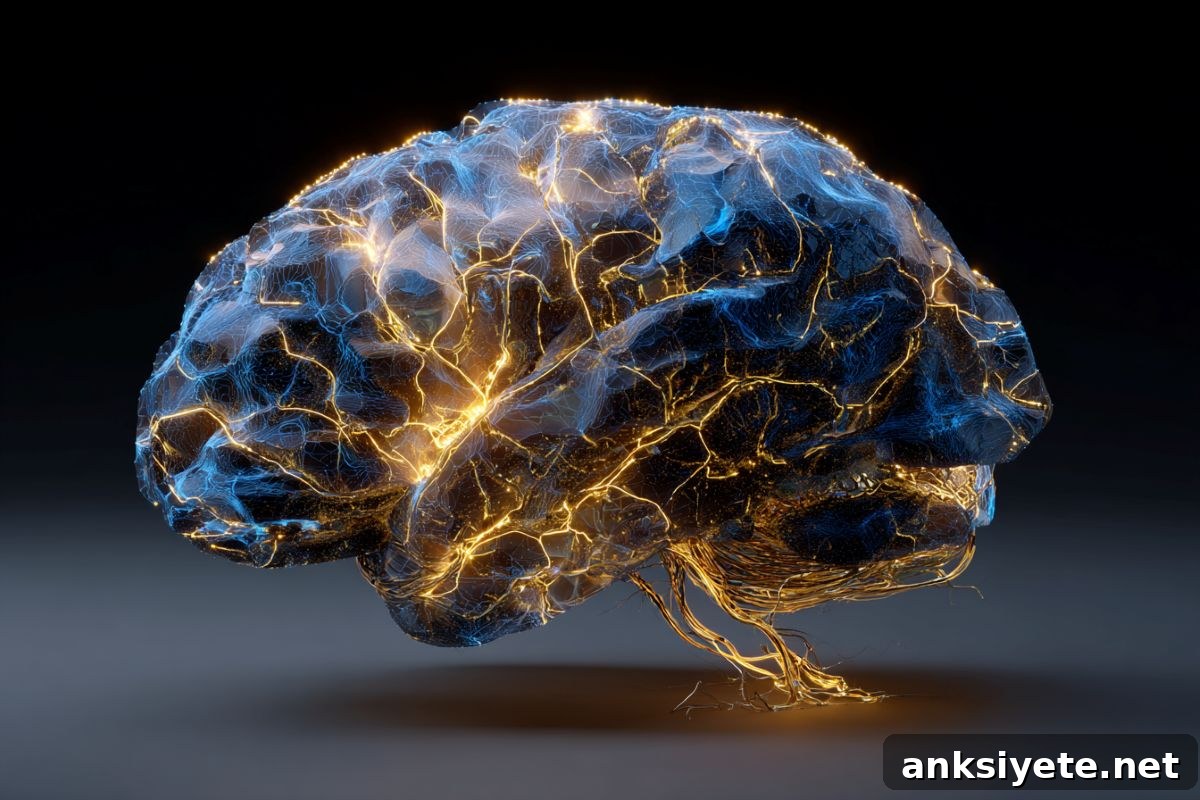
That complexity prompted a collaboration with Liang Zhan, an expert in electrical and computer engineering. Together they are leading a five-year, $3.3M R01 NIH project titled “Multiscale Models of Age-Specific Neurometabolic Coupling,” which aims to produce a whole-brain theoretical framework linking metabolism to cognitive aging.
Looking beyond blood flow
While many Alzheimer’s studies prioritize amyloid accumulation and hemodynamic measures as early indicators, this project targets metabolic shifts across brain networks. The team is examining how concentrations and dynamics of glucose, lactate, and creatine influence neuronal signaling and network stability.
“The brain consumes large amounts of glucose and oxygen as billions of cells coordinate activity,” Iordanova notes. “With aging comes reduced metabolic efficiency. Brain cells must adjust how they process energy to preserve network function—when that adaptive capacity is lost, cognitive decline may follow.”
Some people appear more vulnerable to metabolic failure because of genetics, lifestyle, or other risk factors. The team’s aim is to translate metabolic signatures into early-screening tools and metabolic therapies that could maintain neuronal flexibility before cognition is impacted.
A multiscale, multi-species strategy
The research follows a hierarchical plan. At the cellular level, two-photon microscopy will measure the relationship among red blood cell flow, neural firing, and local lactate fluctuations in late-onset Alzheimer’s mouse models. At the mesoscopic level, wide-field imaging will map how mitochondrial signals spread across cortical regions in mice. Finally, at the macroscopic level the team will integrate animal and human MRI data to evaluate how metabolic changes reshape whole-brain functional connectivity.
“Our goal is to tie cellular mechanisms observed in mice to noninvasive imaging signals in humans,” Iordanova says. “A robust, cross-scale dataset is essential to build a comprehensive network theory of brain aging.”
Zhan will construct the computational framework—drawing on graph theory and network modeling—to unify these diverse datasets. “Mouse and human brains differ structurally and developmentally,” he explains, “but neurodegenerative conditions disrupt network interactions across regions. Our models aim to identify universal principles of network vulnerability and resilience.”
Toward better treatments through interdisciplinary collaboration
A central motivation for the project is to improve translation from laboratory findings to clinical benefit. Although many interventions have shown promise in mice, translating those findings to human therapies has been difficult. By mapping how metabolic factors intersect with genetics, sex differences, and aging, the team hopes to surface biologically meaningful signals that can guide personalized prevention strategies.
“Translating mouse discoveries to human treatments is not straightforward,” Iordanova says. “If we can identify metabolic vulnerabilities that overlap with genetic risk, it may be possible to time interventions more effectively for the people most likely to benefit.”
The collaboration itself emerged from an interdisciplinary meeting and highlights the value of bringing engineers, biologists, and clinicians together. “Different fields often use distinct technical languages,” she adds. “Genuine cross-disciplinary work—when people sit together and build shared models—creates the most impactful advances.”
The interdisciplinary team also includes co-investigators Alberto Vazquez, Tao Jin and Alex Poplawsky from the School of Medicine, and Nicholas Fitz and Rebecca Deek from the School of Public Health at the University of Pittsburgh.
Funding: This project is supported by the National Institute on Aging (R01AG092661) for the period January 2026 through December 2030.
Key Questions Answered:
A: Amyloid plaques often appear after pathological processes have begun. The team proposes that metabolic dysfunction—an impaired “power grid”—can precede plaque formation. If cells cannot sustain energy-dependent cleanup and communication, downstream pathology may follow.
A: Diet influences substrate availability (glucose, lactate), but this research focuses on how brain cells process those fuels. Aging reduces cellular efficiency in converting fuel into neural work. The goal is therapies that preserve metabolic flexibility in aging neurons, independent of nutrient intake alone.
A: Mice and humans differ in brain structure, lifespan, and complexity. Using graph theory and multiscale models, the team aims to create a mathematical bridge that aligns cellular mouse data with human MRI measurements to discover the common rules governing brain aging.
Editorial Notes:
- This article was edited by a Neuroscience News editor.
- The underlying journal paper was reviewed in full.
- Additional context was provided by editorial staff.
About this sleep and neuroscience research news
Author: Anna Ligorio
Source: University of Pittsburgh
Contact: Anna Ligorio, University of Pittsburgh
Image: Image credited to Neuroscience News