
Summary: Memory difficulties that can begin in midlife may reflect a shift in the type of information the brain prioritizes when forming and retrieving memories, rather than a straightforward loss of brain function.
Source: McGill University.
Research offers new insight into what healthy brain aging looks like.
For many people, occasional lapses in remembering specific details — such as where an item was placed — start as early as the 40s. New research from McGill University suggests these changes may arise because the brain begins to pay attention to different kinds of information during memory formation and recall, not necessarily because brain function is failing.
Natasha Rajah, senior author of the study, Director of the Brain Imaging Centre at McGill University’s Douglas Institute and Associate Professor in McGill’s Department of Psychiatry, explains that this shift in focus can affect everyday tasks. “This change in memory strategy with age may have detrimental effects on day-to-day functions that place emphasis on memory for details such as where you parked your car or when you took your prescriptions,” she says.
Because brain changes linked to dementia can develop many years before symptoms appear, researchers are keen to distinguish which age-related brain changes are part of normal aging and which indicate disease. Most prior work has emphasized brain changes in later life, leaving midlife less well understood. “We know little about what happens at midlife in healthy aging and how this relates to findings in late life,” Rajah notes. “Our research was designed to address that gap.”
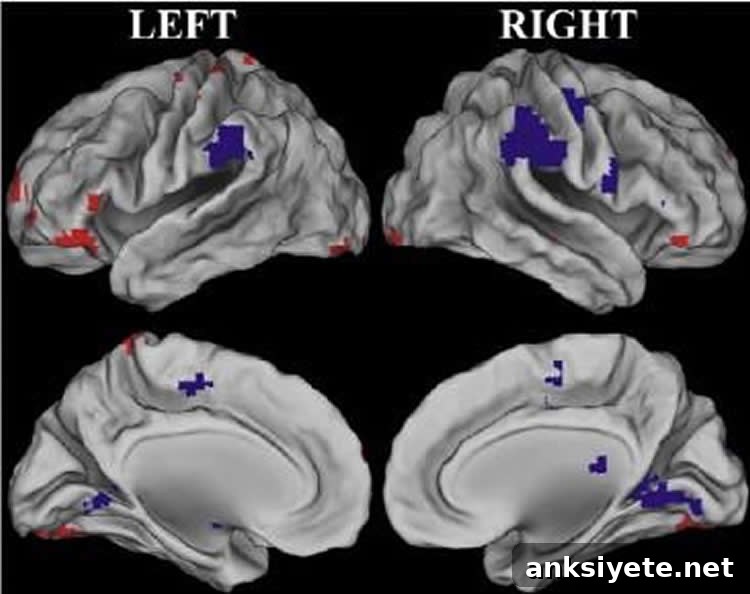
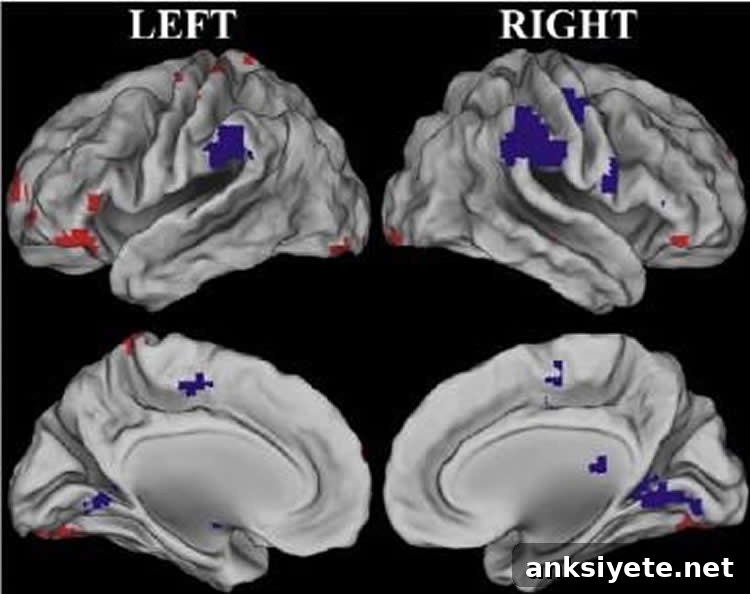
The study, published in the journal NeuroImage, examined 112 healthy adults aged 19 to 76. Participants viewed a series of faces and were later asked to recall two contextual details for each face: the spatial location on the screen (left or right) and the relative timing of presentation (earlier or later). Researchers used functional MRI (fMRI) to identify which brain regions were active during successful retrieval of those contextual details.
Results showed a clear difference in brain activation by age. Younger adults who succeeded at the task engaged the visual cortex, indicating focus on perceptual, external details. Rajah summarizes: “They are really paying attention to the perceptual details in order to make that decision.” In contrast, middle-aged and older adults showed less activation in visual regions during retrieval and greater activation in the medial prefrontal cortex, a region associated with self-referential thinking and internally focused information.
Although middle-aged and older participants performed worse on the specific task than younger participants, Rajah cautions against viewing this as simple impairment. “This may not be a ‘deficit’ in brain function per se, but reflects changes in what adults deem ‘important information’ as they age.” In other words, older participants were attending to different aspects of events — internal or self-related information — rather than external perceptual detail.
Rajah suggests a practical implication of these findings: older adults might improve memory for external details by deliberately shifting attention outward. “That may be why some research has suggested that mindfulness meditation is related to better cognitive aging,” she says. Mindfulness and other attention-training practices could help older adults prioritize perceptual information when the situation requires it.
Rajah and colleagues are also analyzing related data to explore whether sex or hormonal changes around midlife, such as menopause in women, influence these patterns of brain activity and memory focus. “At mid-life women are going through a lot of hormonal change. So we’re wondering how much of these results is driven by post-menopausal women,” she says.
Funding: The study was supported by the Canadian Institutes of Health Research and a grant from the Alzheimer’s Society of Canada.
Source: Cynthia Lee – McGill University
Image Source: Image credited to N. Rajah, McGill University.
Original Research: “Changes in the modulation of brain activity during context encoding vs. context retrieval across the adult lifespan” by E. Ankudowich, S. Pasvanis, and M.N. Rajah in NeuroImage. Published online June 14, 2016. doi:10.1016/j.neuroimage.2016.06.022
MLA: McGill University. “New Clue to How Lithium Works in the Brain.” NeuroscienceNews, 12 July 2016.
APA: McGill University. (2016, July 12). New Clue to How Lithium Works in the Brain. NeuroscienceNews.
Chicago: McGill University. “New Clue to How Lithium Works in the Brain.” NeuroscienceNews. (accessed July 12, 2016).
Abstract
Changes in the modulation of brain activity during context encoding vs. context retrieval across the adult lifespan
Age-related declines in context memory may stem from neural changes that affect both the encoding and retrieval of contextual details. While functional brain changes related to context memory are known to begin in midlife, the specific functional shifts across the adult lifespan are not well described. This study used fMRI to examine linear age-related changes in brain activity associated with successful encoding and retrieval of spatial and temporal details of faces in young, middle-aged and older adults. Multivariate behavioral partial least squares (B-PLS) analysis identified whole-brain activity patterns linked to age and to an age-by-memory-phase interaction. Key findings include: (1) reduced phase-related modulation in bilateral fusiform gyrus and frontal regions beginning in midlife and continuing into older age, (2) reduced modulation in bilateral inferior parietal lobule emerging in older age, and (3) altered phase-related modulation in left middle frontal gyrus and bilateral parahippocampal gyrus in older adults consistent with compensatory over-recruitment. The results indicate that reductions in context memory appear by midlife and reflect changes in perceptual recollection and fronto-parietal retrieval processes.
“Changes in the modulation of brain activity during context encoding vs. context retrieval across the adult lifespan” by E. Ankudowich, S. Pasvanis, and M.N. Rajah in NeuroImage. Published online June 14, 2016. doi:10.1016/j.neuroimage.2016.06.022