
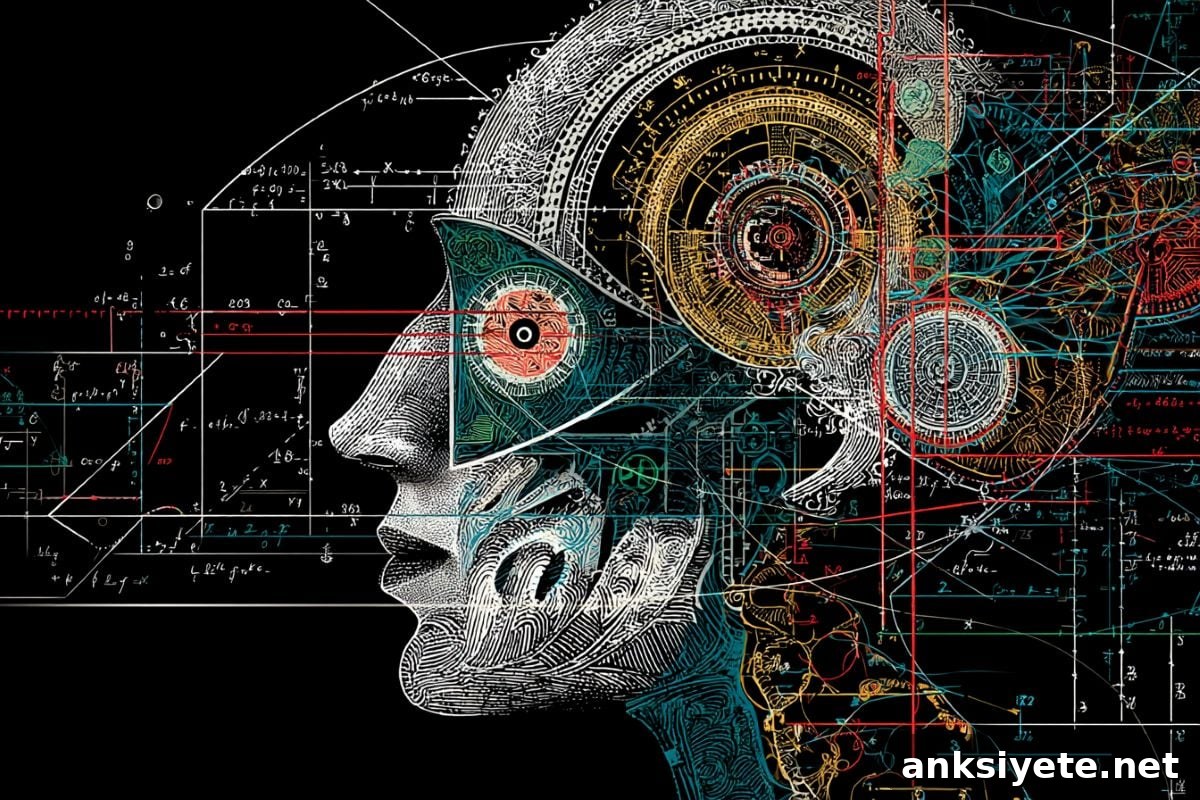
Summary: A bold, cross-disciplinary study will investigate how intense human emotions distort and reorganize memory. The project, titled Quantum Emotions, represents a major advance within the emerging field of quantum cognition by combining psychological research, cognitive neuroscience, and mathematical methods drawn from quantum theory.
Researchers will apply quantum-inspired mathematical models alongside behavioural and neural measures to explain why some emotionally charged moments remain vividly precise while others undergo temporal displacement or lose their sequential context. The goal is to develop predictive tools that capture the ways emotion alters memory precision and order.
Key Facts
- The Quantum Order Parallel: Standard psychological frameworks often struggle to explain why emotions can scramble the order of stored events. Quantum mathematics, which handles systems where the order of operations changes outcomes, provides an alternative formalism well suited to modeling these ordering effects in memory.
- Decoding Life’s Narrative: Temporal order gives memories structure and creates our life narrative. The project will identify behavioural signatures and the neural mechanisms that become active when emotional distress or joy causes memories to misalign or shift in sequence.
- Global Scientific Alliance: Led by Dr Barbara-Anne Robertson at Newcastle University, the team will collaborate with quantum cognition researchers in Japan and Sweden to build novel, empirically grounded cognitive models.
- Clinical and Societal Applications: Mapping the mathematical pathways that govern emotional memory sequencing could produce new tools for research into cognitive ageing, psychiatric diagnostics, and more accurate evaluation of eyewitness testimony in the criminal justice system.
- National Research Infrastructure: The £1.2M UKRI Cross‑Council grant funds community-building activities including workshops and training events designed to establish a UK network in Quantum Cognition and prepare for future large-scale research bids.
Source: Newcastle University
Overview
Emotions are powerful modifiers of memory. While some emotionally charged events are recalled with remarkable clarity, others become distorted, lose temporal context, or are perceived out of sequence. The Quantum Emotions project brings together psychology, cognitive neuroscience, and quantum mathematical frameworks to address this paradox: how and why emotion reshapes the order and precision of our recollections.
Research aims and approach
Temporal order provides the backbone of autobiographical memory and underlies coherent storytelling about our lives. Yet emotional intensity can reorganize that ordering in ways traditional models find difficult to predict. The Newcastle team will use quantum formalism as a mathematical language to model how the order of events changes memory outcomes. Unlike classical models where sequence is commutative, quantum-inspired approaches naturally capture situations in which the sequence of observations or encodings produces different memory states.
The research will combine behavioral experiments, cognitive tasks, and neuroimaging to identify how specific emotional states influence precision and temporal sequencing in memory. By testing quantum-style models against empirical data, the team aims to produce formal, testable explanations of when and how emotional memories become hyper-precise or temporally scrambled.
Collaboration and capacity building
In addition to laboratory research, the grant supports a program of workshops and events to train early-career researchers and build a national research community in Quantum Cognition. These activities will foster interdisciplinary collaboration between psychologists, neuroscientists, and mathematicians, equipping a new generation of scientists with the tools needed to apply quantum-inspired models to cognitive science problems.
Key Questions Answered:
A: No. The project does not claim that brain tissue hosts physical quantum particles or functions as a literal quantum computer. Instead, researchers are applying quantum mathematics as a powerful formal toolkit. These mathematical principles model situations where the order of events changes the result—an aspect shared by human memory—so the equations serve as a more flexible mirror for complex cognitive processes than some classical approaches.
A: Intense emotional states trigger neurochemical and attentional processes that influence how experiences are encoded and stored. While traditional methods can show that distortion occurs, the Quantum Emotions project seeks to predict precisely how and why specific memories retain exceptional clarity while the surrounding timeline shifts, by applying quantum-inspired models to behavioral and neural data.
A: Eyewitness memory is particularly vulnerable during emotionally charged crimes: witnesses may recall details like a weapon with high precision while misordering events. By providing mathematical tools that map how trauma reshapes temporal recall, this research can help forensic psychologists and legal professionals evaluate the reliability of testimony and interpret inconsistencies with greater scientific grounding.
Editorial Notes:
- This article was edited by a Neuroscience News editor.
- Journal paper reviewed in full.
- Additional context added by staff.
About this memory and quantum neuroscience research news
Author: Helen Rae
Source: Newcastle University
Contact: Helen Rae – Newcastle University
Image: The image is credited to Neuroscience News