
Evidence shows that the farther birds migrate, the more new neurons appear in parts of their brains linked to navigation and social coordination.
New research published in Scientific Reports indicates that birds undertaking longer migratory journeys incorporate a greater number of newly generated neurons into brain regions involved in navigation, spatial orientation, and social behavior. The study compares two migratory species — reed warblers and turtle doves — and finds a clear relationship between the distance traveled and neuronal recruitment, with species-specific patterns in which brain areas are most affected.
For decades scientists have recognized that many adult animals continue to generate new neurons, a process that supports brain plasticity and the ability to adapt to changing environments. After birth, these neurons migrate to target brain regions where they can contribute to learning, memory, and sensory processing. The current study explores whether the cognitive demands of migration — especially exposure to diverse landscapes and navigational challenges — are associated with increased incorporation of new neurons in relevant neural circuits.
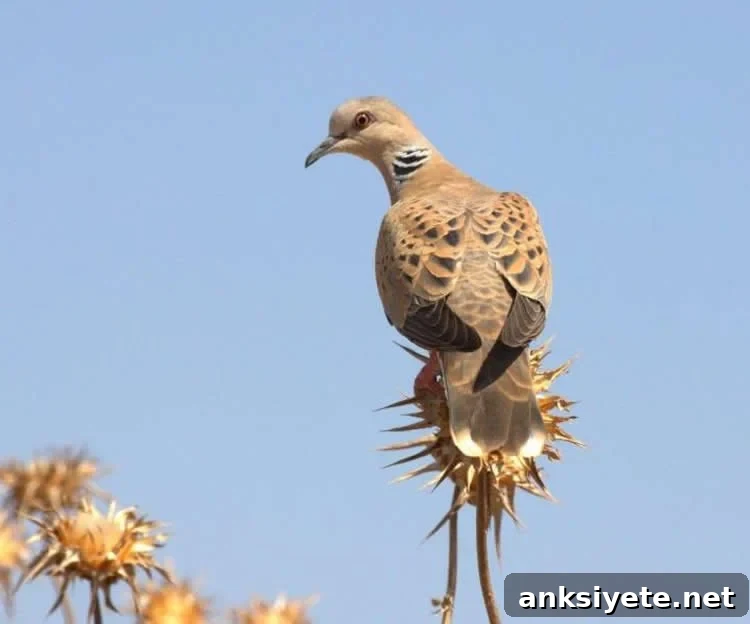
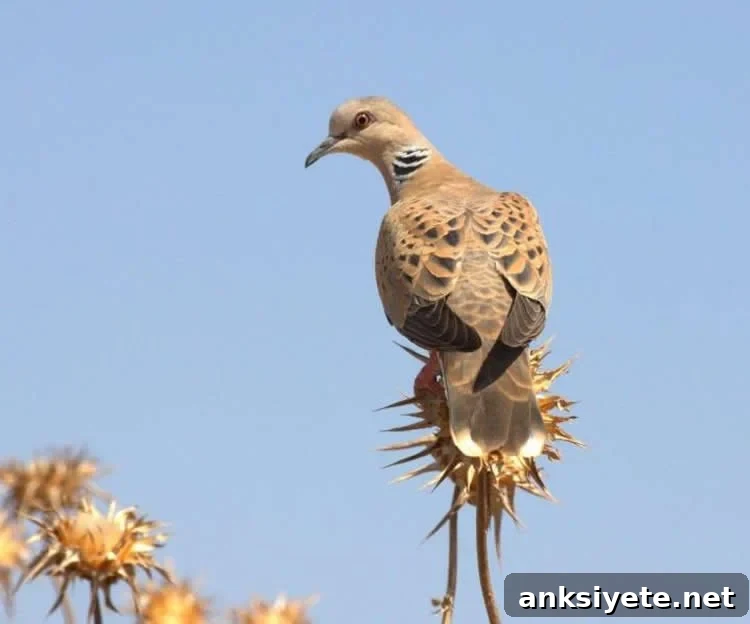
An international team of researchers, including members from the University of Oxford and Tel Aviv University, examined two Palearctic migrants on their spring return from Africa: reed warblers (Acrocephalus scirpaceus) and turtle doves (Streptopelia turtur). The scientists captured 12 turtle doves and six reed warblers in the Jordan Rift Valley in Israel. To estimate how far each bird had flown since wintering in Africa, the team analyzed stable isotope ratios in the birds’ feathers (δ2H and δ13C). Because hydrogen and carbon isotope values in water, soil, and vegetation vary geographically, feathers grown in different parts of Africa carry distinct isotopic signatures. By matching feather isotopes to African isotope maps, the researchers estimated individual migration distances without needing to track each bird directly.
To quantify new neuronal recruitment, the researchers injected the captured birds with a neuronal birth marker and later examined several brain regions known to participate in navigation and spatial processing. Brain tissue was stained selectively to identify cells that had been born after the marker injection; cells stained at both time points were classified as newly incorporated neurons. The two focal regions were the hippocampus, widely implicated in spatial memory and navigation, and the nidopallium caudolateral, associated with higher-order processing and social communication in birds.
Results showed a positive correlation between the estimated migration distance and the proportion of new neurons in these brain regions. However, the pattern differed by species. In reed warblers — nocturnal migrants that often travel alone — new neurons were concentrated primarily in the hippocampus, which aligns with the high navigational demands of solitary long-distance migration. In contrast, turtle doves — which typically migrate in flocks — showed increased neuronal recruitment mainly in the nidopallium caudolateral, suggesting that social coordination and communication during group migration may drive plasticity in regions supporting those functions.
Dr. Uri Roll of the School of Geography and the Environment at the University of Oxford commented that these preliminary findings open an intriguing line of inquiry: routine behaviors and ecological demands may shape where and how the brain adapts. Prior studies have linked neuronal recruitment to behaviors such as food caching, where animals show increased neuron production in memory-related centers. This study expands that idea to migration, proposing that birds facing greater navigational complexity recruit more new neurons in navigation-related brain regions, while birds emphasizing flock cohesion recruit neurons in areas supporting social interaction.
The research was led by Tel Aviv University in collaboration with the University of Oxford, the International Atomic Energy Agency, and additional partners in Israel. Funding was provided by the National Institute for Psychobiology in Israel and the Open University Research Fund.
Source: University of Oxford
Image credit: Guy Barkan
Original research: “Possible linkage between neuronal recruitment and flight distance in migratory birds” by Shay Barkan, Uri Roll, Yoram Yom-Tov, Leonard I. Wassenaar and Anat Barnea in Scientific Reports. Published online February 24, 2016. doi:10.1038/srep21983
Abstract
Possible linkage between neuronal recruitment and flight distance in migratory birds
Adult neurogenesis is believed to support brain plasticity and help animals adapt to novel or changing environments. Because long-distance migration exposes birds to more varied spatial information and navigational challenges, the authors hypothesized that greater migration distance would correlate with increased recruitment of new neurons into brain regions involved in navigation. To test this, they examined reed warblers and turtle doves caught in Israel while returning from Africa. Birds received a neuronal birth marker, and later brain tissue was inspected for newly formed neurons in the hippocampus and nidopallium caudolateral. Migration distance for each individual was estimated by matching feather isotopic values (δ2H and δ13C) to African isotope basemaps. The findings indicate a positive relationship between migration distance and neuronal recruitment: in reed warblers, new neurons increased in the hippocampus, while in turtle doves the increase occurred primarily in the nidopallium caudolateral. This multidisciplinary approach sheds light on how the avian brain adapts to different migratory demands.