
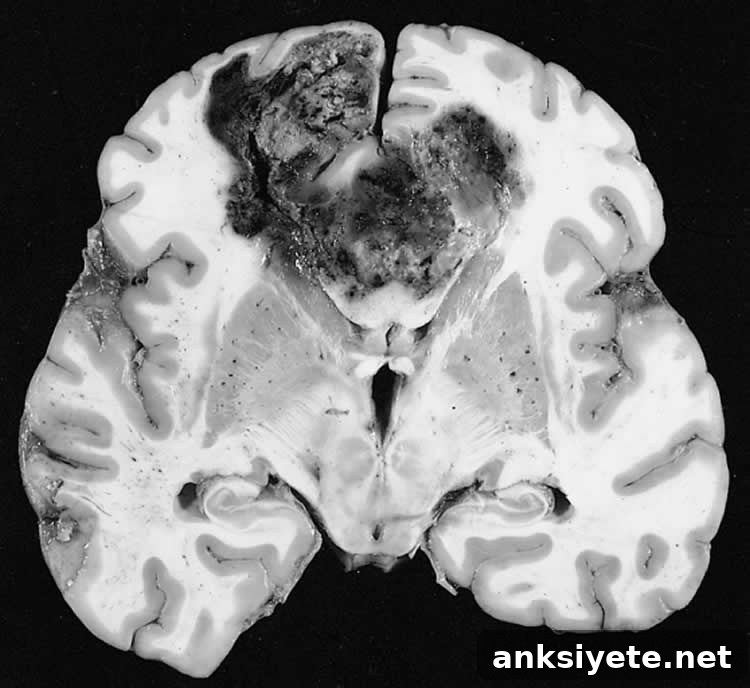
DNA mutations can drive cancer, yet in certain cases a higher number of mutations may predict a better outcome.
A comprehensive genomic study led by Yale researchers, analyzing more than 700 brain tumors, has identified a distinct subtype of glioblastoma (GBM) — the most aggressive form of brain cancer — that carries an unusually large number of tumor-specific DNA mutations. Unlike most GBMs, which typically contain only a few dozen mutations, this subgroup contains thousands of mutations and is linked to longer patient survival.
The research, published in the journal Neuro-Oncology, suggests that recognizing and characterizing these hypermutated or ultramutated glioblastomas could open the door to more personalized treatment strategies, including targeted immunotherapies, according to Murat Günel, professor and chair of neurosurgery at Yale and leader of the Brain Tumor Research Program at Yale and Smilow Cancer Hospital.
“We have translated powerful genomic technologies, once limited to research settings, into clinical practice to analyze individual cancers,” said Günel, who is also a professor of genetics and a member of the Yale Cancer Center. “These methods let us map the molecular landscape of a tumor in detail, identify specific vulnerabilities, and use that information to guide precision treatment options in our Recurrent Brain Tumor Treatment Program.”
While typical glioblastomas often display fewer than 100 mutations, the newly described ultramutated tumors showed an average of nearly 10,000 somatic mutations. This paradoxical association — where a greater mutation burden can correlate with improved survival — has been observed in other cancers such as colorectal and some gynecological malignancies. One leading explanation is that tumors with many mutations produce more abnormal proteins that can make them more visible to the immune system, increasing the likelihood of an anti-tumor immune response.
The study also highlights that standard treatments can sometimes influence mutation burden. In particular, temozolomide, the common first-line chemotherapy for GBM, has been linked to the emergence of hypermutation in some recurrent tumors. This observation raises important questions about how treatment choices affect tumor evolution and how those changes might be exploited therapeutically.
Günel noted that even when a tumor becomes highly mutated, the natural immune response may still be insufficient to eradicate the cancer. However, the researchers suggest that checkpoint inhibitor immunotherapies — a newer class of drugs that amplify the immune system’s ability to attack cancer — could potentially be more effective against these hypermutated GBMs. Incorporating detailed molecular profiling into the design of clinical trials may help identify patients most likely to benefit from such strategies.
Zeynep Erson-Omay and Ahmet Okay Çağlayan from Yale are listed as co-first authors on the paper.
Funding: The Gregory Kiez and Mehmet Kutman Foundation provided financial support for the research.
Article written by Bill Hathaway
Source: Yale News (news.yale.edu)
Research Article: Abstract for “Somatic POLE mutations cause an ultramutated giant cell high-grade glioma subtype with better prognosis” by E. Zeynep Erson-Omay and colleagues in Neuro-Oncology, first published online March 3, 2015; doi: 10.1093/neuonc/nov027
Related Resource: Yale Program in Brain Tumor Research (medicine.yale.edu/braintumorresearch)
Abstract
Background
Malignant high-grade gliomas (HGGs), including glioblastoma multiforme, display marked clinical and genomic heterogeneity. Despite advances in care, overall survival and treatment response remain poor. To better understand how genomic features relate to clinical behavior and to identify distinct molecular subgroups with improved prognosis, the authors performed a comprehensive genomic analysis of a large cohort of HGGs.
Methods
The study compared 720 exome-sequenced gliomas — 136 samples from Yale and 584 from The Cancer Genome Atlas (TCGA) — evaluating genomic, histological, and clinical characteristics.
Results
The investigators identified a distinct subgroup of six high-grade gliomas (four adults and two children) with a dramatically increased number of somatic mutations (mean = 9,257.3 vs. 76.2; P = .002). All ultramutated tumors carried somatic mutations in the exonuclease domain of the polymerase epsilon gene (POLE) and shared a characteristic genetic profile with genomic stability accompanied by an excess of C-to-A transversions. Histologically, these tumors featured multinucleated giant or bizarre cells and, in some cases, a prominent infiltrate of immune cells. One adult patient and both pediatric patients also harbored homozygous germline mutations in the mismatch repair gene MSH6. In adults, POLE-mutant tumors occurred in patients younger than 40 years and were associated with longer progression-free survival.
Conclusions
The authors describe a genomically and histologically distinct subgroup of HGGs defined by somatic POLE mutations and an ultramutated profile, which correlates with improved prognosis. Recognizing these molecular and pathological phenotypes has implications for more precise classification of high-grade gliomas and for developing targeted therapeutic strategies, including immunotherapy approaches tailored to mutation burden and tumor genetics.