
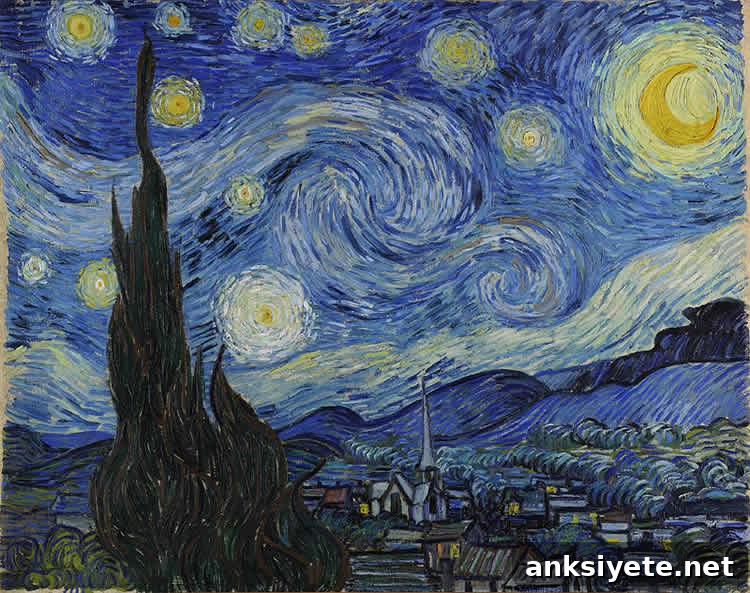
Summary: Labeling an image as “art” alters people’s responses on both neural and behavioral levels, a new pilot study reports.
Source: ECNP
A pilot study by researchers at Erasmus University Rotterdam suggests that simply telling people an image is an artwork changes how they respond to it, both in their reported preferences and in brain activity. The findings indicate that context—whether a viewer expects a scene to be “art” or to depict real events—can implicitly modulate emotional processing. This supports a longstanding aesthetic idea, articulated by Immanuel Kant in his Critique of Judgment, that viewers adopt a type of emotional distance when they encounter art.
Many people recognize that our conscious emotional reactions differ when we know something is fictional or artistic rather than literally real. The Erasmus team set out to test whether that distinction also appears in automatic, unconscious brain responses.
In two related experiments, twenty-four student volunteers were asked to view a series of affective images while the researchers recorded brain activity with electroencephalography (EEG). Half of the images were pleasant and half were unpleasant. In the first experiment participants were told that the pictures were either works of art or photographs of real events. After viewing each image, participants rated it for likability and attractiveness.
The scientists focused on a neural signal called the Late Positive Potential (LPP), a well-established EEG component that reflects motivated attention and emotion processing roughly 600–900 milliseconds after a stimulus appears. The researchers found that LPP amplitude was larger when participants believed the images depicted real events than when they believed the same images were works of art. Behaviorally, images labeled as artworks were also rated as more likable than when those same images were presented as photographs of reality.
Lead researcher Noah van Dongen (Erasmus University, Rotterdam) explained: “When people expect they are looking at an artwork, their brains respond differently than when they expect reality. On a neural level, the emotional response appears subdued in the art context. One interpretation is that viewers ‘distance’ themselves from the content in order to inspect form, color, and composition, rather than react primarily to the depicted events.”
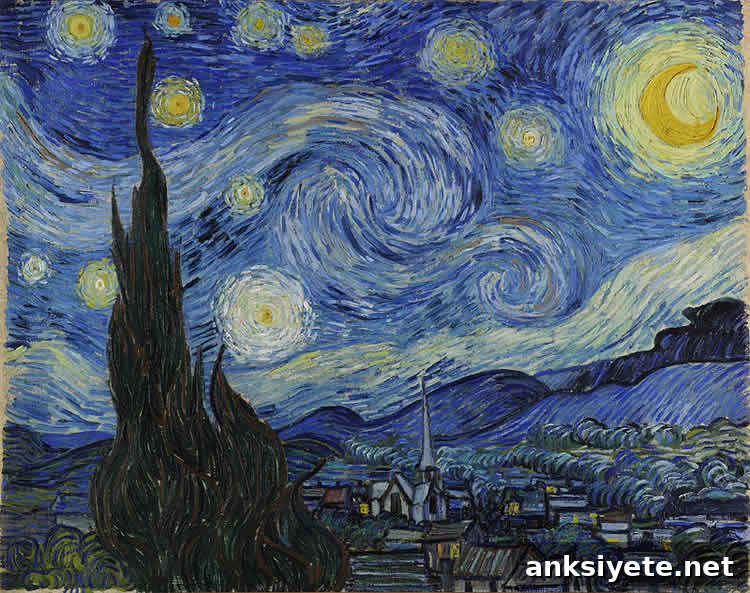
In a second experiment, the same number of volunteers viewed the images under three different contextual labels: photographs of real events, works of art (including paintings, digital renderings, and staged-photo works), or scenes from movies and documentaries. When this additional, ambiguous context was introduced, the previously observed modulation of the LPP by art-versus-reality context was no longer present.
Van Dongen commented on the more complex pattern: “The modified experiment suggests the contextual effect is sensitive to ambiguity and informational load. Too many or unclear contextual cues may attenuate the brain’s implicit emotion-regulation response. These pilot data indicate that automatic regulation of emotional response depends on perceived context, but further work is necessary to clarify the boundary conditions and mechanisms.”
The study tests an idea traced back to Immanuel Kant’s Critique of Judgment (1790), which proposed that perceivers need some emotional distance to properly appreciate artworks—even when the artwork depicts disturbing or emotionally charged events.
Research details: The experimental paper is titled “Implicit emotion regulation in the context of viewing artworks: ERP evidence in response to pleasant and unpleasant pictures” by Noah N.N. Van Dongen, Jan W. Van Strien, and Katinka Dijkstra, published in Brain and Cognition (online August 2016). The authors report that presenting IAPS images as works of art increased likability ratings and reduced late LPP amplitudes (600–900 ms post-stimulus), consistent with implicit emotion regulation induced by an art context. DOI: 10.1016/j.bandc.2016.06.003
Conference presentation: The study was scheduled to be presented at the ECNP annual congress (September).
Implicit emotion regulation in the context of viewing artworks: ERP evidence in response to pleasant and unpleasant pictures
Presenting affective images as artworks can change how people judge and emotionally react to them. Aesthetic theories propose that viewers distance themselves emotionally to appreciate challenging or disturbing imagery in art. To examine whether an art context triggers implicit emotion regulation, the authors presented pleasant and unpleasant IAPS pictures labeled either as “works of art” (paintings, digital renderings, staged photographic scenes) or as “photographs depicting real events.” They measured Late Positive Potentials (LPPs) and likability ratings. Consistent with aesthetic theory and prior findings, images presented as artworks received higher likability ratings. Moreover, late LPP amplitudes (600–900 ms after picture onset) were attenuated when images were framed as art, providing electrophysiological evidence for implicit emotion regulation induced by an art context.
Please cite the original research article for full methodological details and results.