
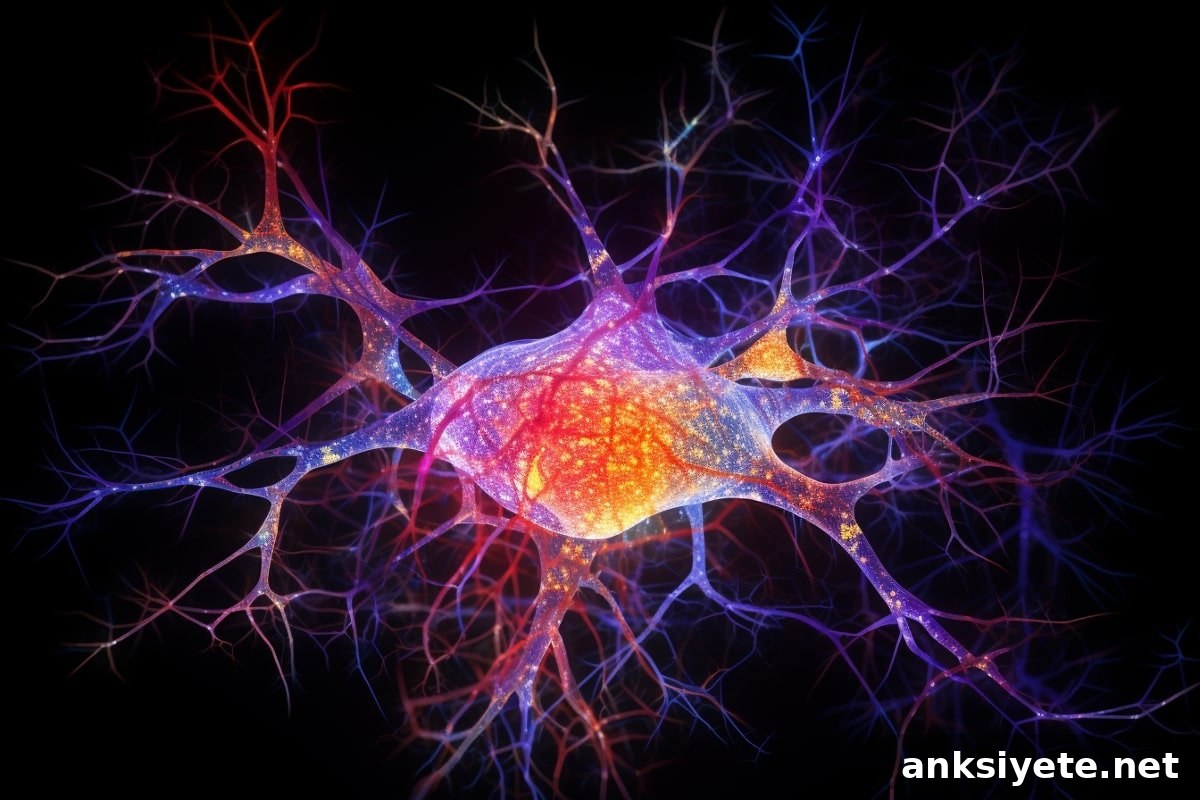
Summary: Regular physical activity—especially running—can rewire the aging brain and help preserve memory. New research shows long-term running maintains the connectivity of neurons born in early adulthood, supporting cognitive health into middle age and beyond.
Researchers report that sustained running throughout adulthood keeps adult-born hippocampal neurons functionally integrated in the brain’s memory networks, potentially delaying age-related memory decline and neurodegeneration. The protective effect appears particularly strong for neurons generated in early adulthood, whose connections can still be modified by exercise in middle age.
These results reinforce the important role of regular physical exercise in maintaining hippocampal structure and function as we grow older.
Key facts:
- Long-term running increases the number of adult-born hippocampal neurons and strengthens their synaptic connections, supporting memory retention.
- Neurons born in early adulthood remain present and can stay integrated into memory circuits; their wiring can be reshaped by midlife physical activity.
- Chronic exercise started in young adulthood and continued into middle age helps preserve memory performance during aging, highlighting the value of making regular exercise part of daily life.
Source: FAU
Background: Aging commonly brings cognitive decline, with the hippocampus and surrounding cortices among the first brain regions affected. These areas are essential for learning, episodic memory encoding, contextual memory and spatial navigation. Age-related memory deficits are linked to reduced hippocampal volume and loss of synaptic connectivity between the hippocampus and the perirhinal and entorhinal cortices.
A growing body of evidence shows that physical activity can slow or prevent these structural and functional losses. A collaborative study by Florida Atlantic University (FAU) and CINVESTAV in Mexico City provides new insight into how long-term running alters neural circuitry to support memory as animals age.
In the study, scientists examined mice that had been allowed to run over extended periods, focusing on hippocampal neurons that were born when the animals were young adults and examined later in middle age. The results indicate that continued running preserves the circuitry of these “old” adult-born neurons, keeping them wired into networks important for memory.
Adult-born neurons in the dentate gyrus are known to contribute to hippocampus-dependent memory. Traditionally, investigators have emphasized a brief ‘critical period’ roughly three to six weeks after neuron birth, when these cells exhibit heightened synaptic plasticity. While many adult-born neurons persist for months, it was previously unclear whether those generated in early adulthood remain integrated into hippocampal circuits later in life and whether their connections can be modified by exercise during middle age.
To answer these questions, the research team used an advanced monosynaptic tracing technique. They labeled proliferating dentate gyrus progenitor cells in two-month-old mice with a retrovirus carrying a fluorescent reporter and a receptor that enabled later selective tracing. More than six months after initial labeling—when the animals were middle-aged—the investigators injected a modified rabies virus to identify and quantify direct inputs onto the labeled, now “old,” adult-born neurons.
Published in the journal eNeuro, the study demonstrates that long-term running substantially remodels the network of neurons generated in young adult animals by middle age. Key network changes included increased input from hippocampal interneurons and strengthened afferent connections from subiculum and entorhinal cortex, regions that provide contextual and spatial information crucial for memory. Importantly, exercise prevented loss of input from the perirhinal cortex, which is linked to recognition and pattern separation capabilities.
Enhanced interneuron input likely helps curb age-related hippocampal hyperexcitability, while stronger subicular and entorhinal projections may boost spatial and contextual memory. According to the authors, these connectivity changes could underlie improvements in pattern separation—the ability to distinguish similar events or environments—an early vulnerability in age-related memory decline.
Interpretation: Long-term running appears to both increase the survival of adult-born neurons and modify their synaptic network so they remain functionally relevant during aging. These adaptations provide a plausible mechanism by which chronic exercise begun in young adulthood and sustained into middle age helps preserve memory.
Quotes: Henriette van Praag, Ph.D., corresponding author and associate professor of biomedical science at FAU’s Schmidt College of Medicine, noted that long-term exercise “profoundly benefits the aging brain” by enhancing survival and network integration of adult-born neurons. Co-author Carmen Vivar, Ph.D., emphasized that running may improve pattern separation and, therefore, reduce early signs of memory decline.
Co-authors include Ben Peterson, Ph.D.; Alejandro Pinto; and Emma Janke. Funding was provided in part by the FAU Stiles-Nicholson Brain Institute, the Jupiter Life Sciences Initiative, and the Fondo de Investigación Científica y Desarrollo Tecnológico del Cinvestav.
About this exercise and neurogenesis research news
Author: Gisele Galoustian
Source: FAU
Contact: Gisele Galoustian – FAU
Image: The image is credited to Neuroscience News
Original research: Open access. “Running throughout Middle-Age Keeps Old Adult-Born Neurons Wired” by Henriette van Praag et al., published in eNeuro.
Abstract
Running throughout Middle-Age Keeps Old Adult-Born Neurons Wired
Exercise may prevent or delay age-related memory loss and neurodegeneration. In rodents, voluntary running increases the number of adult-born neurons in the dentate gyrus of the hippocampus and is associated with improved synaptic plasticity and memory. However, whether adult-born neurons remain fully integrated in hippocampal networks during aging—and whether long-term running alters their connectivity—was not well understood.
To investigate, the authors labeled proliferating dentate gyrus progenitor cells in two-month-old mice and, more than six months later, used a monosynaptic retrograde rabies virus tracer to selectively map inputs to those labeled neurons. They quantified direct afferent inputs within the hippocampus and related cortical areas and found that long-term running substantially reshapes the network of neurons generated in young adulthood. Exercise increased interneuron input to old adult-born neurons, which may reduce age-related hyperexcitability, preserved perirhinal inputs, and enhanced contributions from subiculum and entorhinal cortex—areas critical for contextual and spatial memory—thereby maintaining the wiring of these neurons within memory-relevant circuits during aging.