Variation in Human Olfactory Receptors and Its Impact on Smell Perception
Not every nose perceives scents the same way. New research shows that as much as 30 percent of the human olfactory receptor repertoire can differ between two individuals, and these differences help explain why smells are perceived with varying intensity, quality and pleasantness.
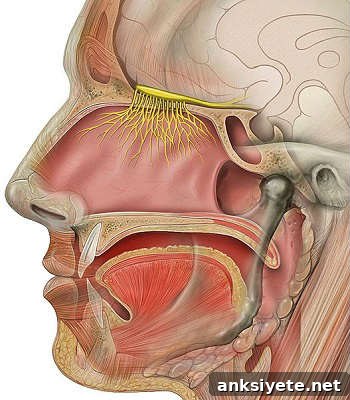
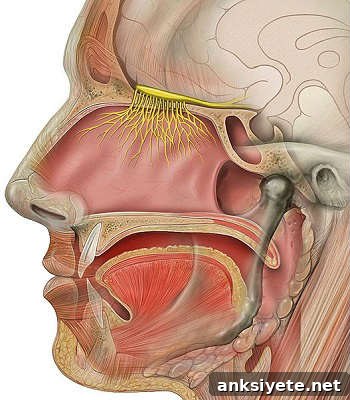
Humans have roughly 400 distinct types of olfactory receptor proteins—specialized sensors in the nose that work together to detect the vast array of odors we encounter. Each receptor contributes to a complex activation pattern that encodes both an odor’s intensity and its qualitative character (for example, whether a scent smells floral, smoky, or sweet).
“Understanding how this large array of receptors encodes odors is a challenging task,” said Joel Mainland, PhD, the study’s lead author and a molecular biologist. The receptor activation pattern must represent tens of thousands of different odors, and scientists are still uncovering how these patterns are translated into the neural signals our brain interprets as specific smells.
One added layer of complexity is that each of the roughly 400 receptor types can exist in several slightly different forms. Small changes in the amino acid sequence of a receptor produce variants that respond differently to odor molecules. Because variants are distributed across the population, almost everyone carries a unique combination of receptor variants—so almost everyone smells the world slightly differently.
To measure how much human olfactory receptors vary and to connect that variation with perception, the research team used high-throughput functional assays and human psychophysics. The results, published in Nature Neuroscience, represent a major step toward understanding how receptor-level differences shape odor intensity, pleasantness and quality.
The researchers cloned 511 known variants of human olfactory receptors and expressed those variants in host cells that are easy to grow in the laboratory. They then tested each receptor variant against a panel of 73 odor molecules to see which variants responded. From this screen, 28 receptor variants were identified that responded to at least one of the tested odor molecules.
In parallel, the team examined the DNA sequence of 16 olfactory receptor genes across many individuals and found substantial genetic diversity in these discrete receptors. Using mathematical modeling to extrapolate from the experimentally characterized receptors and the observed genetic variation, Mainland and colleagues estimate that two randomly selected individuals will differ in about 30 percent of their olfactory receptors—roughly 140 out of the 400 receptor types will respond differently between the two people.
The study also demonstrates how variation in a single receptor can influence perception. The researchers focused on the receptor OR10G4 and analyzed how different OR10G4 variants affected human responses to guaiacol, a compound commonly described as having a smoky aroma. Variants of OR10G4 were linked to differences in perceived intensity and pleasantness of guaiacol, showing a direct connection between receptor genetics and how a specific odor is experienced.
Building on these findings, follow-up work is currently correlating the full olfactory receptor repertoires of hundreds of people with their psychophysical responses to many odorants. Those larger data sets will allow the team to identify additional cases in which changes in single receptors alter human odor perception, and to map which receptors contribute to particular odor qualities.
Longer-term, the researchers envision decoding how receptors collectively encode molecules well enough to predict or recreate odors by manipulating receptor activity directly. “In essence, this would allow us to ‘digitize’ olfaction,” Mainland explained—an outcome that could transform how scents are characterized, transmitted, and reproduced.
Research team and funding notes
The study was led by Joel D. Mainland, with contributions from researchers at Monell Chemical Senses Center, The Rockefeller University, and Duke University Medical Center. Other contributors included Casey Trimmer, Lindsey L. Snyder, Andrew H. Moberly, Andreas Keller, Yun R. Li, Ting Zhou, Kaylin A. Adipietro, Wen Ling L. Liu, Hanyi Zhuang, Senmiao Zhan, Somin S. Lee, Abigail Lin, and Hiroaki Matsunami.
The research received support from the National Institute on Deafness and Other Communication Disorders (NIDCD) and other funding sources, and used core resources supported by institutional grants. Portions of the work were also supported through collaborative programs and initiatives focused on advanced sensory technologies.
Contact: Leslie Stein — Monell Chemical Senses Center
Source: Monell Chemical Senses Center press release
Original Research: Nature Neuroscience, “The missense of smell: functional variability in the human odorant receptor repertoire” (published online December 2013)
Keywords: olfactory receptors, smell perception, odor variability, human olfaction, OR10G4, guaiacol, sensory genetics