
Summary: Researchers report a convolutional neural network that analyzes FDG-PET brain scans to identify biological signs of Alzheimer’s disease years before clinical symptoms appear.
Source: RSNA.
Artificial intelligence enhances brain imaging’s ability to predict Alzheimer’s disease, a study in Radiology finds.
Early diagnosis of Alzheimer’s disease is critical because treatments and lifestyle interventions are most effective when applied at the earliest stages. Detecting the disease before clear clinical symptoms appear remains a major challenge. Research indicates that metabolic changes in the brain—reflected by altered glucose uptake—precede visible atrophy, but these metabolic differences are often subtle and diffuse, making them difficult for clinicians to recognize on routine scans.
“Patterns of glucose uptake in the brain are subtle and spread across regions rather than confined to a single marker,” said Jae Ho Sohn, M.D., a co-author from the Radiology & Biomedical Imaging Department at the University of California, San Francisco (UCSF). “While clinicians excel at spotting specific biomarkers, metabolic signals require a broader, more sensitive approach.”
The study’s senior author, Benjamin Franc, M.D., also at UCSF, engaged a multidisciplinary team from the Big Data in Radiology (BDRAD) research group to apply deep learning to FDG-PET scans. Deep learning, a subset of artificial intelligence in which models learn discriminative features directly from data, can identify complex patterns that are difficult to define by human observers.
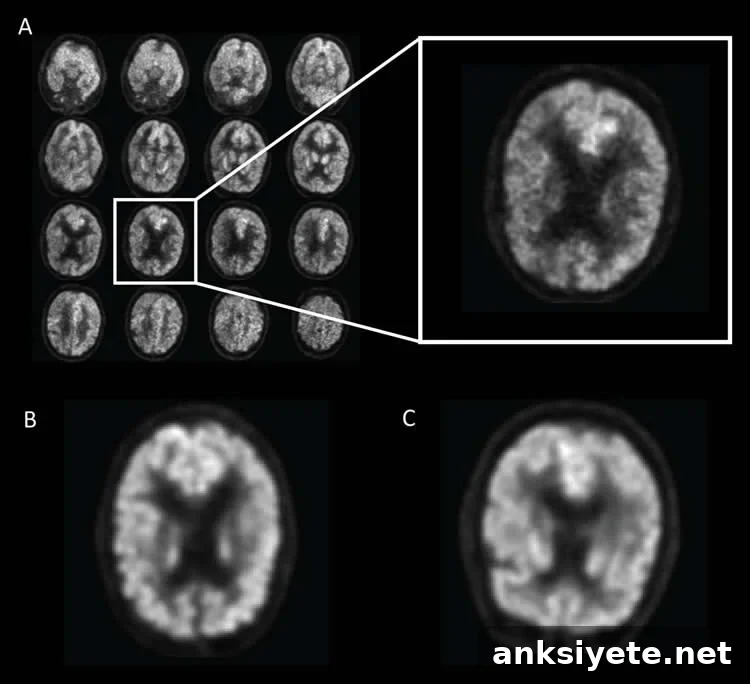
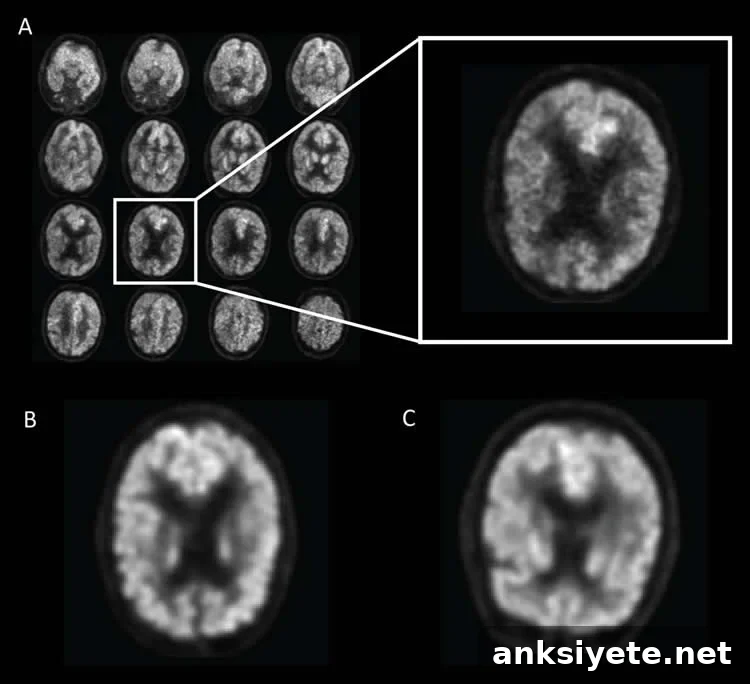
FDG-PET (18F-fluorodeoxyglucose positron emission tomography) measures glucose uptake across the brain by tracking a radiolabeled glucose analog. Lower uptake in specific regions may indicate reduced metabolic activity associated with neurodegenerative processes. The research team trained a convolutional neural network based on the InceptionV3 architecture to learn metabolic signatures associated with Alzheimer’s disease.
They used the Alzheimer’s Disease Neuroimaging Initiative (ADNI) dataset, a large multi-site collection of imaging and clinical data. The ADNI sample included 2,109 FDG-PET studies from 1,002 participants collected between 2005 and 2017. The researchers trained their model on 90% of the ADNI data and reserved 10% for internal testing. After training, the algorithm learned to recognize metabolic patterns predictive of progression to Alzheimer’s disease.
To evaluate generalizability, the team tested the algorithm on an independent retrospective cohort of 40 FDG-PET exams from 40 patients the model had never seen. On this external set the model reached 100% sensitivity, correctly identifying every case that ultimately progressed to Alzheimer’s disease, at an average of more than six years (approximately 75.8 months) prior to the final clinical diagnosis. Specificity in the independent set was 82% at that 100% sensitivity threshold.
“We were very encouraged by the model’s ability to identify all cases that later developed Alzheimer’s disease,” Dr. Sohn said. He noted, however, that the external test set was small and that larger, prospective, multi-institutional studies are needed to validate and refine the approach.
Detecting Alzheimer’s disease well before significant brain volume loss occurs would expand the therapeutic window, giving patients and clinicians more opportunities to test disease-modifying strategies, enroll in clinical trials, or implement supportive measures aimed at slowing progression.
Future work will explore combining FDG-PET–based deep learning with other molecular imaging approaches, such as PET scans targeting beta-amyloid plaques and tau tangles—hallmarks of Alzheimer pathology. Youngho Seo, Ph.D., a faculty advisor on the project, suggested that integrating multiple imaging biomarkers could improve early prediction and help distinguish Alzheimer’s disease from other causes of cognitive decline.
About this research
The study team included Yiming Ding, Jae Ho Sohn, Michael G. Kawczynski, Hari Trivedi, Roy Harnish, Nathaniel W. Jenkins, Dmytro Lituiev, Timothy P. Copeland, Mariam S. Aboian, Carina Mari Aparici, Spencer C. Behr, Robert R. Flavell, Shih-Ying Huang, Kelly A. Zalocusky, Lorenzo Nardo, Youngho Seo, Randall A. Hawkins, Miguel Hernandez Pampaloni, Dexter Hadley, and Benjamin L. Franc, among others.
Funding: Supported by the National Institutes of Health, the Alzheimer’s Disease Neuroimaging Initiative, and the U.S. Department of Defense.
Source: Linda Brooks – RSNA. Publisher: NeuroscienceNews.com. Image credit: RSNA. Original research: “A Deep Learning Model to Predict a Diagnosis of Alzheimer Disease by Using 18F-FDG PET of the Brain” published in Radiology (November 6, 2018).
Abstract (summary)
Purpose: Develop and validate a deep learning algorithm that predicts final clinical diagnosis—Alzheimer disease, mild cognitive impairment, or neither—using FDG-PET of the brain and compare its performance with radiologic readers.
Materials and Methods: Prospective FDG-PET brain studies from ADNI (2,109 imaging studies from 2005–2017, 1,002 patients) and a retrospective independent test set (40 studies from 2006–2016, 40 patients) were analyzed. Final clinical diagnoses at follow-up were recorded. A convolutional neural network based on InceptionV3 was trained on 90% of ADNI data and tested on the remaining 10% and on the independent set. Performance was evaluated using sensitivity, specificity, receiver operating characteristic (ROC) analysis, saliency maps, and t-distributed stochastic neighbor embedding for visualization.
Results: On the independent test set the algorithm achieved an area under the ROC curve of 0.98 (95% CI: 0.94–1.00). At 100% sensitivity, specificity was 82%, and the model predicted Alzheimer’s disease on average 75.8 months prior to final clinical diagnosis. In ROC space the model outperformed radiologic readers, who demonstrated lower sensitivity. Saliency maps indicated that the model attended to known regions of interest but evaluated the entire brain volume rather than isolated focal changes.
Conclusion: A deep learning model applied to FDG-PET brain images can predict a future diagnosis of Alzheimer’s disease years in advance, achieving high sensitivity and strong specificity in initial testing. Larger prospective studies are needed to confirm these findings and to explore integration with other imaging biomarkers.