Summary: Researchers have identified how two intermingled types of neurons split the work of planning and initiating movement.
Source: HHMI.
The mouse brain contains roughly 80 million neurons packed into a space about the size of a hazelnut. These cells include many distinct shapes and sizes, and their connections number in the billions.
The brain relies on this dense circuitry to interpret sensory information, store and use experience, and control actions. Because neurons are tightly interwoven, it has been difficult for scientists to determine which specific cell types carry out particular functions within local circuits.
In two papers published October 31, 2018 in the journal Nature, researchers at the Howard Hughes Medical Institute’s Janelia Research Campus and the Allen Institute for Brain Science combined detailed anatomical, molecular, and functional analyses to reveal how two intermingled classes of cortical neurons divide labor to plan and trigger movement. By integrating single-cell gene expression profiles with reconstructions of neuronal anatomy and behavioral experiments, the teams resolved which neurons are responsible for distinct aspects of motor control.
Bringing together these different datasets represented a significant technical and collaborative effort, says Janelia group leader Karel Svoboda. The work required multiple laboratories coordinating methods and data to address a single, focused question about how motor cortex circuits generate behavior. Svoboda notes that similar large-scale collaborations will be essential to solving the most complex problems in neuroscience.
Worldwide, research groups are building detailed maps of brain cell types and connections. These mapping efforts examine neurons from many perspectives—structural anatomy, molecular identity, and activity during behavior. One central challenge is integrating these different layers of information to produce a coherent view of how particular cell types contribute to circuit function.
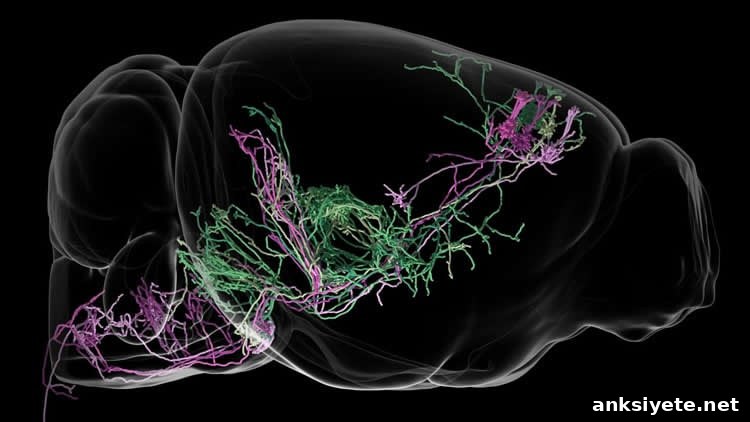
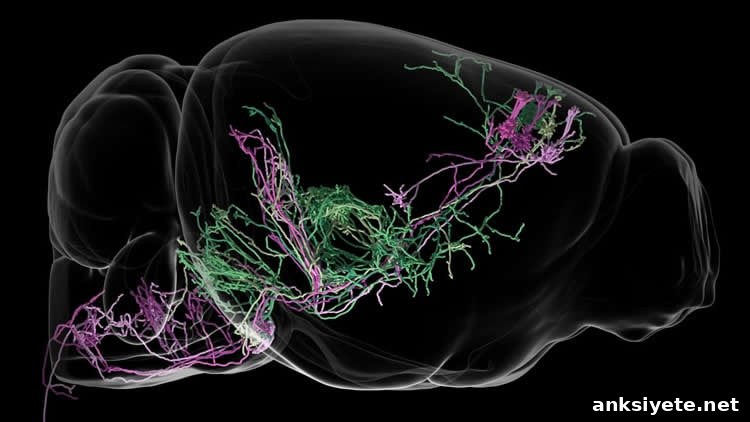
At Janelia, the MouseLight project has traced the detailed anatomy of individual neurons across the mouse brain, reconstructing long-ranging axonal projections by following neuronal arbors through thousands of images. At the Allen Institute, complementary efforts have focused on single-cell transcriptomics to catalog which genes are active in each neuron and thereby reveal molecularly distinct cell classes.
In the studies described here, scientists from Janelia and the Allen Institute concentrated on the anterior lateral motor cortex (ALM), a region important for planning and executing movements. Janelia researchers including Mike Economo, Sarada Viswanathan, Loren Looger, and Karel Svoboda teamed with Allen Institute investigators to combine high-resolution anatomical reconstructions with single-cell RNA sequencing data from the neocortex.
Researchers at the Allen Institute, led by Bosiljka Tasic and Hongkui Zeng, profiled the full transcriptomes of 23,822 neocortical neurons. For each cell they cataloged thousands of expressed genes, allowing the team to define more than 130 transcriptomic cell groups across the sampled tissue. These molecular classifications provided a foundation for linking cellular identity to structure and function.
Next, the combined team matched molecular identities to anatomical projections identified through the MouseLight reconstructions. They focused on large layer 5 pyramidal neurons in ALM that send descending outputs from cortex to other motor-related brain regions. Within this population, two distinct transcriptomic classes emerged that also differed in their projection targets.
One class of neurons projects strongly to thalamic nuclei that, in turn, feed back to motor cortex. The other class projects directly to brainstem motor centers, including regions in the medulla that can issue commands to downstream motor circuits. Although both types are pyramidal tract neurons and share some common targets, their long-range projection patterns and molecular profiles are clearly distinct.
These two cell classes have attracted attention for other reasons as well: they are vulnerable in certain neurodegenerative conditions. But until now, their distinct roles in motor control were not fully appreciated. To test function, Economo and colleagues used targeted manipulations and recordings while mice performed a simple, timed movement task requiring them to move in a particular direction at a specific time.
The experiments showed that the thalamus-projecting neurons are essential for forming and maintaining preparatory activity—neural signals that represent planned movements seconds before action begins. By contrast, the brainstem-projecting neurons become active later and are necessary for initiating the movement itself. In short, the two classes of output neurons carry different kinds of information to different downstream targets: one supports planning, the other drives execution.
By integrating molecular profiles, detailed anatomy, and behaviorally relevant recordings and perturbations, the team was able to clarify how these circuits operate. “Scientists can always subdivide cells into many groups,” says Bosiljka Tasic, “but in this case the molecularly defined groups corresponded to clear, separable functions in motor control.”
Although this work marks important progress, considerable complexity remains. The Allen Institute’s transcriptomic atlas revealed more than a hundred molecularly defined cell types in visual cortex and ALM alone, and many of these remain to be functionally characterized. Svoboda emphasizes that new tools for perturbation and recording, together with ongoing large-scale mapping efforts, will accelerate efforts to decode how diverse cell types give rise to circuit function and behavior.
Source: Meghan Rosen – HHMI
Publisher: Organized by NeuroscienceNews.com.
Image source: Image credited to MouseLight Project, Janelia Research Campus.
Original research: Abstract for “Distinct descending motor cortex pathways and their roles in movement” by Michael N. Economo, Sarada Viswanathan, Bosiljka Tasic, Erhan Bas, Johan Winnubst, Vilas Menon, Lucas T. Graybuck, Thuc Nghi Nguyen, Kimberly A. Smith, Zizhen Yao, Lihua Wang, Charles R. Gerfen, Jayaram Chandrashekar, Hongkui Zeng, Loren L. Looger & Karel Svoboda. Published in Nature, October 31, 2018.
DOI: 10.1038/s41586-018-0642-9
Abstract
Distinct descending motor cortex pathways and their roles in movement
Activity in motor cortex predicts movements seconds before they occur. Preparatory activity is present across cortical layers, including in layer 5 pyramidal tract neurons. A central question is how preparatory signals are maintained without triggering movement, and how they are later converted into motor commands. Using single-cell transcriptional profiling and axonal reconstructions, the investigators identified two types of pyramidal tract neuron. Both project to targets in basal ganglia and brainstem, but differ in key projections: one class projects to thalamic regions that loop back to motor cortex and exhibits early, sustained preparatory activity; the other projects to medullary motor centers and produces later preparatory signals that lead to motor commands. These findings indicate that distinct motor cortex output neurons specialize in different roles during motor control.