
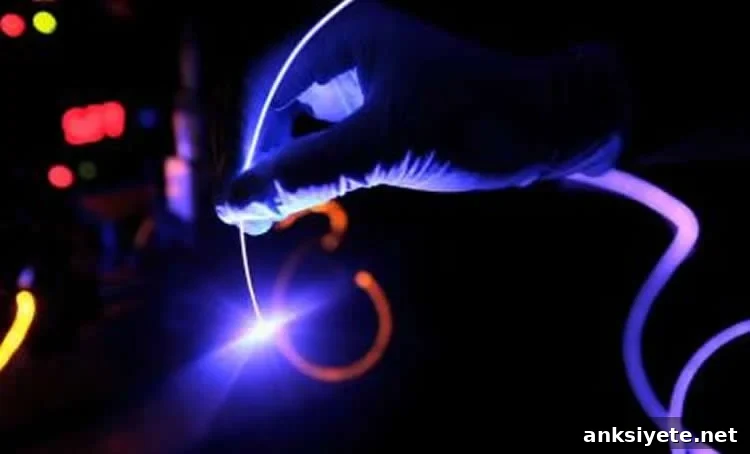
Brown University neuroscientists report in Nature Neuroscience that by applying a precisely timed gamma rhythm in a specific region of the brain, they were able to increase touch sensitivity in mice—making faint vibrations far easier for those mice to detect.
The study provides the first direct causal evidence that gamma-range brainwaves in the cortex influence perception and attention. For years, researchers observed correlations between gamma rhythms and behavior, but could not be sure whether gamma played a functional role or was merely a byproduct of other neural activity. This experiment changes that picture by directly controlling the cells that produce gamma oscillations.
“There’s excitement about gamma rhythms’ importance for behavior, and also considerable skepticism,” said co-lead author Joshua Siegle. “Instead of only correlating gamma with behavior, we used optogenetics to control the neurons that generate gamma and tested the behavioral effect directly.”
The result was a measurable improvement in tactile sensitivity: mice with the induced gamma rhythm were about 20 percent better at detecting faint whisker vibrations than mice without the rhythm.
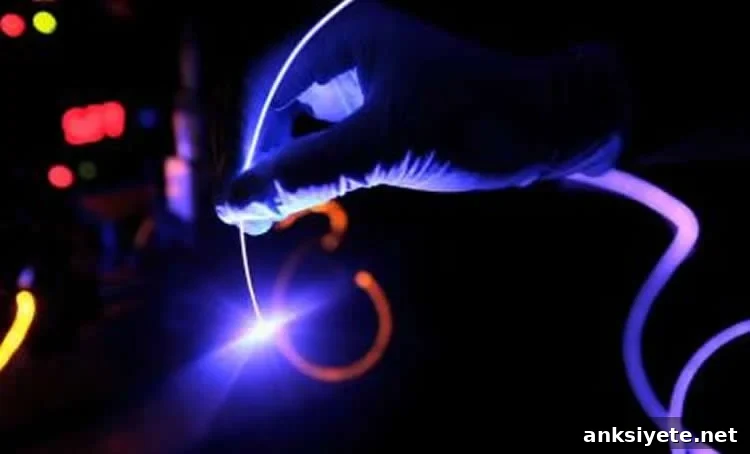
“We were prepared for many ways the experiment could fail, but from the first subjects it was surprisingly decisive,” said Christopher Moore, associate professor of neuroscience at Brown and senior author of the study. “Under the right conditions, we made a mouse better at a task than it would otherwise be.”
The team used optogenetics—a method that uses light to drive the activity of genetically targeted neurons—to generate a roughly 40-hertz gamma rhythm in inhibitory interneurons within the primary sensory neocortex, the cortical area that processes whisker-based touch in rodents. This part of the cortex specializes in detecting subtle sensory cues and enables animals to focus attention on faint stimuli, distinct from brain circuits that signal strong or noxious sensations.
First, the researchers confirmed that mice naturally produce brief bouts of 40-hertz gamma activity in the sensory neocortex. They then recreated that rhythm with precise pulses of blue light targeting fast-spiking inhibitory interneurons. Mice receiving the optogenetic gamma drive detected faint whisker vibrations more often than control animals that did not receive the rhythmic stimulation.
All mice had been trained to report detection by licking for a water reward, and vibrations spanned 17 levels of detectability to gauge sensitivity across a wide range. The experimental results supported the team’s hypothesis that rhythmic inhibitory input organizes pyramidal-cell firing into a more coherent, effective signal. In other words, gamma rhythm does not simply increase firing rates; it times and structures neural output so weak sensory signals can be transmitted more reliably.
“Synchronized bursts of inhibition can sharpen signal transmission, much like synchronized clapping sounds louder than random claps,” Siegle explained.
Timing proved critical. When the researchers shifted the onset of the gamma rhythm in 5-millisecond steps relative to the sensory stimulus, mice showed improved detection only when the gamma rhythm was already ongoing about 20–25 milliseconds before the subtle vibration. If the rhythm began at other times, sensitivity did not improve, indicating that precise temporal alignment between rhythm and stimulus is essential for the effect.
One important implication is that the temporal organization provided by gamma rhythms can be more influential than the simple number of spikes neurons fire. Enhanced perception arose not from elevated firing rates in the sensory cortex, but from neurons being entrained into a precisely timed pattern.
The study offers causal evidence that gamma-range synchronization of inhibitory interneurons can enhance tactile detection, but it leaves open questions about mechanism and broader function. The authors emphasize that the exact cellular and circuit-level processes mediating this amplification remain hypothesized rather than proven.
In some tests, optogenetically stimulated mice were actually less likely to detect the most obvious, high-intensity stimuli even as they improved at perceiving faint ones; other experiments showed no loss for strong stimuli. This mixed outcome could reflect a redistribution of sensory resources—gamma-driven enhancement of threshold-level signals might come at the expense of salience for stronger stimuli, consistent with a mechanism that supports selective attention.
“Paradoxically, rhythmic inhibitory input can amplify near-threshold stimuli, possibly at the expense of salient ones,” said Dominique Pritchett. “That pattern fits what you would expect from a circuit mechanism that implements selective attention.”
Overall, the work gives neuroscientists a clearer sense of how coordinated cortical rhythms can shape sensory processing and attention by organizing neuronal activity in time rather than merely changing overall activity levels.
The research was funded by the National Institutes of Health.
Contact: David Orenstein – Brown University
Source: Brown University press release
Image Source: Image credited to Micheal Cohea/Brown University and adapted from the press release
Original Research: Abstract for “Gamma-range synchronization of fast-spiking interneurons can enhance detection of tactile stimuli” by Joshua H. Siegle, Dominique L. Pritchett, and Christopher I. Moore, Nature Neuroscience. Published online August 24, 2014. doi:10.1038/nn.3797