
Key Questions Answered
Q: What did the study reveal about how the brain processes different materials?
A: Researchers found that distinct brain regions show preferential responses to rigid objects versus non-solid materials like liquids and granular substances.
Q: Why is that distinction important?
A: It helps the brain choose appropriate actions—grasping or lifting for solid objects, versus scooping, pouring, or using tools for fluids and other “stuff.”
Q: How did scientists test this?
A: Using fMRI, they recorded different activation patterns in the visual cortex while participants watched videos of solids and non-solid materials in motion.
Summary: A new MIT study shows the human brain separates “things” (rigid or deformable solid objects) from “stuff” (liquids and granular materials) by engaging different subregions within both the ventral and dorsal visual pathways. Functional MRI scans revealed double dissociations—subareas that respond more strongly either to solid objects or to flowing substances—suggesting the brain may represent and simulate these two classes of materials with distinct computational strategies.
This neural separation likely supports practical behavior: recognizing whether an object can be grasped or must be contained, whether it will bounce or flow, and which physical properties—like viscosity or bounciness—matter for a given interaction. The authors compare this specialization to how artificial physics engines treat meshes for solids and particle systems for fluids.
Key Facts
- Material processing split: Subregions within the visual cortex specialize for solids versus non-solid materials such as water, honey or sand.
- Behavior-driven organization: This neural distinction likely supports different action planning strategies depending on whether a material behaves like a thing or like stuff.
- Analogies to physics engines: The brain’s separate representations for solids and fluids resemble the distinct computational models used in video game and visual effects physics.
Source: MIT
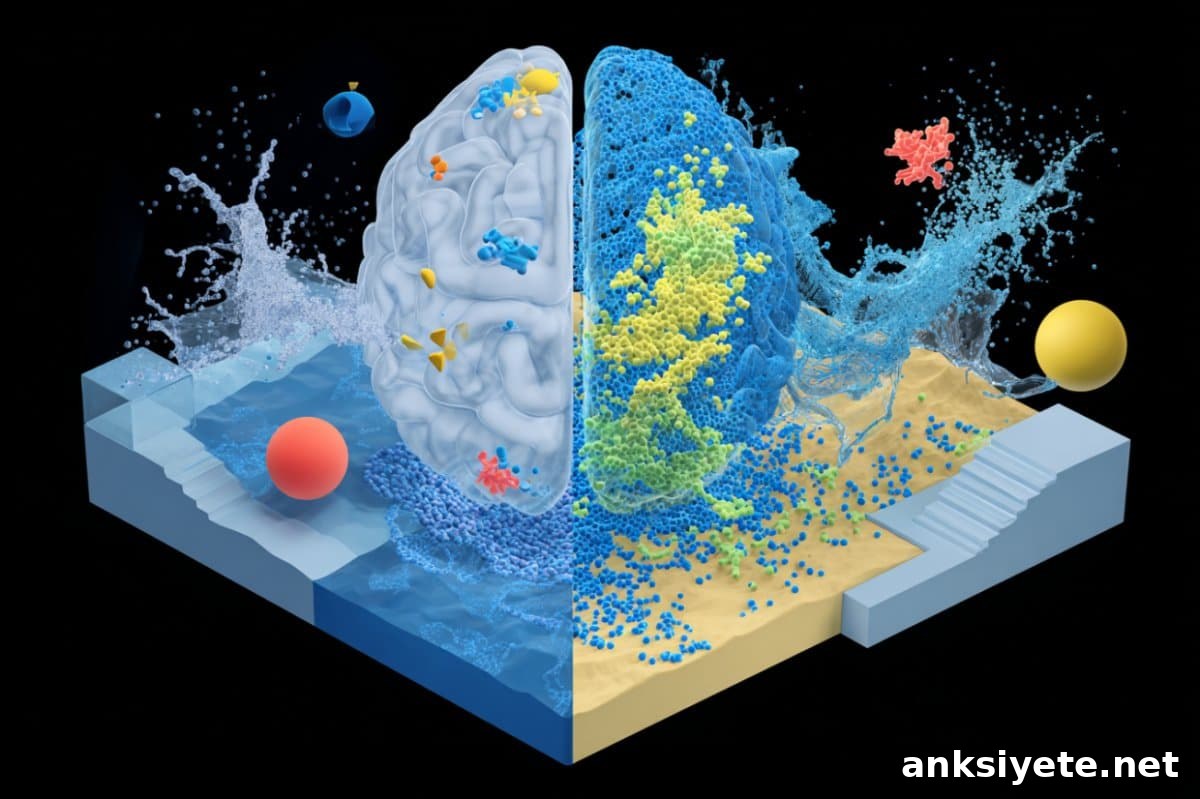
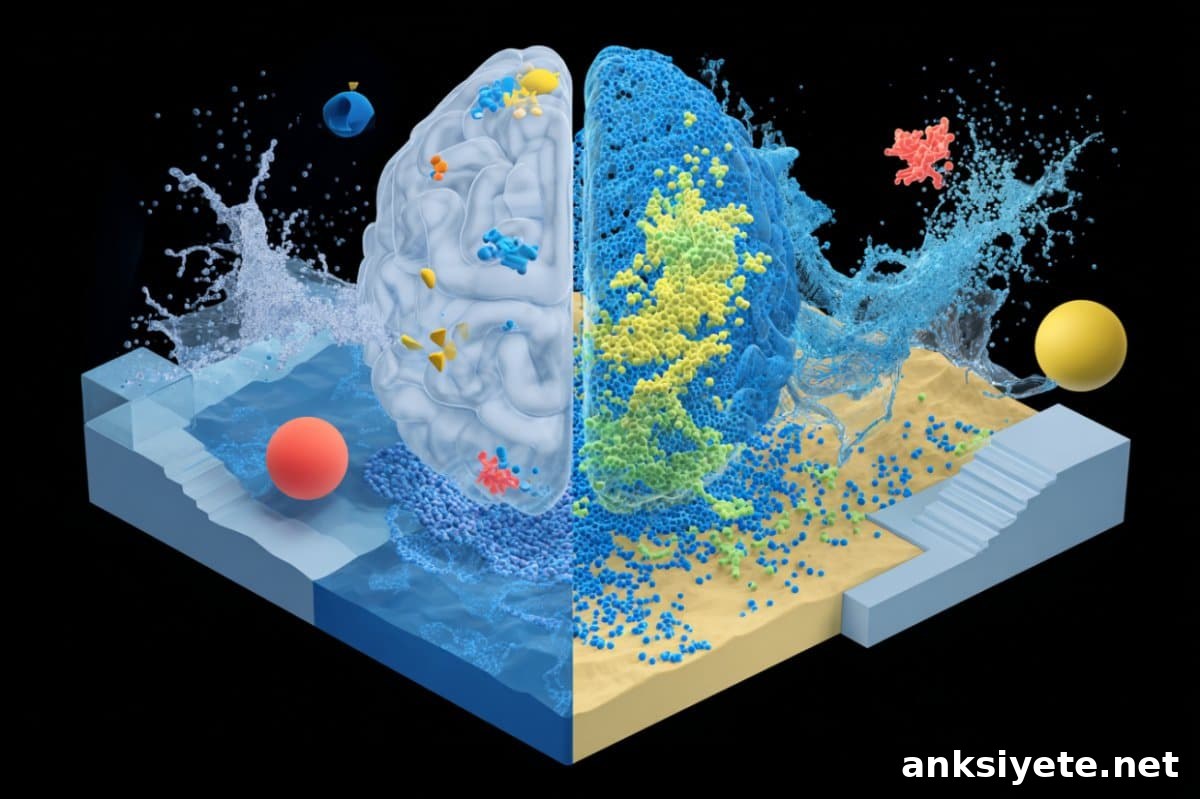
Imagine a ball bouncing down a staircase, then picture a torrent of water following the same path. The two follow very different physical laws, and the brain responds differently as well.
MIT neuroscientists mapped parts of the visual cortex that show stronger responses to “things”—rigid or deformable solid objects like bouncing balls—and other regions that respond more to “stuff”—liquids and granular substances such as sand. This distinction has not been explicitly documented before and may be key to how the brain plans interactions with the physical world.
“When you’re looking at a fluid or a gooey substance, you engage with it differently than with a rigid object,” says Nancy Kanwisher, Walter A. Rosenblith Professor of Cognitive Neuroscience and senior author of the study. “With a rigid object you might pick it up; with a liquid you often need to use a container or a tool.”
Lead author Vivian Paulun, an MIT postdoc who will join the University of Wisconsin–Madison faculty, used a professional visual-effects program to generate more than 100 short videos. These clips showed solids and non-solid materials interacting with environments—sloshing in transparent boxes, bouncing or tumbling, colliding with other objects, or flowing down stairs.
Subjects watched these clips while researchers recorded brain activity with functional MRI. The scans revealed that known object-processing regions such as the lateral occipital complex (LOC) in the ventral stream and the frontoparietal physics network (FPN) in the dorsal stream respond to both categories, but each pathway contains subregions that are selectively more active for either things or stuff.
“Both the ventral and dorsal pathways appear to contain a subdivision: one subregion favors things, and another favors stuff,” Paulun explains. “This pattern emerged because we specifically asked about materials that flow or deform—questions that most earlier studies did not address.”
Implications for physical interaction
The discovery supports the idea that the brain uses different internal representations and perhaps separate simulation strategies for solids and non-solids, much like the distinct algorithms used by graphics and physics software. The researchers propose further tests to determine whether the areas tuned to rigid objects are linked to motor planning circuits for grasping, and whether FPN subregions track material-specific features such as viscosity or elasticity.
Future work will also examine how shape changes in fluids and deformable materials are encoded in object-recognition regions like the LOC and whether those representations directly inform action planning.
Funding:
This research was supported by the German Research Foundation, the U.S. National Institutes of Health, and a National Science Foundation grant to the Center for Brains, Minds, and Machines.
About this visual neuroscience research news
Author: Sarah McDonnell
Source: MIT
Contact: Sarah McDonnell – MIT
Image credit: Neuroscience News
Original Research: Open access. “Dissociable Cortical Regions Represent Things and Stuff in the Human Brain” by Nancy Kanwisher et al., Current Biology. DOI: 10.1016/j.cub.2025.07.027
Abstract
Dissociable Cortical Regions Represent Things and Stuff in the Human Brain
Previous work has identified brain regions involved in visual object perception, such as the lateral occipital complex (LOC), and regions that analyze physical properties and interactions, often called the frontoparietal physics network (FPN). Those studies, however, have largely focused on rigid objects.
Non-solid substances—liquids like water or honey and granular materials like sand—are equally important in daily life but have different physical behaviors and elicit different actions. Little is known about how the brain perceives these “stuff” materials.
Using fMRI while participants viewed videos of rigid objects and of liquids and granular substances, the study found double dissociations between processing of things and stuff across both ventral and dorsal visual pathways. These results suggest that the brain engages distinct computational algorithms when perceiving solids versus non-solids, analogous to separate representations used in artificial physics engines.