
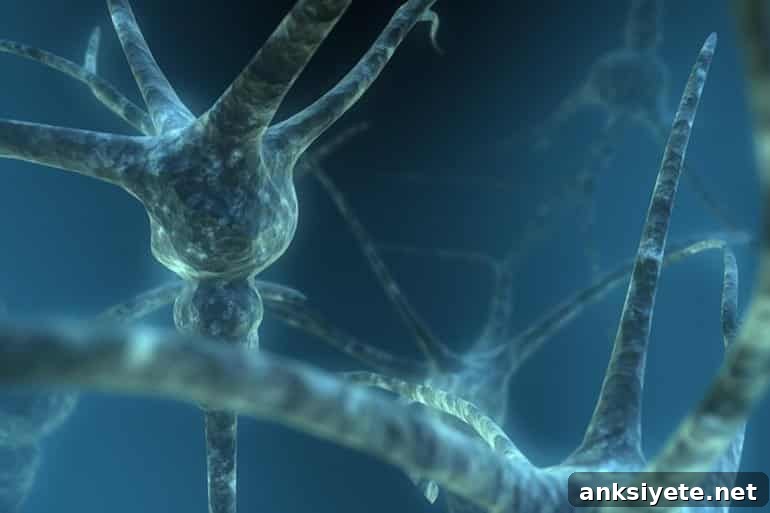
Summary: Programmed cell death (apoptosis) is a central process in brain development, shaping the thickness, composition, and cell density of cortical layers. Small changes in the balance between cell division, migration, and apoptosis can produce abnormal cortical structures associated with neurodevelopmental conditions such as autism, polymicrogyria, and subcortical band heterotopia.
Source: University of Surrey
Computer scientists at the University of Surrey have developed an advanced computational model that improves our understanding of cortical development and its relation to disorders like autism.
Researchers have long sought to explain how the cerebral cortex and its distinct layers form during development, because disruptions in these processes are linked to a range of neurological and psychiatric conditions, including autism spectrum disorders, schizophrenia, and epilepsy.
In a paper published in the journal Cerebral Cortex, a team from the University of Surrey, Newcastle University, and the University of Nottingham describes a three-dimensional computational model that simulates the core cellular processes driving cortical formation: cell division, cell migration, and apoptosis (programmed cell death).
Using this multiscale, agent-based model, the researchers were able to recreate a broad variety of cortical architectures corresponding to different species and brain regions—from rodent models up to non-human primates and humans—allowing them to study how changes at the cellular level translate into altered cortical structure.
The simulations show that modest shifts in the timing or rate of cell division and apoptosis can generate cortical malformations that resemble those observed in several neurodevelopmental disorders. Examples include the excessive folding seen in polymicrogyria and the misplaced neuronal bands characteristic of subcortical band heterotopia. These results suggest that subtle disruptions in basic developmental mechanisms are sufficient to explain a range of pathological outcomes.
Dr Roman Bauer, an Engineering and Physical Sciences Research Council Research Fellow and lead author from the University of Surrey, said: “We are working towards a comprehensive computational model of the cerebral cortex and how it develops—taking into account how neurons behave and organise themselves in our brains. It is clear to us that computational models have a crucial role to play in helping us to comprehensively understand the complex biological processes that lead to developmental disorders.”
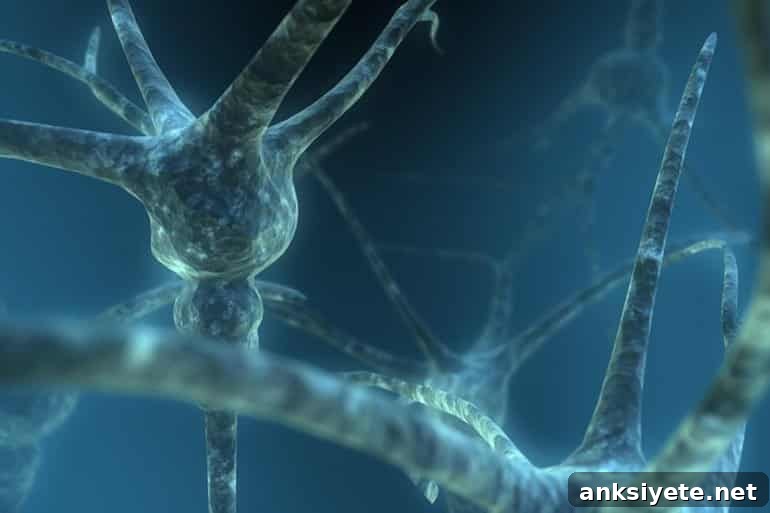
Marcus Kaiser, Professor of Neuroinformatics at the University of Nottingham and senior author of the study, commented: “A large proportion of nerve cells dies before birth, but it was unclear why these cells are just born to die at such an early stage. The team’s results showed that cell death plays an essential role in developing the brain, as it influences the thickness of the cortex’s layers, variety and layer cell density.”
About this neurodevelopment research news
Source: University of Surrey
Contact: Dalitso Njolinjo – University of Surrey
Image: The image is in the public domain
Original Research: Open access.
Title: “Creative Destruction: A Basic Computational Model of Cortical Layer Formation” by Roman Bauer et al., published in Cerebral Cortex
Abstract
Creative Destruction: A Basic Computational Model of Cortical Layer Formation
Many vertebrate neural structures share a layered cellular organization—a cytoarchitecture visible in the cerebral cortex, retina, hippocampus, and multiple other regions of the central nervous system. Decades of experimental work have aimed to uncover the developmental mechanisms that generate these layered arrangements.
This study introduces a general computational model that simulates cortical layer formation within a three-dimensional physical space. The model is multiscale and agent-based, capturing individual cell behaviors across two distinct phases of apoptosis. It demonstrates how these processes can account for the broad variation in neuronal numbers and layer compositions found across different cortical regions and species.
The findings emphasize the model’s capacity to reproduce a rich array of cortical phenotypes through variations in a relatively simple set of developmental rules. Crucially, the inclusion of apoptosis as a regulated stage permits independent modulation of individual layer thickness without automatically altering adjacent layers. This decoupling provides additional evolutionary flexibility for layer architecture and helps explain how small changes in gene-regulatory dynamics can produce the characteristic anomalies observed in neurodevelopmental diseases.
Overall, the paper proposes a novel and biologically grounded computational framework—built on gene-type rules and agent-based dynamics—that captures many features of both normal cortical development and its pathological deviations. By linking cellular-level mechanisms to large-scale cortical structure, the model offers a valuable tool for investigating how developmental processes lead to healthy or disordered brain organization, and for informing future experimental studies on cortical development, apoptosis, cell migration, and neurodevelopmental disorders.