
EPFL researchers have developed a precise method to recreate the chemical modification of the protein linked to Parkinson’s disease. This technique offers a clearer path to study how these modifications affect disease processes and can be adapted to other proteins and conditions.
Parkinson’s disease is associated with the accumulation of the protein alpha-synuclein inside nerve cells that control movement. Research indicates that alpha-synuclein begins to aggregate when certain chemical groups containing nitrogen attach to specific amino acids in the protein. This modification, known as nitration, targets tyrosine residues and has long been difficult to reproduce faithfully in the laboratory. Scientists at École Polytechnique Fédérale de Lausanne (EPFL) report the first method that produces alpha-synuclein bearing defined nitration patterns that mirror those observed in Parkinson’s disease brains. Published in the Journal of the American Chemical Society, the approach opens new opportunities to study the role of nitration in protein aggregation, neuronal dysfunction, and disease progression.
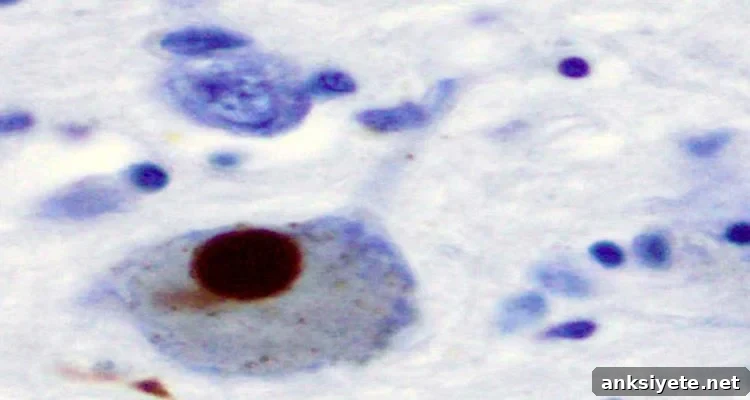
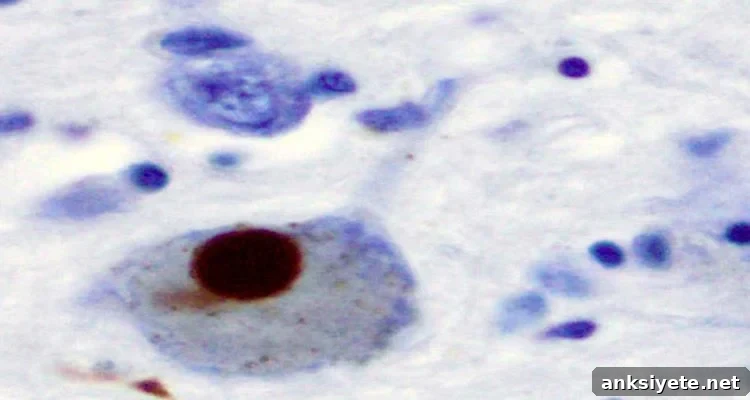
The causes of Parkinson’s disease, which affects millions worldwide, remain incompletely understood. One consistent hallmark is the formation of alpha-synuclein fibrils and larger aggregates, such as Lewy bodies, inside vulnerable neurons. These aggregated forms of alpha-synuclein are thought to impair cellular function and contribute to neuronal death. Multiple chemical modifications of alpha-synuclein have been implicated in this process; among them, nitration of tyrosine residues is suspected to alter the protein’s folding, interactions, and aggregation properties.
Until now, studying nitration has been limited by technical barriers: conventional nitration methods produce mixtures of alpha-synuclein molecules that are modified at different sites. Those heterogeneous preparations differ from the site-specific nitration patterns found in diseased tissue, making it hard to draw reliable conclusions about how nitration influences structure and aggregation.
A targeted strategy to map nitration effects
Led by Hilal Lashuel, the EPFL team devised a protein semisynthesis strategy that yields homogeneous alpha-synuclein molecules bearing nitration at defined tyrosine sites. The approach synthesizes peptide fragments in which nitrated tyrosines are incorporated selectively; these fragments are then chemically assembled into the full-length protein. Crucially, the researchers modified the standard assembly workflow to avoid chemical steps that would reduce or otherwise damage the nitrated groups. This refinement preserves the nitration chemistry throughout synthesis and produces proteins with controlled combinations and numbers of nitrated residues.
By producing alpha-synuclein variants with single-site or multiple-site nitration in a controlled manner, the team could test how each modification alters the protein’s properties. In vitro experiments showed that specific nitrations disrupt alpha-synuclein’s ability to bind to membrane vesicles, a normal interaction relevant to its cellular function. Structural analyses revealed that site-specific nitration also changes local and overall conformations of alpha-synuclein, directly influencing its propensity to form the fibrils and aggregates associated with Parkinson’s disease.
New experimental tools for disease research and diagnostics
EPFL’s work on chemical modifications of alpha-synuclein and related proteins spans several years, and this nitration protocol overcomes a long-standing obstacle. “These advances allow us now to reconstruct, in vitro, alpha-synuclein species with the same chemical properties as those isolated from diseased human brains,” says Hilal Lashuel. Recreating disease-relevant chemical states of alpha-synuclein makes it possible to investigate the protein’s normal biological roles, how specific modifications cause dysfunction, and which biochemical steps might be targeted therapeutically.
Beyond alpha-synuclein, the semisynthesis and site-specific modification tools developed at EPFL can be applied to other proteins and post-translational modifications implicated in diverse diseases. In the context of Parkinson’s disease specifically, Lashuel and colleagues anticipate that these chemical tools will accelerate the development of selective antibodies and imaging agents capable of detecting and quantifying distinct alpha-synuclein species and aggregates during disease progression. Such reagents could support improved diagnostics, biomarkers, and ultimately therapeutic strategies.
Contact: Nik Papageorgiou – EPFL
Source: EPFL press release
Image source: Image credited to Marvin 101 (Creative Commons Attribution-ShareAlike 3.0 Unported).
Original research: Burai R, Ait-Bouziad N, Chiki A, Lashuel HA. “Elucidating the role of site-specific nitration of α-synuclein in the pathogenesis of Parkinson’s disease via protein semisynthesis and mutagenesis.” Journal of the American Chemical Society. Published online March 13, 2015.