
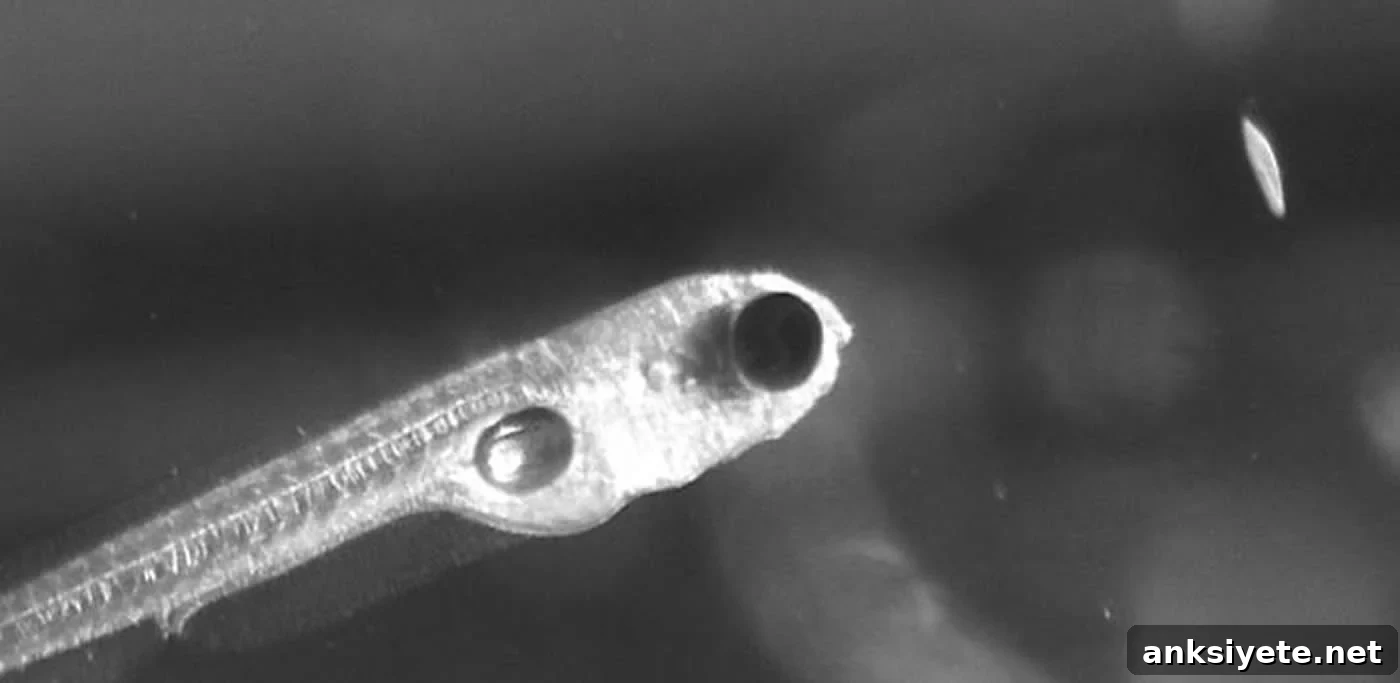
Summary: Researchers report that the visual environment in which a zebrafish develops influences its spontaneous brain activity and later behaviour.
Source: University of Queensland.
How early visual experience shapes spontaneous brain activity and behaviour
The sudden arrival of a new idea is often described as a “lightbulb” moment. In neuroscience, spontaneous neural activity—brain activity that appears without an immediate external stimulus—can underlie such sudden thoughts. A team at the University of Queensland has investigated how different early-life visual experiences influence spontaneous activity in the developing brain and how those changes relate to behaviour.
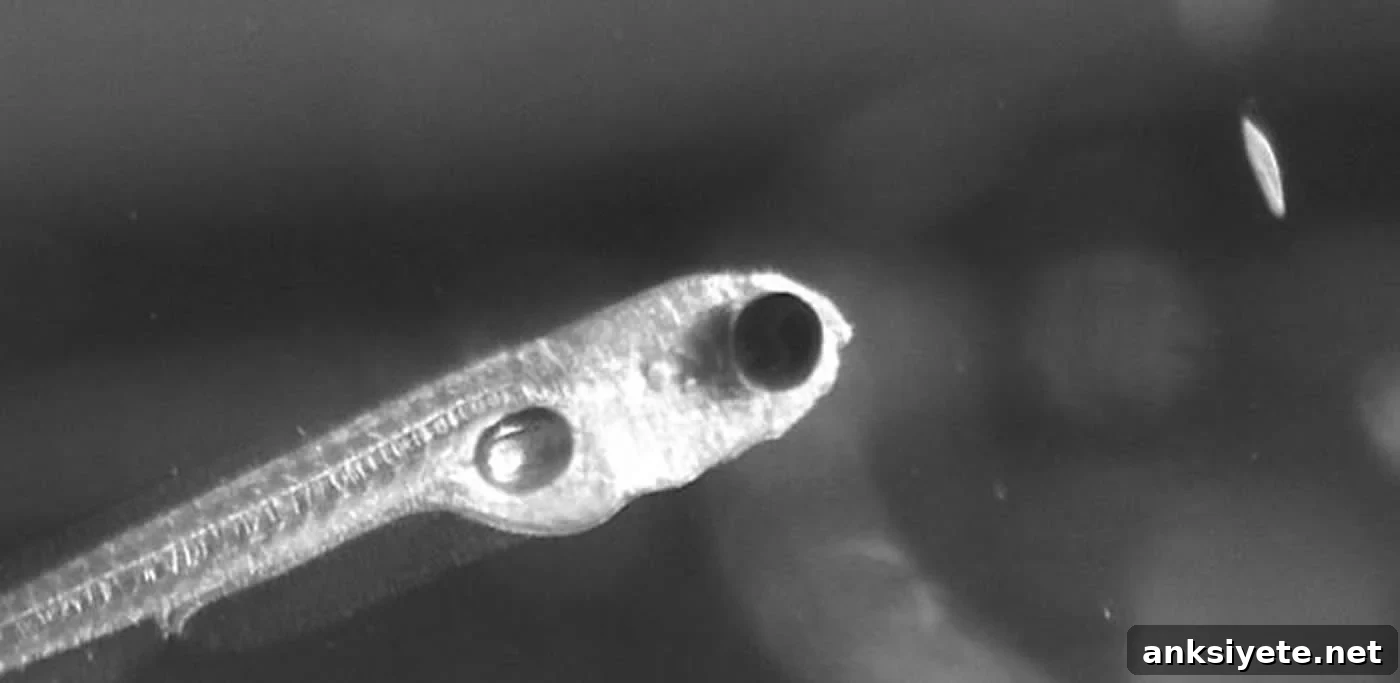
Led by Professor Geoffrey Goodhill from the Queensland Brain Institute and the School of Mathematics and Physics, the research used larval zebrafish as an experimental model to track the origins and development of spontaneous neural activity. Zebrafish larvae are transparent during early development, which allows researchers to observe neural activity directly using optical imaging techniques.
The study focused on the optic tectum, the region of the zebrafish brain responsible for processing visual information and for guiding visually driven behaviours such as hunting. Using calcium imaging to record activity from individual neurons across days, the researchers examined how spontaneous patterns of activity changed during the critical early days after fertilization.
One clear finding was that spontaneous activity in the tectum peaked around five days post-fertilization and then declined. To quantify changes in network organization and activity, the team applied graph theory, a mathematical framework used to characterize relationships and structure within complex networks. Graph-theoretic measures revealed a reorganization of neural assemblies and population-level activity during development, with a particularly marked reorganization occurring around days five to six.
Crucially, the animals’ visual environment altered these developmental patterns. Larvae raised in complete darkness—a manipulation referred to as dark rearing—developed different spontaneous activity statistics in the tectum compared with normally reared siblings. This change in spontaneous activity was not merely a transient difference: dark-reared larvae showed a persistent behavioural deficit in hunting. Even after light conditions were restored, those larvae were less effective at catching their natural prey, single-celled organisms called paramecia.
These observations indicate that intrinsic developmental processes and sensory experience work together to shape the functional wiring of the tectum. The observed long-lasting behavioural impact of altered early visual input highlights a degree of plasticity in the zebrafish brain: its circuits can be influenced substantially by the quality and timing of sensory experience during development.
Beyond the specifics of zebrafish biology, the findings have broader relevance for understanding how early sensory environments influence brain development more generally. The optic tectum’s changing spontaneous activity and the vulnerability of hunting behaviour to early visual deprivation suggest that there may be critical or sensitive periods during which the right sensory inputs are particularly important for establishing effective neural circuitry.
Professor Goodhill and colleagues plan further work to identify whether there are precise developmental windows in zebrafish when visual input is most important for shaping network structure and behaviour. Determining the timing and mechanisms of such windows could improve the use of zebrafish as a model for examining how deprived or atypical sensory experiences in early life affect neural development in other species, including humans.
Study
Spontaneous Activity in the Zebrafish Tectum Reorganizes over Development and Is Influenced by Visual Experience
Highlights
• Daily calcium imaging of the zebrafish optic tectum from 4 to 9 days post-fertilization (dpf).
• Graph-theoretic measures of spontaneous activity change with development.
• Neural assemblies evolve in their properties during early development.
• Altering visual experience affects both spontaneous tectal activity and visually guided behaviour such as prey capture.
Summary
Spontaneous activity in the developing visual system appears to contribute to the formation of functional neural circuits. During 4–9 dpf, larval zebrafish acquire hunting behaviour that relies on the optic tectum. Using two-photon calcium imaging of GCaMP6s-expressing larvae and graph theoretic analysis, the authors found significant developmental changes at both single-cell and population levels, and identified days 5–6 as a critical period of network reorganization. Manipulating visual experience altered tectal activity statistics and dark rearing produced a long-lasting deficit in prey capture. These results indicate that tectal maturation is governed by both internal developmental programs and sensory experience.
Publication
Article published in Current Biology by Lilach Avitan, Zac Pujic, Jan Mölter, Matthew Van De Poll, Biao Sun, Haotian Teng, Rumelo Amor, Ethan K. Scott, and Geoffrey J. Goodhill. Published online August 3, 2017. doi:10.1016/j.cub.2017.06.056