
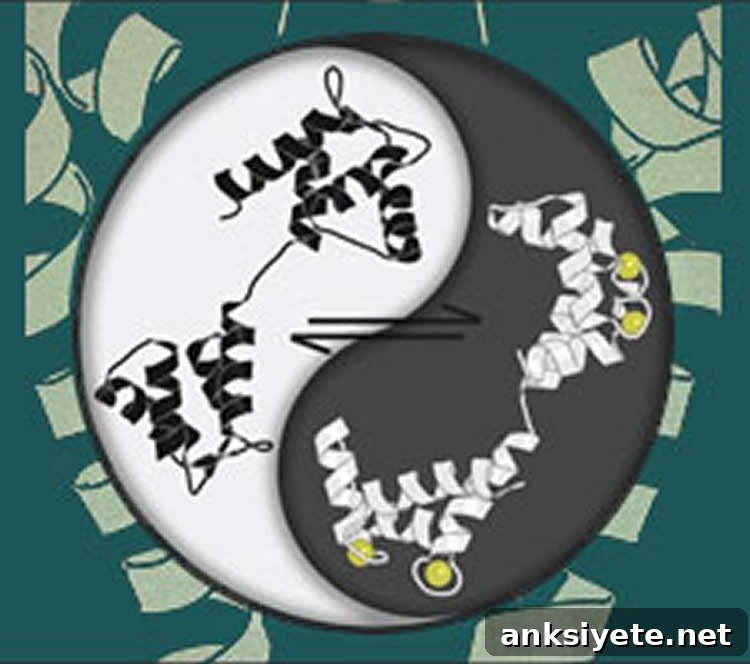
Calmodulin’s Unexpected Role Could Be Key to Treating Ion Channel Disorders
Discovery may inform treatments for channel-related diseases such as cardiac arrhythmias, epilepsy, and Parkinson’s disease.
Researchers at Johns Hopkins University have discovered that a widely studied protein, calmodulin, plays a more active and nuanced role in controlling ion channels than previously believed. Ion channels that regulate the flow of sodium and calcium into and out of cells are fundamental to normal brain signaling, heart rhythm, and many other physiological processes. The new findings reveal that a form of calmodulin that was long thought to be inactive actually promotes the opening of these channels, a revelation that reshapes our understanding of how cells control ionic balance and could point to new therapeutic approaches for disorders linked to dysfunctional ion channels.
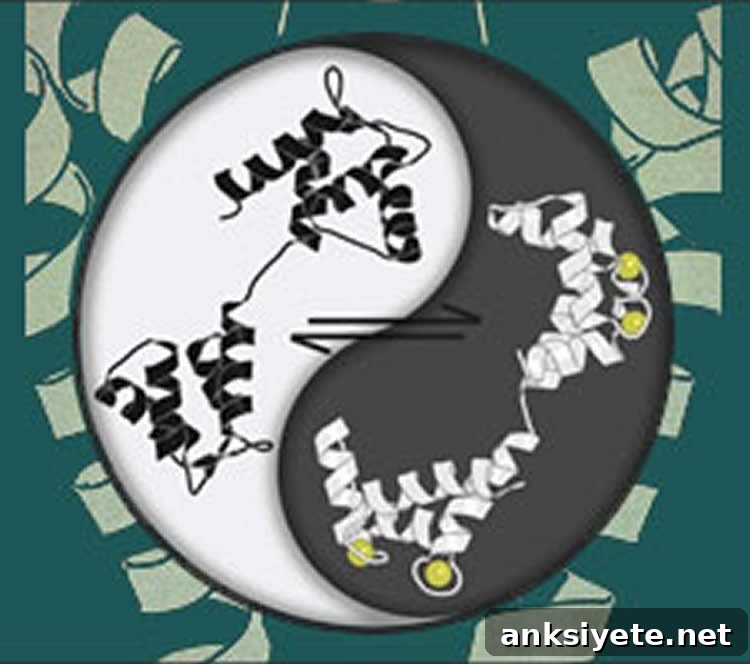
According to David Yue, M.D., Ph.D., a professor of biomedical engineering and neuroscience at the Johns Hopkins University School of Medicine and a senior author on the study, the prevailing model held that calmodulin needed to bind calcium to change shape and become active. In that activated state, calmodulin was thought to attach to an internal regulatory domain within calcium and sodium channels and act to close them, thereby contributing to calcium-dependent inactivation and other regulatory behaviors.
The new study challenges this view by delivering surges of calcium-free calmodulin to channel complexes and observing the functional consequences. Instead of remaining passive, the calcium-free form—often referred to as apocalmodulin—markedly enhances channel opening. In other words, channels are primed to open in the presence of calcium-free calmodulin, and when calcium subsequently binds to that bound calmodulin, the initial enhancement diminishes. This creates a model in which both calcium-free and calcium-bound calmodulin exert potent but opposing effects that together provide fine-tuned control over ion flux.
Yue likens this regulatory balance to a biological “yin-yang”: each calmodulin state imposes an opposing influence that helps maintain precise control of channel behavior. That balanced interplay enables rapid responses to changing cellular conditions, such as fluctuating intracellular calcium levels, and helps explain how cells control the timing and magnitude of sodium and calcium entry.
Understanding this dual role of calmodulin has important implications. Many neurological and cardiac conditions arise from improper ion channel regulation—examples include cardiac arrhythmias that disturb heart rhythm, forms of epilepsy that involve aberrant neuronal excitability, and degenerative disorders such as Parkinson’s disease where ion channel function may contribute to neuronal vulnerability. By revealing a new mechanism by which calmodulin modulates channel opening and closure, the findings open avenues for exploring therapies that selectively target the calmodulin-controlled lever of ion channels.
Other contributors to the research were Paul J. Adams, Manu Ben-Johny, Ivy E. Dick, and Takanari Inoue, all affiliated with The Johns Hopkins University.
The study received support from several grants: the National Institute of Neurological Disorders and Stroke (R01NS085074 and R01NS073874), the National Heart, Lung, and Blood Institute (R37HL076795), the National Institute of Mental Health (F31MH88109), and Parkinson Society Canada.
Contact: Shawna Williams – Johns Hopkins Medicine
Source: Johns Hopkins Medicine press release
Image Source: Image credited to Manu Ben-Johny and David Yue/Johns Hopkins Medicine; adapted from the press release.
Original Research: Abstract for “Apocalmodulin Itself Promotes Ion Channel Opening and Ca2+ Regulation” by Paul J. Adams, Manu Ben-Johny, Ivy E. Dick, Takanari Inoue, and David T. Yue. Published online September 26, 2014. DOI: 10.1016/j.cell.2014.09.047. Report appeared in the Oct. 23 issue of Cell.