
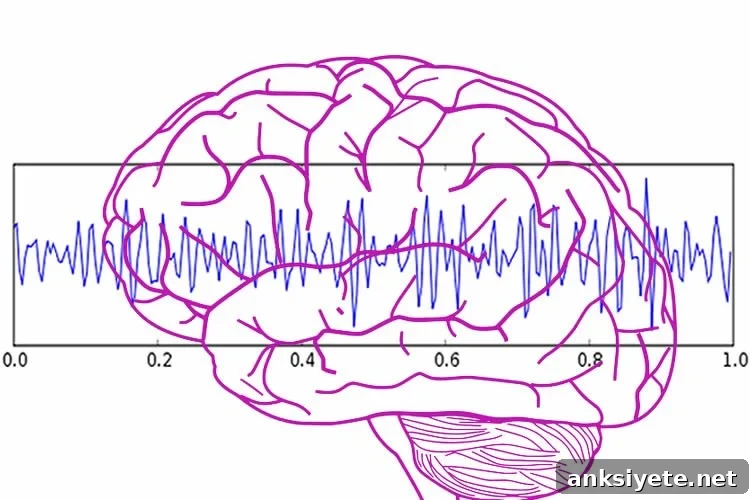
High-frequency nerve signals enable mice to remember and execute the correct movement.
Processing information in the brain requires both the interpretation of sensory inputs and the translation of those inputs into actions. Electrical oscillations that travel between networks of neurons in different brain regions are widely believed to play a key role in cognition, conscious perception, and awareness. Until now, however, there has been limited direct evidence linking specific neuronal oscillations to distinct moments of decision-making or corrective behavior.
Researchers at the RIKEN–MIT Center for Neural Circuit Genetics, led by Jun Yamamoto, have identified a short, synchronized burst of high-frequency neuronal activity that appears in two precise regions of the mouse brain immediately before a correct choice is made. This activity occurs either when the animal is planning the action or when it recognizes and corrects an error.
To find evidence of these oscillations, the team trained mice to navigate a T-shaped maze where a food reward was placed at the end of one arm. Just prior to making the correct directional choice, the researchers detected a brief, synchronized burst of high-frequency gamma oscillations in specific subregions of the entorhinal cortex and the hippocampus. These brain structures are known to be critical for memory and spatial navigation.
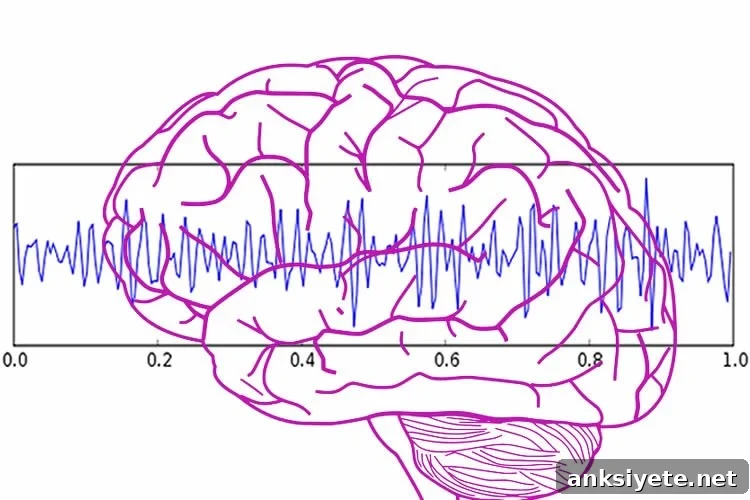
Yamamoto and colleagues observed that this burst also appeared at the moment mice that initially turned the wrong way realized their mistake and reversed course. The team referred to this instant as an “oops” moment. The same synchronized gamma event was present both when the correct choice was made immediately and when it followed recognition of an error. Importantly, the gamma synchrony was absent when mice made the wrong choice and did not correct it, establishing a strong correlation between the oscillatory event and successful retrieval or use of remembered information.
To test causality — whether the gamma synchrony was necessary for the correct choice rather than merely a byproduct — the researchers used genetic tools to express light-sensitive ion channels in the relevant neurons. By activating these channels with light, they were able to disrupt the high-frequency oscillations. When the synchronized gamma activity was blocked in this way, mice lost the ability to reliably select the correct direction or to correct an initial mistake. These results indicate that the transient gamma synchrony contributes functionally to the successful execution of working memory during decision-making.
“Our findings illuminate how the brain retrieves and uses stored information at decisive moments,” says Jun Yamamoto. “Synchronized gamma oscillations appear to play an active role in guiding the animal to the correct choice.” By linking a specific, brief pattern of oscillatory activity to a behavioral outcome, this work advances understanding of the neural dynamics that support working memory and goal-directed action.
The study also touches on broader questions about animal cognition. The researchers suggest that the observed behavior-monitoring process, which enables animals to detect and correct their own mistakes, aligns with the concept of metacognition — a higher-level monitoring of one’s own mental states that is typically associated with conscious awareness. While these findings do not prove consciousness in animals, they provide evidence that animals possess neural mechanisms for assessing and adjusting behavior based on remembered information.
Going forward, Yamamoto plans to investigate whether similar synchronized gamma activity plays a role in other brain regions and in different types of memory-dependent tasks. Establishing how these oscillations scale across circuits and behaviors will help clarify their general importance for cognition and for disorders that affect memory and decision-making.
Contact: Jun Yamamoto – RIKEN
Source: RIKEN press release
Image Source: The gamma waves image is credited to Hugo Gambo and licensed Creative Commons Attribution Share-Alike 3.0 Unported. The brain artwork is credited to OpenClips and is in the public domain. Image adapted by NeuroscienceNews.com
Original Research: Abstract for “Successful execution of working memory linked to synchronized high-frequency gamma oscillations” by Yamamoto, J., Suh, J., Takeuchi, D., and Tonegawa, S. in Cell. Published online May 8, 2014, doi:10.1016/j.cell.2014.04.009