
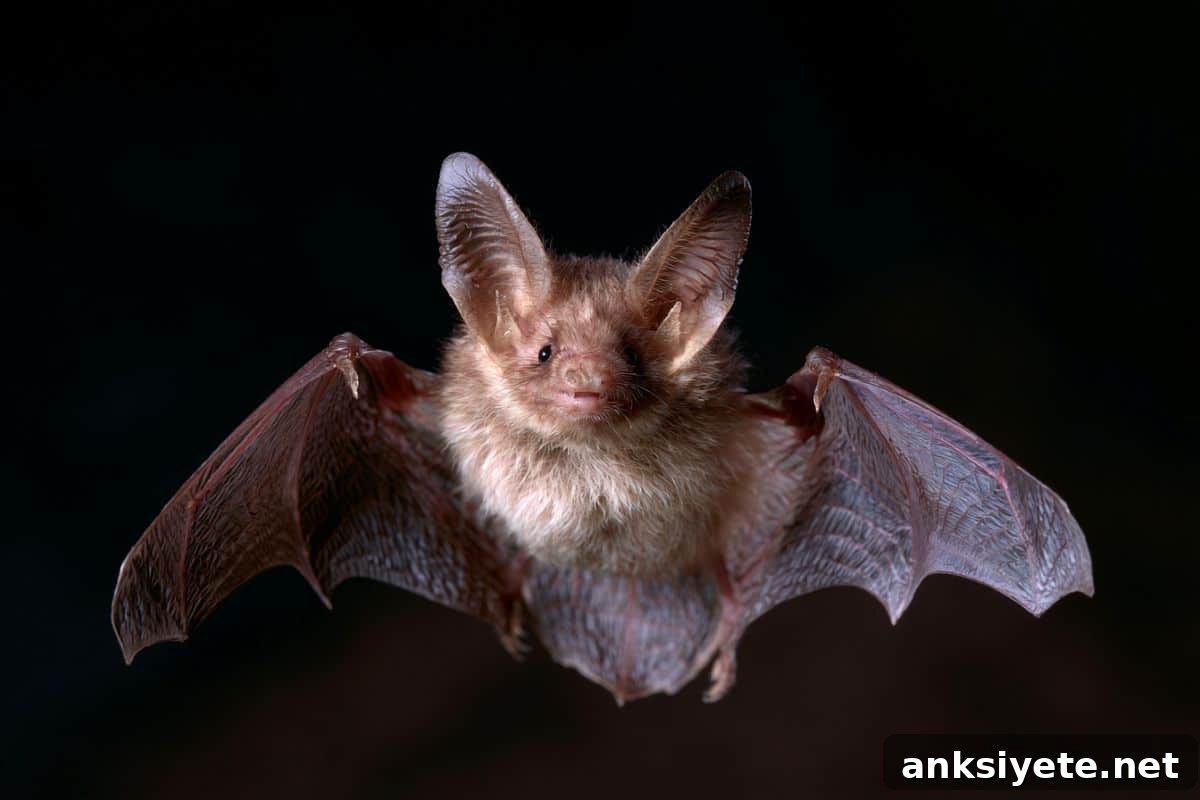
Summary: Researchers found that greater Japanese horseshoe bats (Rhinolophus nippon) adjust and align the frequency of their echolocation calls when living together in colonies. Instead of spreading out frequencies to avoid overlap, these bats—especially lower-frequency individuals—shift upward to share a common, clutter-free frequency band that improves detection of Doppler-shifted echoes from fluttering insect prey.
Key Facts
- Acoustic interference explained: Overlapping echolocation calls from many bats create auditory clutter, making it harder for individuals to distinguish echoes from their own calls, similar to multiple flashlights obscuring a single glint in a dark cave.
- CF-FM calls and Doppler sensing: Greater Japanese horseshoe bats use combined constant-frequency (CF) and frequency-modulated (FM) pulses. Their inner ear contains an acoustic fovea tuned to the second harmonic CF (CF2), allowing precise detection of periodic “glints” produced by insect wingbeats while compensating for Doppler shifts caused by motion.
- Asymmetric frequency convergence: Across a long-term dataset spanning 2008–2024 and 15 capture events, wild bats with lower CF2 frequencies consistently shifted upward after joining captive colonies, while higher-frequency individuals remained largely unchanged.
- Shared silent spectral window: By converging upward, lower-frequency bats avoid interfering with higher-frequency colony members and collectively preserve a clutter-free frequency band above CF2 that is optimal for detecting Doppler-shifted prey echoes.
- Importance of long-term data: This discovery depended on sustained laboratory recordings over many years and multiple colony mixes, demonstrating the value of longitudinal bioacoustic monitoring.
Source: Doshisha University
Imagine searching for a small gemstone inside a dark cavern using a flashlight. If ten other people shine different-colored flashlights at the same time, reflections and overlapping beams make it difficult to identify the true glint from your stone. If everyone used the same color instead, the gemstone’s reflection would stand out more clearly. This is an intuitive analogy for how echolocation signals interact in dense bat colonies and why spectral alignment can be advantageous.
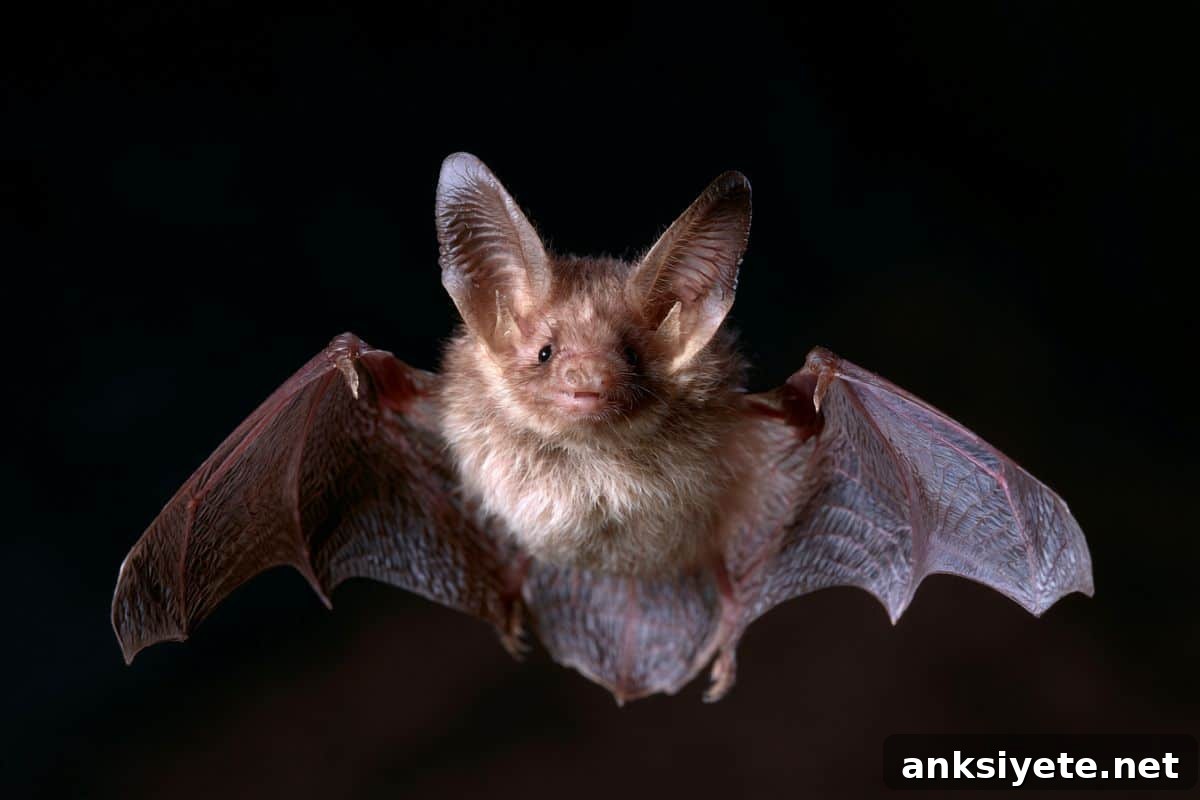
A new study by researchers at Doshisha University shows that when wild greater Japanese horseshoe bats are added to an established captive colony, many of the wild-caught individuals adjust their CF2 echolocation frequencies upward. This behavior contrasts with the frequency dispersion strategy reported in some other bat species and instead reflects a tendency to converge on a common frequency band within the group.
Bats are vital to ecosystems—controlling pests, pollinating plants, and dispersing seeds—and echolocation is their primary sensory system for navigation and hunting. Most species rely mainly on frequency-modulated pulses, but CF-FM bats like Rhinolophus nippon add a constant-frequency component that is crucial for Doppler-based detection. The CF2 harmonic is especially important because the acoustic fovea in these bats’ inner ears is finely tuned to that narrow band, enabling them to perceive the fine temporal and spectral modulations, or “glints,” caused by insect wingbeats.
The researchers focused on how CF2 frequencies shift at the individual level when resident and wild-caught bats are mixed. They recorded the CF2 frequencies of 101 individual bats across 15 capture events, measuring changes during a one-month integration period. When resident and wild groups initially had different CF2 ranges, the overall difference diminished after mixing, driven mainly by lower-frequency individuals moving upward. When there was no initial difference in frequency distributions, no systematic shifts were observed.
This asymmetric adjustment suggests a functional explanation: by raising their CF2 frequencies, lower-frequency bats avoid creating interference within the spectral band that higher-frequency colony members already occupy. That shared band—the “silent spectral window”—remains relatively free of competing background signals and is therefore more reliable for detecting Doppler-shifted echoes from moving prey. Because CF-FM bats depend on Doppler information to resolve fluttering insect targets, aligning frequencies in this way preserves high-sensitivity hunting performance across the colony.
The findings emphasize two broader points. First, acoustic interference between conspecifics is an important selective pressure shaping echolocation behavior in social contexts. Second, detecting these subtle, long-term patterns depends on persistent, careful bioacoustic monitoring of individuals over many years and colony reconfigurations.
Key Questions Answered
Q: How do greater Japanese horseshoe bats use constant-frequency calls to hunt?
A: They emit a CF component and listen for periodic modulations—“glints”—in returning echoes produced by insect wingbeats. The acoustic fovea centered on CF2 enhances sensitivity to those modulations while the bats compensate for Doppler shifts due to motion.
Q: Why do these bats converge on a shared frequency rather than spreadeing out?
A: Converging upward allows colony members to maintain a common, clutter-free spectral window above CF2. This shared window improves detection of Doppler-shifted prey echoes without interference from neighboring calls.
Q: What did the long-term dataset reveal about individual adjustments?
A: Across capture events from 2008 to 2024, only lower-frequency individuals consistently shifted their CF2 frequencies upward after joining colonies with higher-frequency residents; when initial frequencies were similar between groups, no convergence occurred.
Editorial Notes
- Edited by a Neuroscience News editor.
- Journal paper reviewed in full by the editorial team.
- Additional context provided by staff to summarize implications for sensory ecology and bio-inspired sensing.
About this auditory neuroscience research news
Author: Marika Kawano
Source: Doshisha University
Contact: Marika Kawano, Doshisha University
Image: Image credited to Neuroscience News
Original Research: Greater Japanese horseshoe bats (Rhinolophus nippon) gradually converge their echolocation call frequency to colony members. Journal of Comparative Physiology A. DOI: 10.1007/s00359-026-01821-5. Open access.
Abstract
Greater Japanese horseshoe bats (Rhinolophus nippon) gradually converge their echolocation call frequency to colony members
CF component frequencies in CF-FM echolocation calls vary among colonies, regions, and sexes. This study examined changes in the second harmonic CF component (CF2)—the dominant harmonic in multi-harmonic calls—following the mixed housing of resident and wild-caught populations of Rhinolophus nippon. Focusing on individual-level adjustments during colony mixing, the study tracked CF2 in 101 individuals across 15 capture events over one month. Initial CF2 differences between resident and wild-caught groups decreased after mixing, with reduced variability within the colony. Convergence occurred asymmetrically: bats with lower CF2 frequencies adjusted upward, while higher-frequency individuals exhibited little change. No systematic shifts occurred when initial frequencies were similar. For CF bats that rely on Doppler information, frequency convergence appears to be a strategy for avoiding acoustic interference by maintaining a shared “silent spectral window” above CF2 that is critical for detecting Doppler-shifted echoes from moving prey.