Summary: Subtle changes in walking speed and stride length are established early clinical signs of cognitive decline and dementia in humans. New research shows the same brain-body link exists in dogs. The study offers a more complete, objective view of canine cognitive dysfunction (CCD), commonly called dog dementia, and suggests gait monitoring could help veterinarians detect and track cognitive decline earlier.
In a longitudinal study of 88 senior dogs (average age ~12 years) followed across multiple months, researchers combined physical, neurological, and orthopedic exams with standardized cognitive tests and owner questionnaires, including the Canine Dementia Scale (CADES). Gait was recorded on a standardized indoor walkway and analyzed for stride metrics. The investigators found that more advanced cognitive decline was linked to a noticeably shorter stride length, specifically in the dog’s front (thoracic) limbs.
Key Facts
- Front-limb association: Owner-reported cognitive decline and higher CADES scores were significantly associated with shorter thoracic (front) limb stride length when adjusted for the dog’s height.
- Measured effect size: Statistical modeling showed that each 10-point rise on the Canine Dementia Scale corresponds to roughly a 1.2% decrease in front-limb stride length.
- Hind-limb independence: Pelvic (hind) limb stride length did not show a relationship with cognitive status and remained functionally independent of the observed mental decline.
- Cortical influence: Thoracic limbs are under greater cortical control for braking, balance and steering, making them more sensitive to declines in spatial awareness, vision, and executive function.
- Controlled for confounders: The connection between shorter front strides and cognitive impairment remained statistically significant after adjusting for age and pain (measured by the Canine Brief Pain Inventory).
- Clinical utility: Stride length by itself does not diagnose CCD, but tracking an individual dog’s gait over time provides a noninvasive early marker of functional brain decline useful for monitoring progression.
Source: North Carolina State University
New findings from North Carolina State University reveal that cognitive decline in aging dogs is linked to shorter stride length in the front limbs. The results broaden our understanding of canine dementia and may support earlier detection and better monitoring of disease progression.
“In humans, changes in stride length are a recognized indicator of cognitive impairment and dementia,” says Natasha Olby, professor of neurology and the Dr. Kady M. Gjessing and Rhanna M. Davidson Distinguished Chair in Gerontology at NC State’s College of Veterinary Medicine. “We wanted to see if the same pattern appears in dogs.” Olby is the corresponding author of the study.
Eighty-eight geriatric companion dogs (mean age about 12 years) were enrolled and re-evaluated roughly every six months. Each visit included physical, neurologic, and orthopedic examinations; mobility and hearing assessments; routine blood work; a standardized cognitive test; and owner questionnaires such as CADES and the Canine Brief Pain Inventory (CBPI).
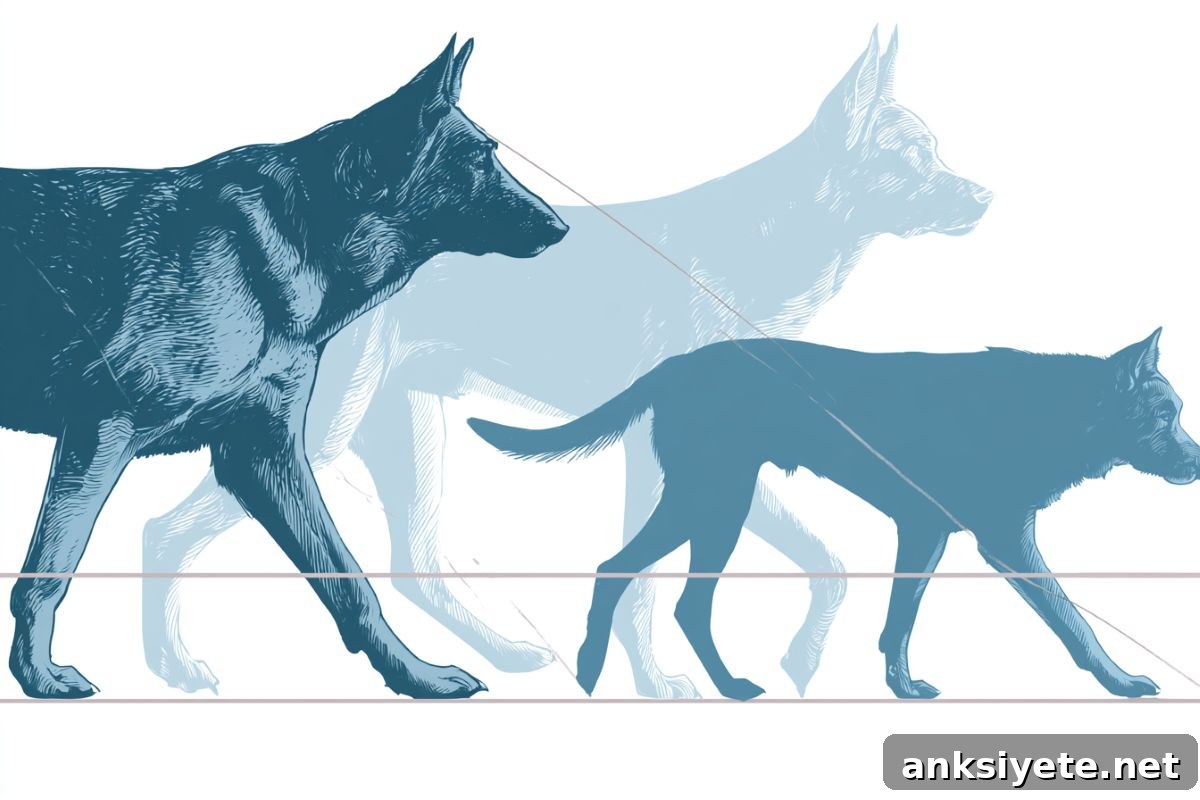
Trained observers measured gait as dogs walked a straight five-meter indoor walkway. Video analysis produced stride-length measurements for thoracic and pelvic limbs, which were then adjusted for the dog’s height to account for body size differences.
Analyses showed that owner-reported cognitive decline and higher CADES scores correlated with shorter thoracic limb stride length after height adjustment. This relationship held even when statistical models accounted for age and pain scores. Pelvic limb stride length showed no meaningful association with cognitive measures.
“Thoracic limbs contribute primarily to braking and postural stability, while pelvic limbs drive propulsion,” Olby explains. “Because front-limb movement relies more on cortical input, it may reflect changes in visual and spatial processing earlier than hind-limb movement.”
The researchers emphasize that while a shortened front stride is not a standalone diagnostic test for canine dementia, it can be a valuable component of a broader clinical assessment and a practical tool for longitudinal monitoring.
“Cognitive decline produced a modest but measurable effect on thoracic stride length. Tracking that change over time could offer an early signal of functional decline and help guide timely interventions to preserve quality of life,” Olby adds.
The study was led by postdoctoral researcher Shaghayegh Rafatpanah Baigi. Other NC State contributors included veterinary students Akiya Stywall and Katherine E. Simon; former postdoctoral researchers Alejandra Mondino Vero, Chin Chieh Yang, and Wojciech K. Panek; Dr. Gilad Fefer; research technician Beth C. Case; and Professor Margaret E. Gruen.
Key Questions Answered:
A: The difference stems from how limb movement is controlled. Pelvic (hind) limbs primarily provide propulsion and rely heavily on automatic spinal circuits for rhythmic movement. Thoracic (front) limbs handle braking, steering and balance and therefore need more cortical input from the brain. When cortical regions that support vision, spatial awareness and executive function deteriorate, front-limb coordination is affected first, producing shorter, more cautious steps.
A: To distinguish brain-driven gait changes from pain-related stiffness, owners completed the Canine Brief Pain Inventory and each dog received orthopedic evaluations. The team used statistical models that adjusted for both age and pain scores. Even when two dogs had equivalent levels of arthritis, the dog with higher CADES scores had a significantly shorter thoracic stride, supporting a neurological rather than purely orthopedic cause.
A: While a single observation of a short stride cannot confirm dementia, measuring baseline front-stride length during routine checkups (beginning around seven or eight years old) can establish an individual trajectory. Significant or progressive shortening of the thoracic stride can act as an early alert to functional decline, encouraging earlier environmental, dietary, or supportive interventions to help maintain quality of life.
Editorial Notes:
- This article was edited by a Neuroscience News editor.
- The full journal paper was reviewed.
- Additional context was provided by editorial staff.
About this canine dementia research news
Author: Matt Shipman
Source: North Carolina State University
Contact: Matt Shipman – North Carolina State University
Image: The image is credited to Neuroscience News
Original Research: Open access. “Thoracic limb stride length is associated with cognitive impairment in aging dogs” by Shaghayegh Rafatpanah Baigi, Akiya Stywall, Chin Chieh Yang, Alejandra Mondino, Gilad Fefer, Wojciech K. Panek, Katherine E. Simon, Beth C. Case, Margaret E. Gruen, Natasha J. Olby. Frontiers in Veterinary Science. DOI: 10.1038/s41591-026-04448-w
Abstract
Thoracic limb stride length is associated with cognitive impairment in aging dogs
Introduction:
In people, reductions in stride length correlate with cognitive impairment and dementia. Aging dogs with cognitive decline also show slower walking speed, but the specific relationship between stride length and cognitive status had not been studied. This research evaluated whether height-adjusted stride length is associated with owner-reported cognitive impairment in companion dogs.
Methods:
Data came from a cohort of client-owned senior and geriatric dogs participating in the Longitudinal Study of Canine Neuroaging. On-leash gait was recorded along a standardized five-meter walkway, and stride lengths were extracted from video and normalized to withers height. Cognitive status was measured with the Canine Dementia Scale (CADES) and pain with the Canine Brief Pain Inventory (CBPI). Linear mixed-effects models tested associations between height-adjusted stride length, age, CADES, and CBPI scores.
Results:
Eighty-eight dogs were included. Adjusting stride length for height reduced body-size effects. Thoracic limb, height-adjusted stride length decreased significantly with age, while pelvic limb stride did not show an age-related decline. CADES scores rose with age, but the association between CADES and thoracic stride persisted after adjusting for age and pain; age alone was not a significant predictor in multivariable models. Measurement reliability within and between observers was excellent.
Conclusion:
Thoracic limb stride length is a practical, objective mobility measure that reflects changes related to cognitive decline. It may serve as a scalable tool for clinical monitoring and research on aging in companion dogs.