
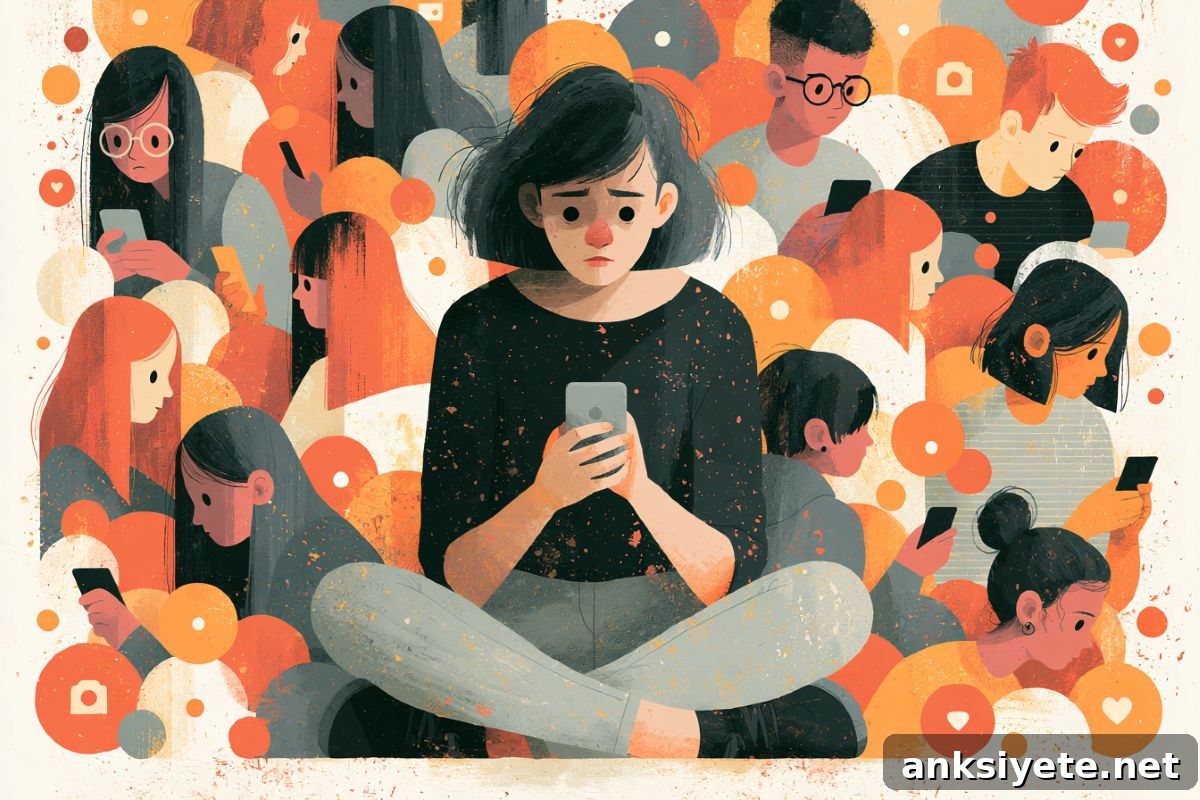
Summary: New longitudinal research followed 1,066 participants from about age 12 onward, collecting annual self-reported data from 2018 through 2025. The study captures the era of short-form, algorithm-driven platforms such as TikTok and identifies gender differences: girls reported higher daily social media use and a stronger connection between heavy use and anxiety symptoms.
Key Facts
- Usage and mental health risks: Teens who spent six or more hours per day on social media were about twice as likely to show anxiety symptoms and three times as likely to report suicidal thoughts compared with peers who spent under one hour daily.
- Longitudinal cohort: The research tracked 1,066 young people starting at an average age of 12, with annual surveys from 2018 to 2025 to reflect changes in platform use and content.
- Distribution of screen time: In the sample, 8.5% used social media under one hour per day, over one-third used 1–3 hours daily, nearly 38% used 3–6 hours, and 17.3% used more than six hours daily.
- Gender differences: Female participants reported higher overall social media use than males, and the link between very high use and anxiety was more pronounced among girls.
- Validated clinical measures: Researchers measured depression and anxiety with standardized instruments (CES-D and GAD scales) and assessed suicidal ideation with an established cross-cutting symptom measure.
Source: UT Houston
Key finding: In this sample, emerging adults who reported more than six hours per day on social media had higher odds of anxiety and suicidal ideation than those using social media less than an hour daily, after accounting for demographic factors.
The study, published in Pediatrics Open Science, was led by Jeff Temple, PhD, professor and associate dean for clinical research at UTHealth Houston School of Behavioral Health Sciences. Temple noted two main mechanisms that likely help explain the link between heavy social media use and worse mental health: upward social comparison and displacement of real-world activities that support wellbeing.
“When teens spend many hours on social platforms, they most often encounter curated highlight reels — people posting their best moments — which invites comparison,” Temple said. “That comparison can undermine self-esteem and increase anxiety. At the same time, heavy social media use may replace real-world social interaction, exercise, sleep, and other prosocial behaviors that protect against anxiety and depression.”
Temple also emphasized reverse causality is possible: young people already experiencing anxiety or depression might use social media more as a form of escape or coping, meaning the relationship is likely bi-directional.
This study differs from earlier work by beginning with a younger, diverse cohort at a time when short-form video platforms expanded rapidly. Participants were encouraged to consult their phone’s screen-time reports when answering how many hours per day they spent on social media, increasing the accuracy of self-reported use.
Key Questions Answered:
A: Older studies primarily focused on older adolescents or college students and often predated the rise of short-form, algorithmic platforms like TikTok. This study follows a younger, racially and socioeconomically diverse cohort from early adolescence into emerging adulthood, covering 2018–2025.
A: The authors point to two main processes: upward social comparison (comparing oneself to idealized online portrayals) and displacement (where screen time reduces participation in protective real-world activities such as sleep, exercise, and face-to-face socializing).
A: The relationship appears to be bi-directional. Excessive exposure to idealized content and disrupted routines can increase anxiety and suicidal thoughts, while youth already struggling with emotional distress may turn to social media more frequently as a coping strategy.
Editorial Notes:
- This article was edited by a Neuroscience News editor.
- The journal paper was reviewed in full by editorial staff.
- Additional context and clarification were provided by the newsroom.
About this neurodevelopment and mental health research news
Author: Catherine Marfin
Source: UT Houston
Contact: Catherine Marfin – UT Houston
Image: The image is credited to Neuroscience News
Original Research: Open access. “Associations Between Social Media Use and Mental Health in Emerging Adulthood” by Jeff R. Temple, Elizabeth Baumler, and Leila Wood. Pediatrics Open Science. DOI: 10.1177/21677026261450607
Abstract
Associations Between Social Media Use and Mental Health in Emerging Adulthood
Introduction
Social media plays a central role in the daily lives of adolescents and emerging adults. While moderate use can support connection and belonging, extensive engagement has been associated with poorer mental health. Much prior research concentrated on older adolescents or college samples and often predated popular short-form platforms. This study examines cross-sectional associations between daily social media use and symptoms of anxiety, depression, and suicidal ideation in a diverse sample of emerging adults.
Methods
Researchers used data from the control arm of a longitudinal trial that began in 2018 (mean baseline age 12.7) with annual follow-ups. Wave 7 (fielded February–August 2025) included social media use questions. The analytic sample (n = 1,066; mean age 19.7) was 51.7% female and racially and ethnically diverse. Depression and anxiety were measured with the CES-D and GAD scales, using established cutoffs to indicate probable cases. Suicidal ideation in the past year was assessed with a DSM-5 Level 1 cross-cutting item. Social media use was self-reported across five categories ranging from none to over six hours per day; respondents were encouraged to check phone screen-time data before answering. Analyses adjusted for sex, race, ethnicity, perceived income, and clustering, using multilevel linear and logistic regression models.
Results
Distribution of daily social media use was: under 1 hour (8.5%), 1–3 hours (36.3%), 3–6 hours (37.9%), and over 6 hours (17.3%). Higher social media use was associated with progressively greater symptoms of anxiety and depression and increased reports of past-year suicidal ideation. These associations remained after adjusting for demographic covariates. Compared to those using social media under one hour daily, participants reporting over six hours per day had significantly higher odds of anxiety (OR ≈ 2.6) and suicidal ideation (OR ≈ 3.2) and higher symptom scores for depression and anxiety. Sex-stratified analyses showed similar overall patterns; however, the link between very high social media use and anxiety symptoms was stronger among girls, with a significant interaction observed at the highest use category.
These findings support careful consideration of how modern social platforms and high screen time may affect mental health, and they underscore the need for further research to clarify causality and identify effective prevention or intervention strategies.