Summary: Chemically stimulating specific neurons and providing an enriched environment reverses structural and connectivity changes in a mouse model of frontotemporal dementia, restoring aspects of neural circuitry. If these findings translate to humans, they could inform new approaches to reduce cognitive decline in dementia.
Source: SfN
New research shows that dysfunctional neurons in the hippocampus of adult female mice modeling frontotemporal dementia can be repaired and reconnected to distant brain regions. The similarities between this mouse model and human patient tissue suggest a promising therapeutic target for dementia.
The hippocampus, a brain region central to learning, memory, and lifelong neurogenesis, is heavily implicated in many neurodegenerative conditions. Researchers led by María Llorens-Martín at the Centro de Biología Molecular “Severo Ochoa” (CBMSO, CSIC-UAM) used a genetic mouse model of frontotemporal dementia (FTD) to examine how the disease affects dentate granule cells (DGCs), the newborn neurons generated in the dentate gyrus (DG).
Comparative analysis revealed striking parallels between the morphology and connectivity of newborn DGCs from the FTD mice and DGCs examined in human brain tissue from FTD patients. In the mouse model, two interventions—environmental enrichment (housing that includes running wheels, novel objects, and sensory stimulation) and targeted chemoactivation of neurons—partially reversed disease-related changes. Treated mice showed improved neuronal structure and a partial restoration of long-range and local synaptic connections that were disrupted by the disease. These outcomes point to activity-dependent mechanisms that can rewire affected circuits and hint at strategies that might be adapted to preserve cognitive function in aging humans with dementia.
Source:
SfN
Media contact:
David Barnstone – SfN
Image source:
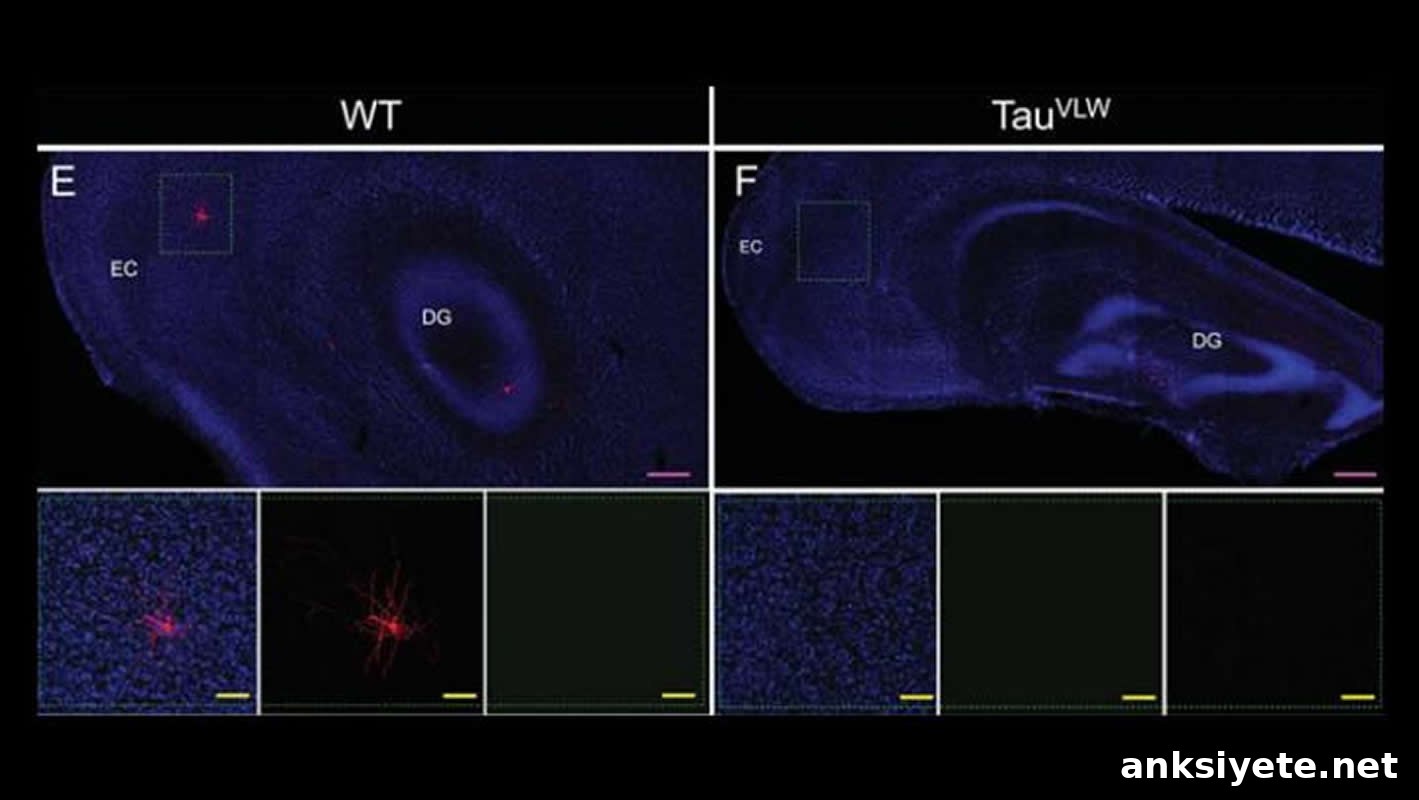
The image is credited to Terreros-Roncal et al., Journal of Neuroscience (2019).
Original Research: Closed access
“Activity-dependent reconnection of adult-born dentate granule cells in a mouse model of frontotemporal dementia.” J. Terreros-Roncal, M. Flor-García, E. P. Moreno-Jiménez, N. Pallas-Bazarra, A. Rábano, N. Sah, H. van Praag, D. Giacomini, A. F. Schinder, J. Ávila, and M. Llorens-Martín. Journal of Neuroscience. DOI: 10.1523/JNEUROSCI.2724-18.2019
Abstract (paraphrased)
The study reports pronounced morphological and connectivity alterations in dentate granule cells (DGCs) from patients with frontotemporal dementia (FTD) and in the TauVLW mouse model of the disease. Using color-coded retroviral labeling, the authors traced newborn DGCs over time in female TauVLW mice to characterize when and how these alterations emerge. Complementary molecular tracers—PSD95:GFP and Synaptophysin:GFP—revealed major disruptions in both incoming (afferent) and outgoing (efferent) synaptic contacts of the newborn DGCs. Monosynaptic retrograde rabies tracing demonstrated that many of these cells had lost connections with distant brain regions and with excitatory local circuits, while showing an abnormal predominance of local inhibitory input. Consistent with this, markers of inhibitory synapses were elevated in the dentate gyrus of both TauVLW mice and FTD patient tissue, and an increased number of Neuropeptide Y–positive interneurons correlated with fewer activated egr-1–positive DGCs. Importantly, two interventions—environmental enrichment and chemoactivation—stimulated activity in newborn DGCs and reversed many of the morphological defects while partially restoring connectivity in the mouse model.
Significance
This work provides the first direct evidence that a specific population of adult-born hippocampal neurons becomes disconnected from broader brain networks in frontotemporal dementia. The discovery of matching structural changes in human FTD tissue and a mouse model strengthens the translational relevance. Crucially, the study demonstrates that activity-based interventions—in this case, environmental enrichment and targeted chemoactivation—can reverse structural defects and reconnect neurons, at least partially, suggesting activity-dependent therapies as a promising avenue to mitigate circuit failure in neurodegenerative disease.