
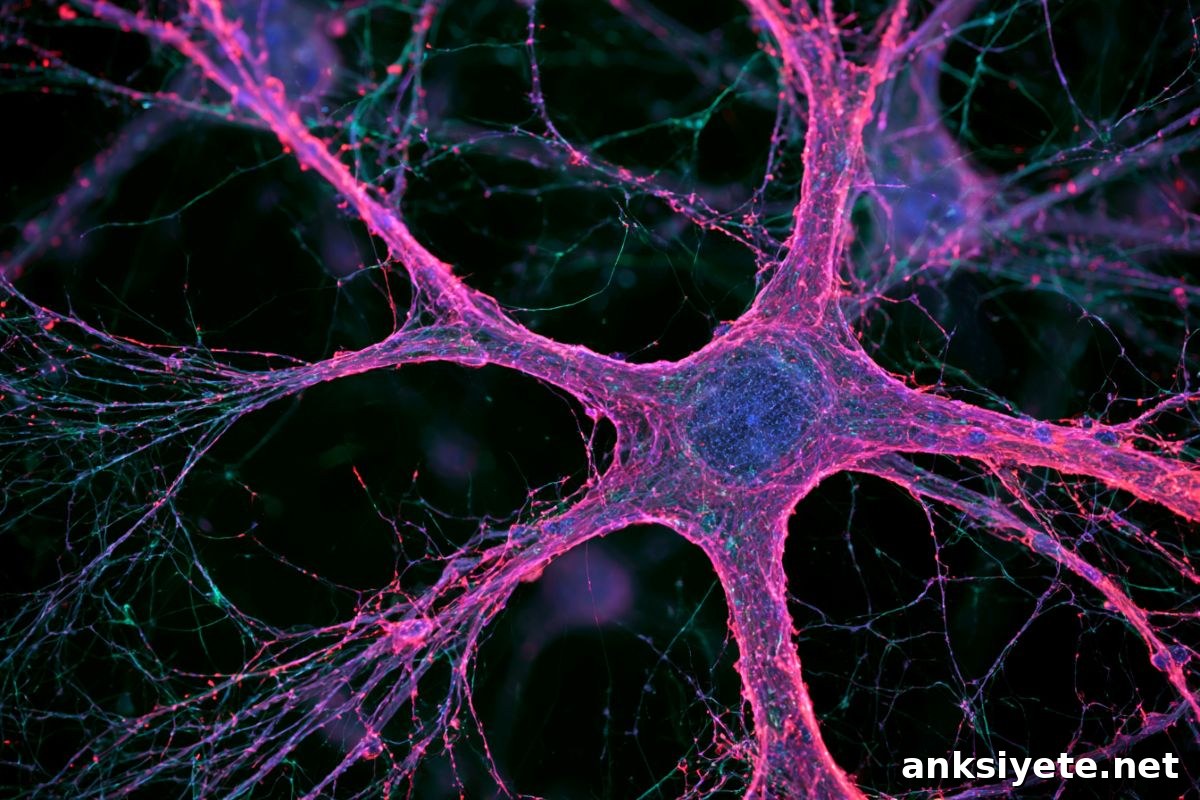
Summary: Recent evidence shows that astrocytes—long considered passive support cells—play an active, central role in neural circuitry and emotional regulation. Researchers mapped cellular mechanisms that convert healthy astrocytes into neurotoxic phenotypes and identified these glial changes as a core driver of overlapping psychiatric symptoms and instability in brain networks linked to mood disorders.
Key Facts
- Beyond the neuron-centric model: Traditional psychiatry emphasized neuronal signaling, but astrocytes are now recognized as essential regulators of mental health. They maintain synaptic stability, control neurotransmitter clearance, support metabolic homeostasis, and safeguard blood–brain barrier integrity—functions that directly affect mood and cognition.
- Microglia-induced neurotoxicity: Under chronic stress or inflammatory conditions, activated microglia release a trio of signaling molecules—interleukin-1-alpha (IL-1α), tumor necrosis factor-alpha (TNF-α), and complement protein C1q. This inflammatory cocktail triggers nearby astrocytes to adopt neurotoxic phenotypes that promote neuronal injury and synaptic loss.
- Neuroprotective astrocyte states: Anti-inflammatory mediators such as interleukin-10 (IL-10) and transforming growth factor-beta (TGF-β) drive astrocytes toward neuroprotective profiles that support tissue repair, neuronal survival, and synaptic recovery.
- Mechanisms linking astrocyte dysfunction to mood symptoms: The review identifies specific cellular disruptions that compromise emotional regulation:
- Disrupted glutamate transport: Reduced clearance of glutamate results in extracellular accumulation and excitotoxicity, damaging neurons and synapses.
- Abnormal calcium signaling: Dysregulated intracellular calcium produces erratic astrocyte–neuron communication and destabilizes network firing patterns.
- Impaired potassium buffering: Failure to restore ionic balance leaves circuits hyperexcitable and prone to stress-triggered dysfunction.
- Explaining overlapping clinical symptoms: Because astrocytes influence large-scale network stability, their dysfunction helps explain why depression, anxiety, and bipolar disorder share symptoms such as cognitive impairment, emotional instability, heightened stress sensitivity, and chronic neuroinflammation.
- New therapeutic directions: Targeting astrocytic glutamate transporters, calcium homeostasis, inflammatory pathways, ion channels, and epigenetic regulators may offer biologically informed strategies for treating mood disorders, complementing existing antidepressants and anxiolytics.
Source: Brain Network Disorders
Mood disorders—including major depressive disorder, anxiety disorders, and bipolar disorder—affect millions and remain leading causes of disability worldwide. While most current treatments focus on neuronal signaling, mounting research highlights astrocytes as active players in mental health and disease.
Astrocytes perform essential tasks: they regulate neurotransmitter levels at synapses, support neuronal energy metabolism, preserve the blood–brain barrier, and modulate local inflammatory responses. When these functions falter, astrocytes can transition into harmful states that amplify inflammation, impair neuronal function, and produce emotional and cognitive disturbances.
To clarify how these transitions occur, a team led by Prof. Jingji Wang and Prof. Guoqi Zhu at Anhui University of Chinese Medicine, together with Prof. Shaojie Yang at the Second Affiliated Hospital of Anhui University of Chinese Medicine, conducted a comprehensive review of astrocyte subtype dynamics in mood disorders.
Their analysis synthesizes evidence on inflammatory signaling, metabolic dysregulation, epigenetic control, ion channel dysfunction, and astrocyte–microglia interactions that together modulate astrocyte phenotype and influence disease trajectories. The review, published in Brain Network Disorders on May 22, 2026, reframes astrocytes as active regulators of circuits underlying emotion and cognition.
Specifically, the authors describe how microglial activation and proinflammatory mediators (IL-1α, TNF-α, C1q) push astrocytes toward neurotoxic states, whereas anti-inflammatory factors (IL-10, TGF-β) favor protective phenotypes. They map how disruptions in glutamate uptake, calcium signaling, potassium buffering, and redox balance contribute to synaptic dysfunction and network instability in regions tied to mood regulation, including the hippocampus, amygdala, and lateral habenula.
The review argues that altered astrocyte activity can weaken the blood–brain barrier, dysregulate ATP-mediated signaling, heighten inflammatory cascades, and disturb neuron–glia communication—changes that ultimately undermine synaptic plasticity and emotional resilience.
“Understanding astrocyte subtype dynamics could fundamentally reshape treatment approaches to mood disorders,” says Prof. Wang. “Shifting focus from neurons alone to include glial biology reveals new molecular targets and pathways relevant to inflammation, metabolism, and synaptic regulation.”
The authors highlight promising intervention points: enhancing astrocytic glutamate transport, stabilizing intracellular calcium, modulating inflammatory signaling, and targeting epigenetic mechanisms that control astrocyte plasticity. Such strategies could reduce neurotoxic signaling while restoring protective astrocyte functions, offering complementary options to current psychiatric medications.
Prof. Zhu emphasizes that clarifying the cellular and molecular mechanisms behind astrocyte subtype plasticity will accelerate translation to clinical therapies: “Astrocytes represent promising therapeutic entry points for future psychiatric medicine. Detailed mechanistic studies are needed to develop safe, targeted treatments.”
Overall, the review integrates diverse lines of evidence to position astrocyte subtype dynamics as central components of mood disorder biology. By linking inflammatory signaling, metabolic imbalance, ion channel dysfunction, and neuron–glia communication, the study provides a broader, biologically grounded framework for understanding and treating depression, anxiety, bipolar disorder, and related neuropsychiatric conditions.
Key Questions Answered:
A: For decades, psychiatry emphasized neurotransmitter imbalances among neurons. However, this approach overlooks the brain’s support system. Astrocytes, the most abundant brain cells, clear excess neurotransmitters, supply metabolic substrates to neurons, and maintain the blood–brain barrier. If astrocytes fail or become neurotoxic, neuronal signaling alone cannot restore healthy circuit function, explaining why neuron-targeted therapies sometimes provide incomplete relief.
A: Chronic inflammation or prolonged stress activates microglia, which release IL-1α, TNF-α, and C1q. These signals induce a molecular reprogramming in astrocytes, shifting them from supportive to neurotoxic states. Neurotoxic astrocytes then amplify inflammation, damage synapses, and destabilize circuits that control mood and stress responses.
A: The review offers a detailed molecular roadmap—identifying ion channels, glutamate transporters, inflammatory pathways, and epigenetic regulators that determine astrocyte states. This blueprint opens new avenues for drug development aimed at protecting or restoring astrocyte function, complementing neuron-focused therapies and addressing underlying structural and metabolic contributors to mood disorders.
Editorial Notes:
- This article was edited by a neuroscience editor.
- Journal paper reviewed in full.
- Additional context added by editorial staff.
About this psychology and neuroscience research news
Author: Mengyuan Duan
Source: Brain Network Disorders
Contact: Mengyuan Duan – Brain Network Disorders
Image: The image is credited to Neuroscience News
Original Research: Open access. “Astrocyte subtype dynamics in mood disorders: Current insights and future directions” by Daokang Chen, Guoqi Zhu, Jingji Wang, Shaojie Yang. Brain Network Disorders
DOI: 10.1016/j.bnd.2026.04.003
Abstract
Astrocyte subtype dynamics in mood disorders: Current insights and future directions
Astrocytes are increasingly recognized as key contributors to the pathophysiology of mood disorders. Dynamic shifts in astrocyte subtypes influence disease progression and clinical outcomes. This review summarizes current knowledge on how inflammatory responses, metabolic alterations, cell signaling pathways, epigenetic regulation, and ion channel function govern astrocyte phenotype changes and thereby affect mood disorder biology.
By clarifying the mechanisms behind astrocyte transitions between neuroprotective and neurotoxic states, the review highlights novel therapeutic targets and supports further research into astrocyte-directed treatments for depression, anxiety, bipolar disorder, and related neuropsychiatric conditions.