
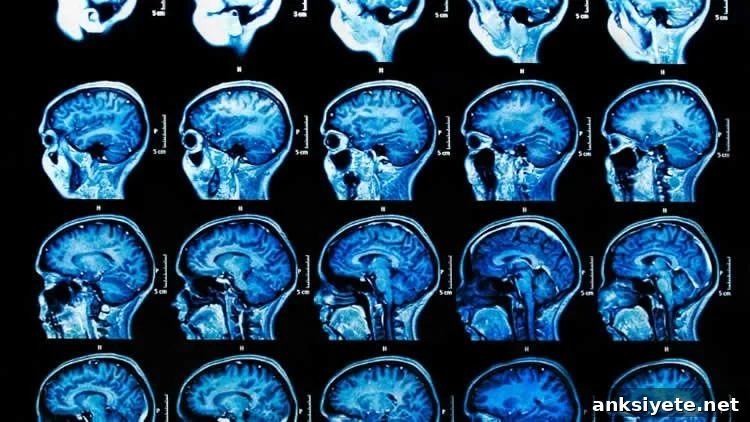
Summary: New neuroimaging research shows that adolescents with conduct disorder exhibit altered connectivity between the prefrontal cortex and the amygdala, which may explain difficulties in emotion regulation and an increased risk of mood problems.
Source: University of Bath.
New research offers important insights into why some young people with severe antisocial behaviour struggle to regulate emotions and why they may be at greater risk of developing anxiety or depression.
The study, reported in the journal Social Cognitive and Affective Neuroscience, used functional MRI (fMRI) and connectivity analyses to examine brain activity in adolescents diagnosed with Conduct Disorder (CD). Conduct Disorder is characterised by a range of antisocial behaviours, from deceit and truancy to aggressive acts and weapon use in its most severe presentations.
Researchers from the University of Bath, the University of Cambridge and the California Institute of Technology investigated how the amygdala — a central brain region for processing emotion — communicates with prefrontal areas involved in decision-making and behavioural control. They also explored how these patterns relate to the severity of conduct problems and to psychopathic traits, a set of personality characteristics linked to deficits in guilt, remorse and empathy.
Wired differently?
The team conducted fMRI scans on male adolescents with Conduct Disorder and on typically developing peers while participants viewed emotional faces. Prior work had shown that youths with CD often struggle to recognise angry and sad facial expressions; this study aimed to identify the neural mechanisms behind that impairment.
Results showed that adolescents with Conduct Disorder exhibited reduced amygdala activation in response to angry and sad faces compared with neutral expressions. Reduced amygdala responses resemble patterns seen in individuals with amygdala damage, who also have difficulty reading others’ emotions, implying a possible neural basis for some of the social and emotional problems in CD.
Crucially, the study examined effective connectivity — how activity in one brain region influences another during emotional processing. The researchers focused on connections between the amygdala and the anterior cingulate cortex and other parts of the prefrontal cortex that typically help regulate emotional responses.
Contrary to some expectations, connectivity differences depended on the presence of psychopathic traits. Adolescents with Conduct Disorder but low levels of psychopathic traits showed abnormal connectivity between the amygdala and prefrontal regions. In contrast, those with Conduct Disorder and high levels of psychopathic traits showed relatively normal amygdala–prefrontal connectivity.
Related mental health problems
Dr Graeme Fairchild of the University of Bath’s Department of Psychology commented that these findings may explain why youths with Conduct Disorder without psychopathic traits have particular difficulty controlling intense negative emotions such as anger. When the prefrontal regions that normally regulate limbic structures like the amygdala are less effective, emotional responses can become harder to manage.
Over time, impaired emotion regulation could increase vulnerability to comorbid conditions such as depression and anxiety. By contrast, adolescents with high levels of psychopathic traits may be less likely to develop such internalising disorders because their regulatory circuits appear differently organised.
These distinctions suggest that Conduct Disorder is not a uniform condition at the neural level; instead, subgroups defined by psychopathic traits show different patterns of brain function and interaction, which may influence their emotional and behavioural outcomes.
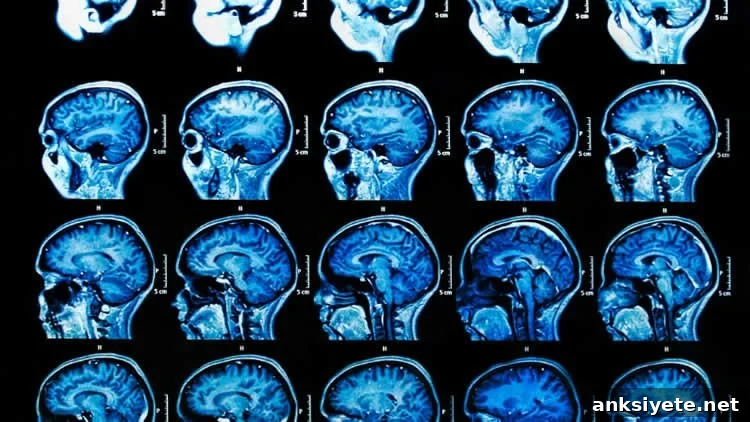
More targeted interventions
Given the heterogeneity in brain wiring, the researchers say treatments for Conduct Disorder could be tailored more precisely. Psychological interventions that strengthen emotion-regulation skills may be especially helpful for youths with CD who do not show pronounced psychopathic traits. These therapies might focus on improving recognition of others’ emotions, managing anger and reducing impulsive reactions.
The team also highlights the potential of neurofeedback and brain-based training approaches that use real-time imaging signals to help young people learn to modulate activity in specific neural circuits. While still experimental, such approaches could complement psychological therapies where appropriate.
The researchers are now undertaking a larger European study that includes participants from the UK to investigate sex differences in antisocial behaviour and to determine whether boys and girls with Conduct Disorder show similar or distinct neural abnormalities compared with typically developing peers.
Funding: Supported by The Wellcome Trust and the Medical Research Council.
Source: University of Bath
Publisher: Neuroscience News
Image source: University of Bath.
Original research: Open-access article titled “Psychopathic traits influence amygdala–anterior cingulate cortex connectivity during facial emotion processing” by Michael P Ewbank, Luca Passamonti, Cindy C Hagan, Ian M Goodyer, Andrew J Calder and Graeme Fairchild, published in Social Cognitive and Affective Neuroscience (doi: 10.1093/scan/nsy019). Published April 12, 2018.
University of Bath. “Brains of Young People with Severe Behavioral Problems ‘Wired’ Differently.” Neuroscience News, May 1, 2018.
Abstract
Psychopathic traits influence amygdala–anterior cingulate cortex connectivity during facial emotion processing
Evidence indicates that youths with antisocial behaviour or psychopathic traits have deficits in recognising facial emotion, but the neural mechanisms remain unclear. Using fMRI and psycho-physiological interaction methods, the study examined amygdala responses and effective connectivity in 46 male youths with Conduct Disorder and 25 typically developing controls (ages 16–21) during emotional face processing. Compared with controls, youths with Conduct Disorder showed reduced amygdala activity to angry and sad faces. Group differences in amygdala-related effective connectivity were more nuanced: psychopathic traits were linked to reduced amygdala–ventral anterior cingulate cortex connectivity for angry versus neutral faces, while amygdala activation itself was more closely associated with Conduct Disorder diagnosis. The findings indicate that Conduct Disorder and psychopathic traits affect amygdala activation and limbic-prefrontal interactions in different ways during facial emotion processing.