
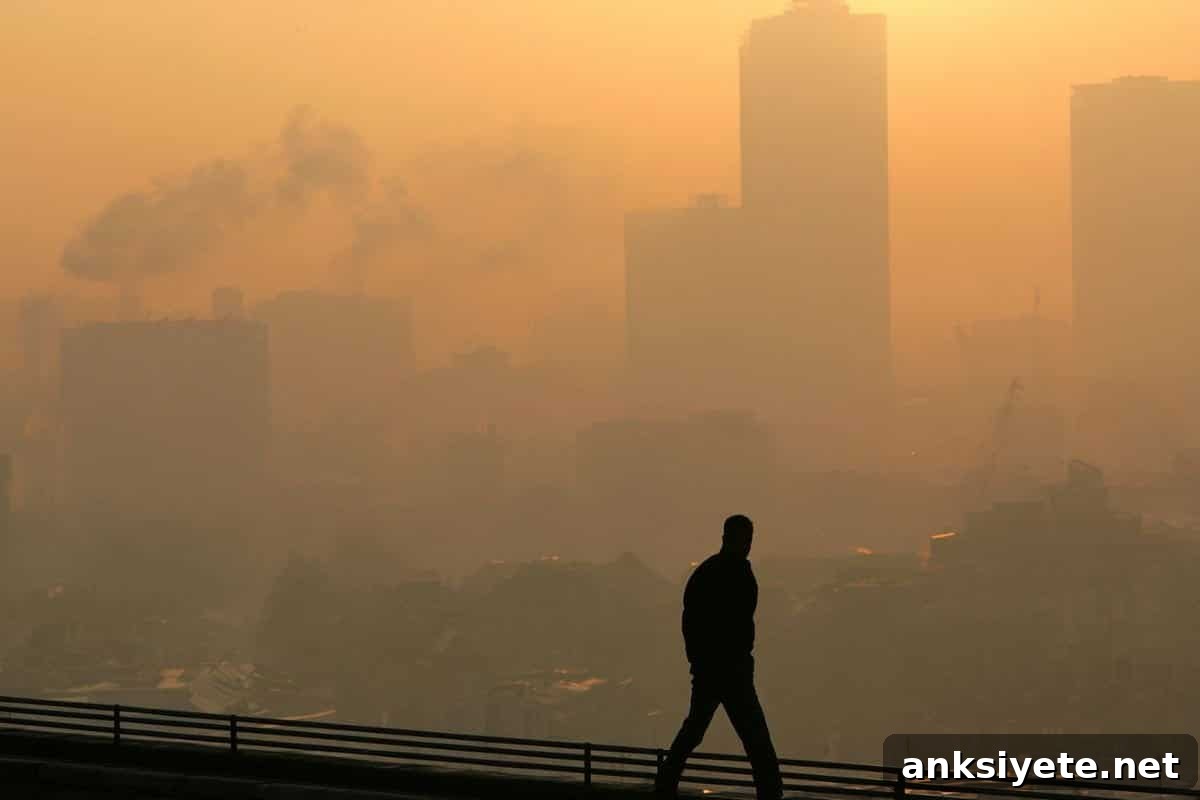
Summary: A pooled analysis of 26 international studies reveals a consistent association between long-term exposure to ambient fine particulate air pollution and an increased risk of Parkinson’s disease. The evidence indicates that chronic exposure to PM2.5 and PM10 elevates the relative risk of developing Parkinson’s, likely through mechanisms involving oxidative stress and neuroinflammation that damage dopamine-producing neurons in vulnerable people.
Researchers propose that inhaled microscopic particles can cross biological barriers, provoke persistent inflammation and oxidative damage in the nervous system, and accelerate pathological changes—such as abnormal alpha-synuclein aggregation—that underpin Parkinson’s disease in genetically susceptible individuals.
Key Facts
- Pollutants Identified: The Cambridge-led meta-analysis isolated two airborne particulate classes linked to higher Parkinson’s risk:
- PM2.5 (fine particulate matter): Particles 2.5 microns or smaller that penetrate deep into the lungs and can enter the bloodstream. Sources include vehicle exhaust and non-exhaust traffic emissions, power plants, industrial activity, wood burning, and secondary atmospheric chemistry.
- PM10 (coarse particulate matter): Particles up to 10 microns from construction dust, roadwear, industrial emissions, pollen and other coarse sources including brake and tyre wear.
- Risk Estimates: The pooled models indicate that every 5 μg/m³ increase in long-term PM2.5 exposure is associated with roughly a 10% rise in relative Parkinson’s risk, while each 15 μg/m³ rise in PM10 corresponds to an estimated 18% increase in risk.
- Urban Context: For perspective, average roadside measurements reported for Central London in 2023 were about 10 μg/m³ for PM2.5 and 17 μg/m³ for PM10—illustrating that many urban residents routinely experience exposures above baseline safety levels.
- Proposed Biological Pathway: Inhaled particles can promote oxidative stress and chronic neuroinflammation, which may interact with genetic vulnerabilities to encourage misfolding and accumulation of alpha-synuclein and progressive loss of dopaminergic neurons—hallmarks of Parkinson’s disease.
- Policy Tools: An open-access interactive evidence map compiled by Dr. Haneen Khreis and colleagues reviews more than 1,000 urban interventions—such as congestion charging, low-emission zones, expanded mass transit and active travel infrastructure—that can reduce traffic-related emissions and lower human exposure.
Source: University of Cambridge
Overview: Long-term exposure to specific forms of air pollution is linked to higher Parkinson’s disease incidence, according to a systematic review and meta-analysis from researchers at IMS Epidemiology, University of Cambridge. The study synthesizes evidence from hundreds of thousands of participants across multiple regions to provide a clearer picture where individual studies alone were underpowered or inconsistent.
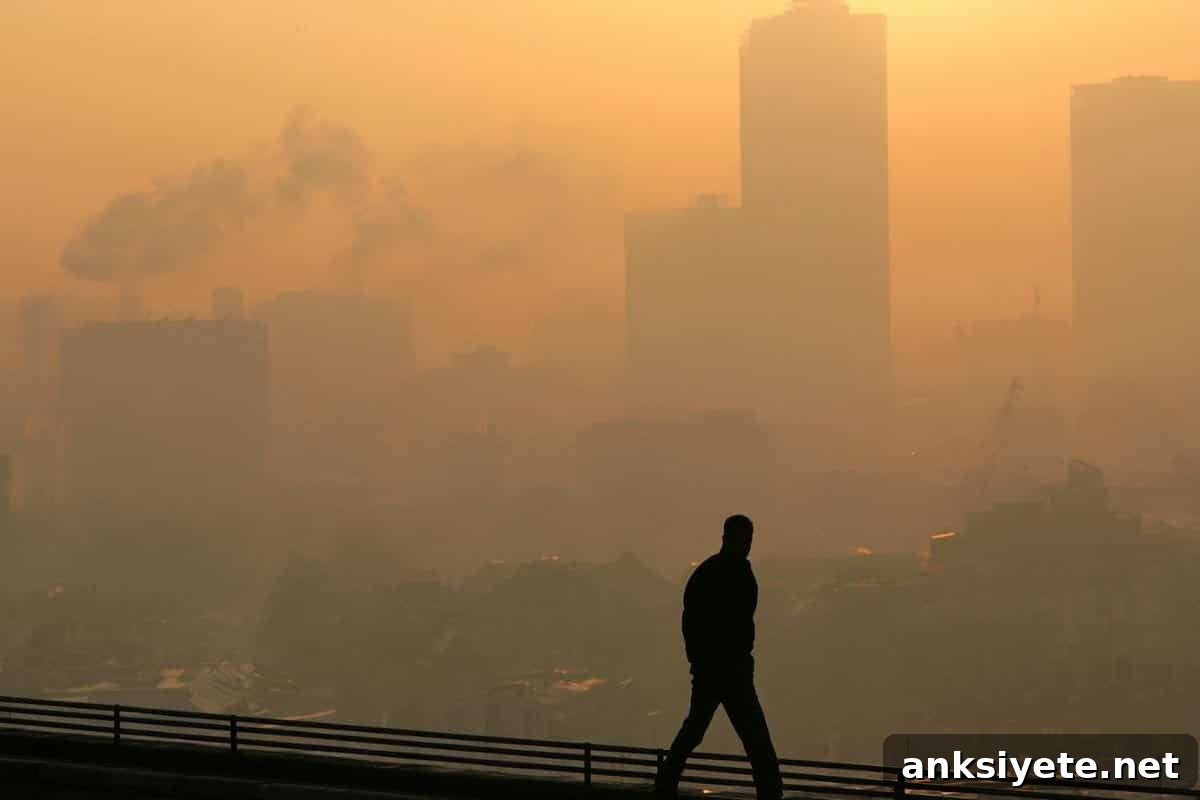
Published in Environment International, the review combined 26 studies on Parkinson’s, plus three studies each on multiple sclerosis (MS) and motor neurone disease (MND/ALS), to evaluate long-term outdoor air pollution exposure (≥1 year) and neurological disease incidence. The authors conducted meta-analyses using random-effects models and assessed heterogeneity and exposure–response patterns across studies from North America, Europe and Asia.
Key quantitative findings: per 5 μg/m³ increase in PM2.5 the pooled Parkinson’s risk estimate was about 10% (95% CI 3–19%); per 15 μg/m³ increase in PM10 the pooled estimate was about 18% (95% CI 1–38%). Effects varied by region, with the largest PM2.5-associated risk observed in studies from Asia. Prediction intervals indicated variability across settings, underscoring the need to consider local exposure contexts.
Evidence linking other common pollutants—such as nitrogen dioxide (NO2), carbon monoxide (CO), sulphur dioxide (SO2), ozone and soot—to Parkinson’s was inconclusive, mainly because of limited study numbers and inconsistent designs. Similarly, the review found no clear association between air pollution and MS or MND, though the authors emphasize that the evidence base for those diseases remains very limited.
Dr. Annalan Navaratnam, Clinical Research Fellow at IMS Epidemiology, noted that while robust, well-powered studies are still relatively few, the accumulating evidence supports a link between particulate pollution and Parkinson’s and calls for larger, better-designed studies to refine risk estimates and understand mechanisms.
First author Alexandra Tien-Smith highlighted that these findings add to a growing body of evidence on the broad harms of air pollution across organ systems and on premature mortality. The research received partial funding from the European Research Council and EU research programmes.
To support policy action, the research team points to an existing open-access systematic evidence map that evaluates the effectiveness of urban-level interventions—covering transport planning, congestion measures, housing policy, mass transit investment, electric vehicles, and promotion of walking and cycling—to reduce emissions, human exposure and related health impacts.
Key Questions Answered
A: Fine particles like PM2.5 are small enough to penetrate deep into the lungs and enter the bloodstream. They can also travel directly to the brain via the olfactory pathway, crossing the olfactory epithelium and moving along the olfactory nerve. Once in brain tissue, they can trigger chronic inflammation and oxidative stress that contribute to neuronal damage.
A: Persistent particle exposure can provoke oxidative stress and sustained neuroinflammation. In individuals with genetic susceptibility, these processes may promote misfolding and aggregation of alpha-synuclein and accelerate loss of dopaminergic neurons—the pathological features associated with Parkinson’s disease.
A: Current evidence is inconclusive. The Cambridge review found no clear association for MS or MND, but the number of relevant studies is small and often underpowered. Larger, well-designed studies are needed to determine whether air pollution contributes to these conditions.
Editorial Notes
- This article was edited by a Neuroscience News editor.
- The journal paper was reviewed in full by the editorial team.
- Additional context was added by staff to aid reader understanding.
About this Parkinson’s disease research news
Author: Craig Brierley, University of Cambridge
Source: University of Cambridge
Contact: Craig Brierley – University of Cambridge
Image credit: Neuroscience News
Original Research: Open access. “Association of long-term outdoor air pollution exposure with incidence of Parkinson’s disease, multiple sclerosis and motor neuron diseases: a systematic review and meta-analysis” by Annalan M. D. Navaratnam et al., Environment International. DOI: 10.1016/j.envint.2026.110377
Abstract
Association of long-term outdoor air pollution exposure with incidence of Parkinson’s disease, multiple sclerosis and motor neuron diseases: a systematic review and meta-analysis
Background
Parkinson’s disease (PD), multiple sclerosis (MS) and motor neurone disease (MND) are progressive neurological disorders with rising global prevalence. Prior studies on long-term air pollution and these diseases have produced inconsistent results, often due to limited sample sizes or heterogeneous methods.
Methods
The team conducted a systematic review and meta-analysis of studies assessing long-term (≥1 year) outdoor air pollution exposure and adult incidence of PD, MS and MND. Searches covered multiple databases up to July 2025. Eligible study designs included cohort, case-control, cross-sectional and ecological studies. Meta-analyses employed random-effects models with assessment of heterogeneity, meta-bias and exposure–response shapes. PROSPERO registration: CRD42023417961.
Results
From 42 included papers, 26 studies were meta-analysed for PD, and three each for MS and MND. Studies spanned North America, Europe and Asia. For PM2.5, every 5 μg/m³ increase was associated with a pooled PD risk estimate of 10% (95% CI 3–19%); for PM10, every 15 μg/m³ increase corresponded to an 18% pooled risk increase (95% CI 1–38%). Regional variation was apparent, with the strongest PM2.5 signal identified in Asia. There was no clear evidence of associations between PM2.5 or NO2 and MS, or PM2.5 and MND, but the evidence base for these outcomes was very limited.
Conclusion
This systematic review and meta-analysis reports an increased risk of Parkinson’s disease associated with long-term exposure to PM2.5 and PM10. For MS and MND the current evidence is insufficient to draw conclusions. Given the relative rarity of these neurodegenerative diseases, alternative study designs and larger datasets are needed to strengthen the evidence and guide public health and urban policy responses.