
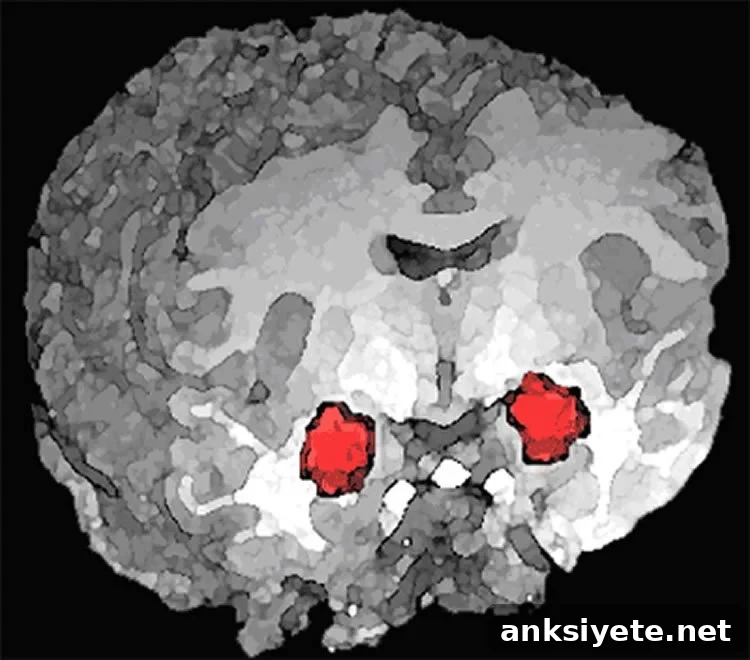
Summary: UCLA researchers report that the amygdala contains far more diverse cell types than previously recognized, and they introduce a method to link specific cell types to behavior.
Source: UCLA
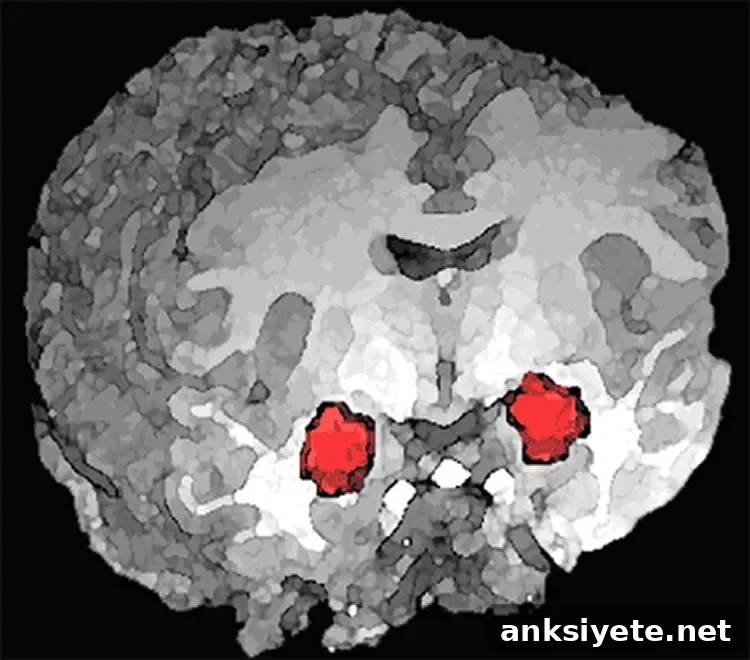
UCLA researchers have produced the first comprehensive cellular map of the amygdala, a brain region central to emotion and social behavior and implicated in conditions such as autism spectrum disorder and depression. The team also describes a new technique for systematically connecting distinct brain cell types to specific behavioral functions.
“Cellular diversity in the brain has been underappreciated,” said study senior author Weizhe Hong, assistant professor of biological chemistry and neurobiology at the David Geffen School of Medicine at UCLA. “By identifying the many cell types that make up the amygdala and developing a method to probe their roles, this work opens a path to better understand how this region supports emotional and social processing and how those processes can go awry in mental health disorders.”
The results were published in the October 11 issue of the journal Neuron.
Unlike most organs, the brain is composed of a wide variety of cell types whose differences underpin cognitive functions such as learning, memory, emotional arousal and decision-making, as well as many neurological and psychiatric disorders. Using modern single-cell RNA sequencing techniques that allow rapid transcriptional profiling of individual cells, the UCLA team discovered that the amygdala is more cellularly diverse than earlier studies suggested. Their analysis revealed 16 distinct neuronal populations along with multiple classes of non-neuronal supporting cells.
Charting this cellular diversity was an essential first step. “Identifying different cell types is important, but the next challenge is to link those cell types to behavior and disease,” Hong said. “Until now, there has not been a systematic approach to do that.”
To connect cell types with function, the researchers developed a technique they call Act-seq. This method addresses a common technical problem in single-cell transcriptional profiling: conventional tissue dissociation procedures can induce artificial changes in gene expression that obscure genuine, activity-related signals. Act-seq minimizes those artificial transcriptional perturbations, enabling faithful detection of both baseline gene expression and rapid, behavior- or experience-driven transcriptional responses.
Using Act-seq, the team identified two of the 16 neuronal subtypes in the amygdala that are particularly involved in stress-related responses. The method also proved sensitive enough to detect acute molecular and cellular changes that occur after brain injury or intense neuronal activity. For example, the group observed a marked activation of glial cells—supporting cells in the brain—immediately following a seizure event, demonstrating Act-seq’s utility for capturing rapid, cell-type-specific responses.
The research group is applying Act-seq more broadly to unravel how individual amygdala components drive emotional and social behavior and to investigate how those circuits are altered in mental disorders. “Dissecting the amygdala into its constituent cell types and mapping their functions will provide new insights into the neural basis of emotion and social behavior,” Hong said.
Authors on the study include Ye Emily Wu, Lin Pan and Yanning Zuo of the departments of biological chemistry and neurobiology at UCLA; Xinmin Li of the department of pathology at UCLA; and Weizhe Hong.
Source: David Olmos, UCLA
Image source: NeuroscienceNews.com image is in the public domain.
Original research: Abstract for “Detecting Activated Cell Populations Using Single-Cell RNA-Seq” by Ye Emily Wu, Lin Pan, Yanning Zuo, Xinmin Li, and Weizhe Hong in Neuron. Published online October 11, 2017. doi:10.1016/j.neuron.2017.09.026
Suggested citation: UCLA. Discovery in Amygdala Sheds Light on Emotional and Social Behavior Regulation. NeuroscienceNews. October 12, 2017.
Abstract
Detecting Activated Cell Populations Using Single-Cell RNA-Seq
Highlights
• Act-seq reduces artificial transcriptional changes that arise during tissue dissociation
• Act-seq enables unbiased characterization of cell types and their rapid activation states
• Application of Act-seq provides the first detailed molecular taxonomy of the amygdala
• Act-seq identifies specific neuronal subpopulations that are activated by stress
Summary
Single-cell RNA sequencing provides a powerful approach for identifying the cell types that mediate defined behavioral functions and for uncovering the molecular programs they engage. A major barrier has been transcriptional artifacts introduced during conventional dissociation of tissue into single cells, which can mask true activity-induced gene expression. The authors developed Act-seq to minimize these artificial effects, allowing accurate measurement of both baseline molecular identities and rapid, activity-dependent transcriptional changes. Applying Act-seq to the amygdala, they produced the first detailed molecular taxonomy of its constituent cell types. The method reliably detected seizure-induced acute gene expression changes across multiple cell types and revealed cell-type-specific activation profiles. In addition, the study found that acute stress preferentially activates neuronal subpopulations that express the neuropeptide gene Cck. Act-seq thus creates a framework for linking physiological stimuli with acute transcriptional dynamics in defined cell types across complex tissues.
“Detecting Activated Cell Populations Using Single-Cell RNA-Seq” by Ye Emily Wu, Lin Pan, Yanning Zuo, Xinmin Li, and Weizhe Hong. Neuron. Published online October 11, 2017. doi:10.1016/j.neuron.2017.09.026