
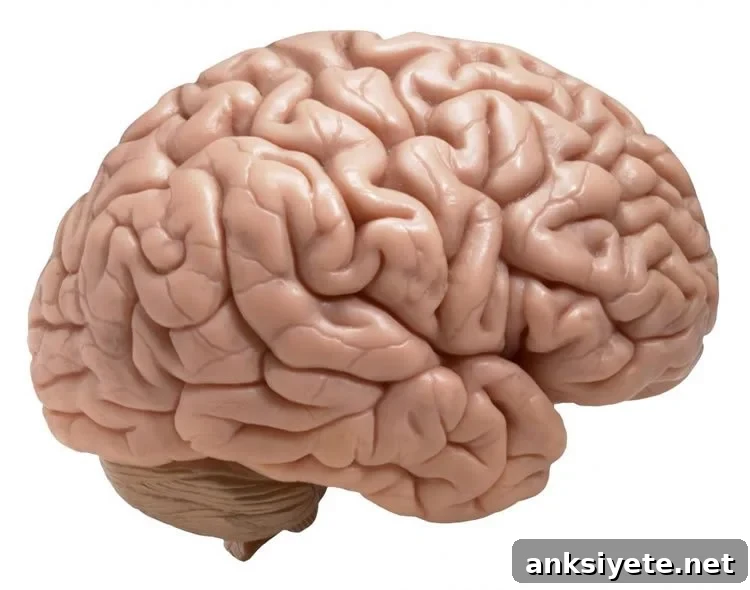
Preteens who experiment or seek out new experiences may have brain wiring that differs from their less exploratory peers, according to a new study presented at the American Academy of Neurology’s 67th Annual Meeting in Washington, DC, April 18–25, 2015.
Adolescence marks the start of greater curiosity, risk-taking and exploration, but the underlying neural mechanisms that support these behaviors are not yet fully understood. Andrew Kayser, MD, PhD, of the University of California, San Francisco, and a member of the American Academy of Neurology, led a study examining how individual differences in exploration relate to brain structure and activity. Previous research in adults has linked the rostrolateral prefrontal cortex to complex decision-making and a willingness to seek new experiences; this study investigates whether similar patterns appear early in adolescence, during the preteen years when exploratory behavior often increases.
The research enrolled 62 girls ages 11 to 13 and combined behavioral testing with magnetic resonance imaging (MRI) to assess brain function. To measure exploration, participants completed a reward-based task that required learning by trial and error. The task used a clock-face interface: a second hand rotated once every five seconds, and participants earned points based on when they stopped the hand. Because the most rewarding time changed and was not obvious at first, participants had to try different stopping times to discover which actions produced higher rewards. This setup captured real-time choices reflecting exploration versus exploiting known rewards.
Based on their performance in the reward task, the girls were categorized into two groups: 41 “explorers,” who frequently varied their responses to test new options, and 21 “non-explorers,” who tended to repeat choices that had previously earned points. After grouping, researchers compared MRI scans to identify differences in functional connections among brain regions implicated in decision-making, bodily state awareness, and action execution.
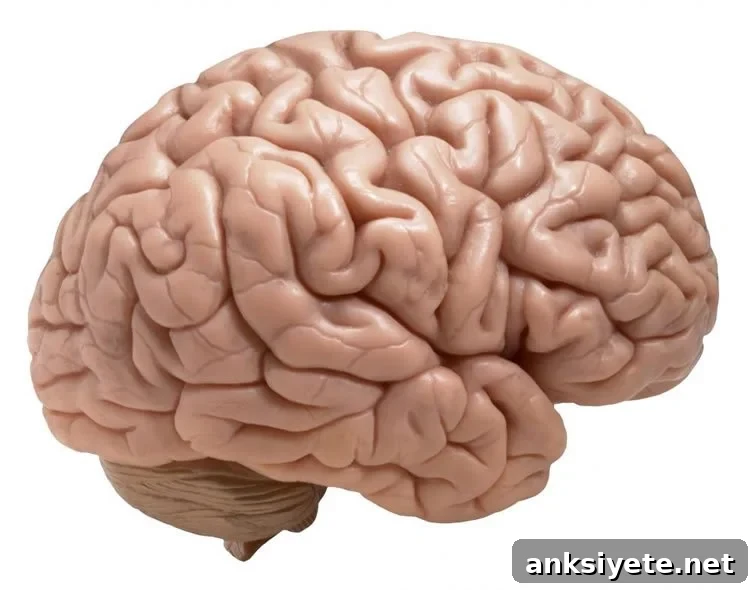
Analysis of the MRI data revealed that explorers showed stronger connectivity between the rostrolateral prefrontal cortex and two subcortical regions: the posterior insula and the putamen. The posterior insula is involved in sensing the state of the body—including bodily feelings and internal signals—while the putamen plays a key role in planning and executing actions. Notably, the data suggested a directional influence from the putamen and posterior insula toward the rostrolateral prefrontal cortex, indicating that bodily signals and action-related processing may be driving higher-order decision regions during exploratory behavior in preteens.
These findings shed light on the neural circuits that support the increase in exploratory behavior during early adolescence. The pattern—where somatic and motor-related brain areas influence prefrontal decision areas—could help explain why some preteens are more inclined to experiment with new activities, social situations, or risky behaviors. Understanding these brain connections offers a more nuanced view of how exploration emerges and how it might be associated with both adaptive outcomes (learning, creativity, skill development) and maladaptive outcomes (risk-taking that jeopardizes health or safety).
“This research is important because it helps map the brain systems that underlie exploration in early adolescence,” said Kayser. “A better understanding of these connections could eventually inform approaches to identify adolescents who are more likely to engage in dangerous or risky behavior, and to develop targeted interventions that support healthy exploration while reducing harm.”
The study received support from several sources, including the Department of Defense, the National Center for Responsible Gaming, the Wheeler Center for the Neurobiology of Addiction, and state funding from California. The research was presented at the American Academy of Neurology’s 67th Annual Meeting, highlighting emerging findings on preteen brain development, exploratory behavior, and the neural basis of decision-making in adolescence.
Contact: Rachel Seroka – AAN
Source: AAN press release
Image Source: The image is available in the public domain
Original Research: Presented at the American Academy of Neurology’s 67th Annual Meeting in Washington, DC, April 18–25, 2015.