
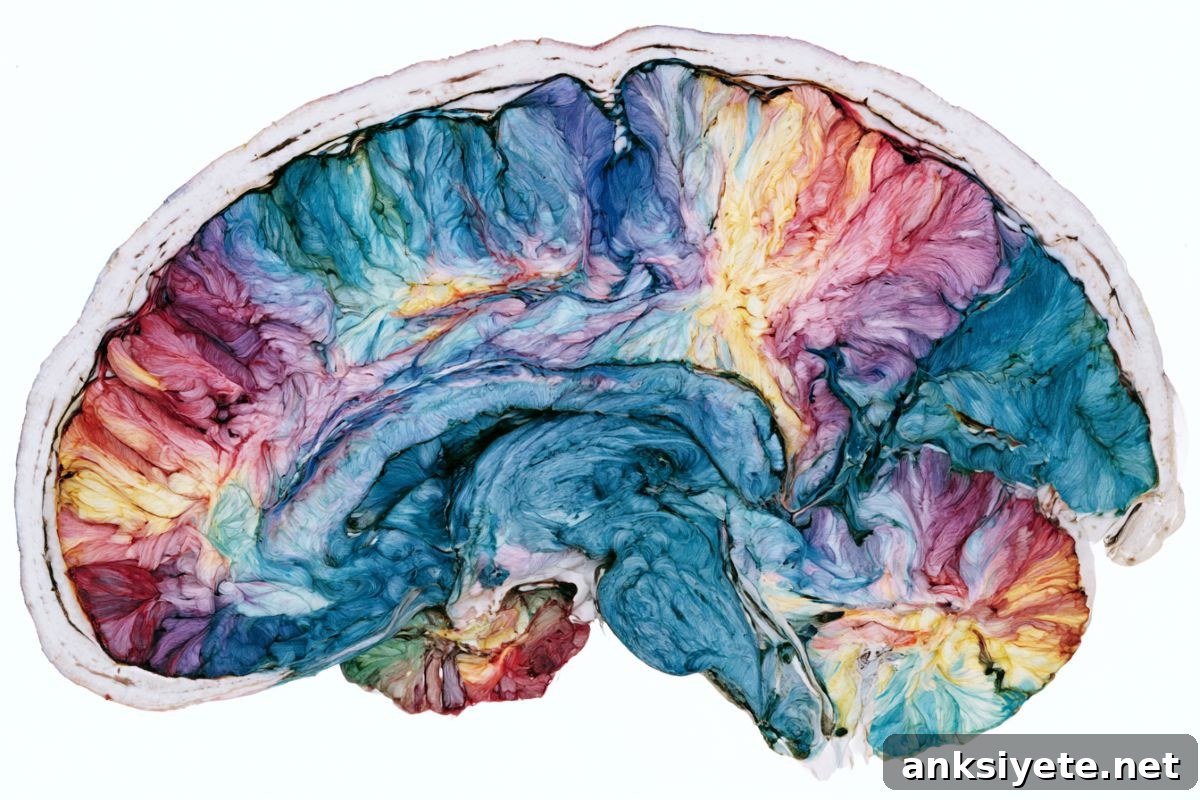
Summary: Multiple sclerosis (MS) is highly variable. Some people remain clinically stable for decades while others develop rapid, disabling progression. Predicting these divergent courses has been difficult. A large study combining pathology, clinical history, and genetics from 287 donated MS brains at the Netherlands Brain Bank reveals distinct tissue patterns that map to different disease trajectories, and shows that patient genetics shape those patterns.
Researchers analyzed the largest well-characterized MS pathology cohort available, systematically scoring four key tissue features across donor brains: perivascular inflammation (inflammation around blood vessels), parenchymal immune cell clusters, chronic active “broad rim” lesions, and endogenous remyelination (the brain’s capacity to repair myelin). By linking these pathological measures to clinical histories and genetic data, the team identified consistent associations between lesion types, repair capacity, genetic background, and clinical severity.
Key Findings
- MS is heterogeneous: The disease behaves as a set of distinct biological sub-processes rather than a single uniform disorder. Different inflammatory and repair mechanisms dominate in different individuals, explaining wide differences in clinical course.
- Four pathological pillars: The study concentrated on perivascular inflammation, clustered parenchymal immune cells, broad rim lesions, and remyelination capacity—features that together describe how damage and repair unfold in each brain.
- Broad rim lesions predict severe progression: Chronic active rim lesions—sites with a smoldering, destructive outer border—were strongly associated with the most aggressive and rapidly progressive clinical courses.
- Poor remyelination links to chronic damage: Low endogenous myelin repair was associated with widespread, irreversible tissue loss and long-term disability rather than with isolated acute relapses.
- Genetic influence on inflammation: Common genetic variants previously linked to MS risk were more frequent in donors with pronounced perivascular inflammation and immune cell clustering, connecting host genetics to intracerebral inflammatory behavior.
- Progression-linked gene and rim lesions: A genetic variant earlier associated with faster clinical progression was found predominantly in donors who developed broad rim lesions, implying a genetic drive for this destructive lesion type.
- Translational goal—live biomarkers: While based on postmortem tissue, the work lays the groundwork for developing imaging and fluid biomarkers that can detect these pathological signatures in living patients and guide personalized therapies.
Source: KNAW
Why disease courses differ
Investigators from the Netherlands Institute for Neuroscience, led by first authors Lukas Lütje and Alida Chen in the Huitinga group, examined pathological, clinical, and genetic records of 287 MS donors. Their goal was to determine whether distinct lesion and repair patterns exist that help explain clinical heterogeneity. The results show that disease severity and progression are linked to specific combinations of tissue damage and repair—and that genetic background helps determine which combination predominates in each individual.
Interpreting the patterns
Donors with broad rim lesions tended to have the worst clinical outcomes, with faster accumulation of physical and cognitive disability. Conversely, donors with limited rim activity but low remyelination capacity showed extensive chronic tissue loss without necessarily more acute inflammatory episodes. Genetic analyses revealed that immune-related risk variants were associated with perivascular inflammation and parenchymal immune clusters, while a separate progression-associated variant correlated with rim lesion formation. Together, these observations suggest that both inherited susceptibility and local tissue responses shape a patient’s disease path.
The study demonstrates that combining pathology, genetics, and clinical data can identify donor-specific features that explain why MS evolves so differently from person to person. These donor-level profiles provide a biologically grounded framework for precision neuroimmunology.
Key Questions Answered
A: The study shows MS is not a single process but a spectrum of biological mechanisms. In some individuals a smoldering inflammatory lesion type predominates, driving steady tissue loss and rapid progression. In others, the main problem is a failure to repair myelin, producing chronic damage without the same pattern of active lesion expansion. Which mechanisms dominate in a person’s brain determines their clinical trajectory.
A: A broad rim lesion—often described in imaging as an iron-rim or chronic active lesion—has a persistently active outer edge where inflammatory cells steadily damage surrounding tissue. Unlike transient inflammatory plaques, rim lesions expand slowly and continuously over years, causing gradual but irreversible loss of brain tissue. The study found these lesions to be strong structural predictors of rapid clinical progression.
A: Genetic background appears to steer the immune response and lesion phenotype. Variants that raise MS risk were linked to robust perivascular inflammation and immune cell clustering in brain tissue. A separate variant previously associated with faster progression was enriched in donors with rim lesions, indicating genetics can predispose an individual to particular destructive tissue processes.
Editorial Notes
- This article was edited by a Neuroscience News editor.
- Journal paper reviewed in full.
- Additional context provided by staff.
About this multiple sclerosis research news
Author: Eline Feenstra
Source: KNAW
Contact: Eline Feenstra – KNAW
Image credit: Neuroscience News
Original Research: Open access. “Donor-specific pathological features associate with genetic background, lesion type distribution, and clinical heterogeneity in multiple sclerosis” by Lukas Lütje, J. Q. Alida Chen, Jörg Hamann, Joost Smolders, Inge Huitinga & Aletta M. R. van den Bosch. Acta Neuropathologica. DOI:10.1007/s00401-026-03040-3
Abstract (condensed)
Multiple sclerosis exhibits marked pathological and clinical variability, reflecting differences in genetic susceptibility, inflammatory activity, and tissue repair. This variability complicates linking lesion pathology to clinical outcomes. Prior work in the Netherlands Brain Bank MS autopsy cohort showed that proportions of lesion types, lesion load, and microglia/macrophage activation associate with clinical severity but vary greatly between individuals. This study extends those observations by testing whether donor-specific pathological features relate to genetic background, quantitative lesion distributions, and clinical course, thereby helping to contextualize heterogeneity in MS.