
Summary: Recent papers in the Journal of Parkinson’s Disease investigate the link between Parkinson’s disease and gastrointestinal dysfunction, with a focus on constipation and objective measures of intestinal transit.
Source: IOS Press.
New research in the Journal of Parkinson’s Disease explores intestinal dysfunction and constipation in Parkinson’s disease.
Constipation ranks among the most frequent non-motor problems reported by people with Parkinson’s disease (PD). Two studies from the same research group, published in the Journal of Parkinson’s Disease, provide new objective evidence about how PD affects gastrointestinal (GI) function. One study compares objective measures of colonic function with patients’ self-reported constipation, while the other uses a novel magnetic tracking system to measure regional GI transit times with an ingestible wireless capsule.
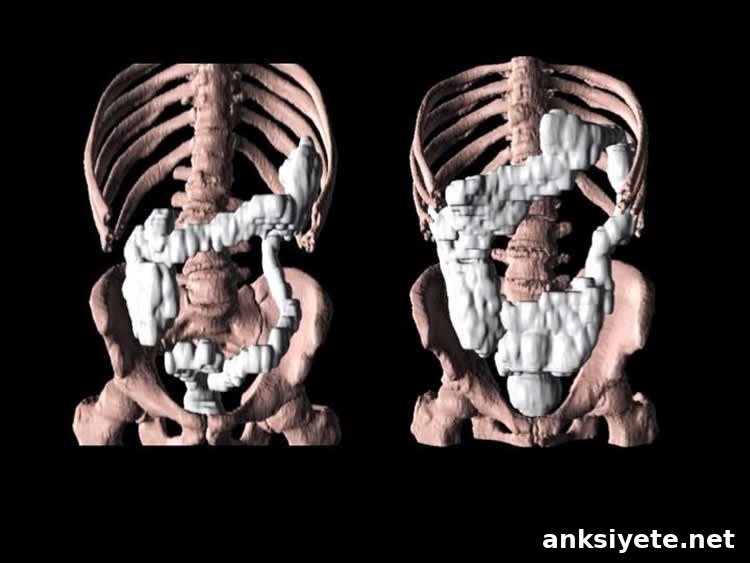
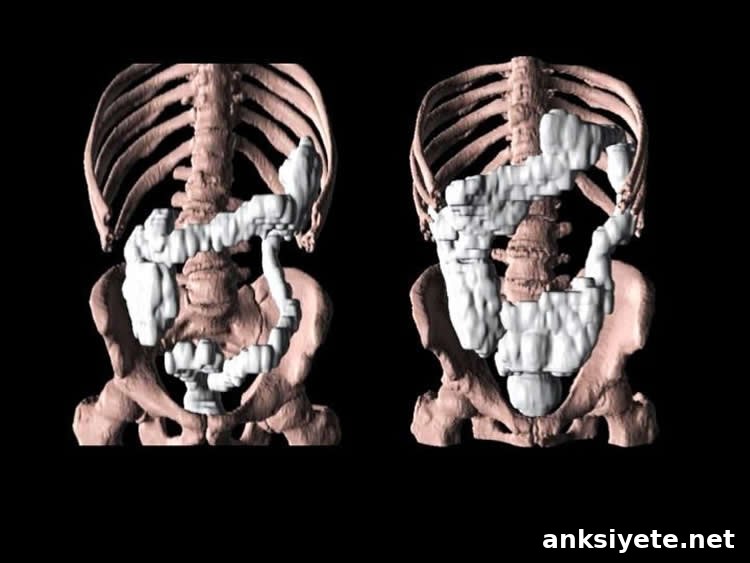
Patient-reported symptoms can vary widely and may not always reflect underlying physiological changes. To address this, the first study, titled “Objective Colonic Dysfunction Is Far More Prevalent than Subjective Constipation in Parkinson’s Disease: A Colon Transit and Volume Study,” assessed colonic transit time (CTT) using radio-opaque markers and measured colonic volume with CT scans. The investigators found markedly delayed colonic transit and enlarged colonic volume in PD patients compared with controls.
Per Borghammer, MD, PhD, DMSc, lead investigator and a researcher at the Positron Emission Tomography Center, Aarhus University, explained that 79% of early-stage PD patients displayed significantly increased CTT and 66% had raised colonic volume. The delay was particularly pronounced in the transverse, descending, and rectosigmoid segments of the colon, suggesting a combination of slow transit and outlet constipation even at early stages of PD.
The team also evaluated gastric emptying and the completeness of medication absorption. They observed no difference in gastric emptying rate between PD patients and controls, and evidence of unabsorbed tablets was rare—only two PD participants showed tablet residues in the intestine, with none found in the stomach. As Dr. Borghammer noted, these findings challenge the common assumption that slowed gastric emptying and poor drug absorption are typical features of early-stage PD, though such problems could be more relevant in later disease stages.
Researchers collected patient-reported upper GI symptoms and constipation using validated instruments, including the Rome III criteria, the NMSQuest, and the Cleveland Constipation Score. Objective colonic dysfunction proved substantially more common than subjective reports of constipation. The discrepancy likely stems in part from differences in how questionnaires capture symptoms versus measurable dysfunction. The authors emphasize the need for clearer definitions of constipation in PD and better alignment between subjective symptom measures and objective physiological assessments.
To obtain precise, segmental data on GI transit, the second study, “Gastrointestinal Transit Time in Parkinson’s Disease Using a Magnetic Tracking System,” used the ambulatory 3D-Transit system. This technology follows the position of an ingested wireless electromagnetic capsule over time, allowing researchers to calculate gastric, small intestinal, and regional colonic transit times and to quantify colonic motility patterns such as mass and fast movements.
Using the 3D-Transit system, the investigators found that PD patients exhibited significantly prolonged small intestinal transit time (SITT) compared with controls. They also documented a marked increase in proximal colonic transit time and a reduction in both colonic mass movements and fast movements in the PD group. These findings indicate that PD-related GI dysfunction is not limited to the colon but extends into the small intestine, with dysfunction increasing progressively from the proximal to the distal gut.
By continuously tracking GI markers over a 24-hour period, the 3D-Transit recordings revealed widespread intestinal involvement in PD. The combined data from both studies show that objective dysfunction in the GI tract is considerably more prevalent than subjective constipation complaints: whereas about 40% of PD patients report constipation on symptom questionnaires, objective testing finds evidence of colonic dysfunction in up to 80% of patients.
These studies underscore the important role of the gut in Parkinson’s disease and highlight the limitations of relying solely on patient-reported symptoms to detect GI involvement. Objective measurements—such as colonic transit time, colonic volume, and magnetic capsule tracking—offer a more accurate picture of how PD affects motility from the stomach through the small intestine and into the colon. The authors recommend further research to refine diagnostic criteria for constipation in PD, to reconcile subjective and objective measures, and to explore how GI dysfunction evolves across disease stages.
Source: Diana Murray – IOS Press
Image credit: Aarhus University, Aarhus, Denmark.
Original Research: “Gastrointestinal Transit Time in Parkinson’s Disease Using a Magnetic Tracking System” by Knudsen, Karoline; Haase, Anne-Mette; Fedorova, Tatyana D.; Bekker, Anne Charlotte; Østergaard, Karen; Krogh, Klaus; and Borghammer, Per. Journal of Parkinson’s Disease. Published online July 27, 2017. doi:10.3233/JPD-171131
IOS Press. “New Insights Into Gastrointestinal Dysfunction in Parkinson’s Patients.” NeuroscienceNews. July 31, 2017.
Abstract
Gastrointestinal Transit Time in Parkinson’s Disease Using a Magnetic Tracking System
Background: Gastrointestinal symptoms are highly prevalent in Parkinson’s disease, yet the underlying pathology and reliable objective markers of regional GI function remain incompletely defined.
Objective: To evaluate regional GI transit times and colonic motility in PD patients compared to controls.
Methods: Twenty-two PD patients and 15 control subjects underwent ambulatory 3D-Transit testing to measure gastric, small intestinal, and caecum-ascending colonic transit times, in addition to colonic motility metrics (mass and fast movements). Radio-opaque marker studies, gastric emptying scintigraphy, and validated non-motor symptom questionnaires were also performed.
Results: The 3D-Transit system showed significantly longer small intestinal and caecum-ascending transit times in PD patients (p = 0.030 and p = 0.0063). Gastric transit time did not differ between groups (p = 0.91). Time to first propagating colonic mass and fast movements was increased in PD (p = 0.023 and p = 0.006). Radio-opaque marker studies confirmed markedly delayed overall gastrointestinal transit in the PD group (p < 0.0001), while scintigraphic gastric emptying times were similar (p = 0.68). Symptom questionnaires indicated constipation in 41% of PD patients versus 7% of controls.
Conclusions: PD patients demonstrate significantly prolonged small intestinal and proximal colonic transit times and delayed onset of propagating colonic activity, indicating widespread intestinal involvement that progresses along the GI tract. Objective testing reveals greater prevalence of dysfunction than symptom reporting alone.
“Gastrointestinal Transit Time in Parkinson’s Disease Using a Magnetic Tracking System” by Knudsen K., Haase A.-M., Fedorova T. D., Bekker A. C., Østergaard K., Krogh K., and Borghammer P. Journal of Parkinson’s Disease. Published July 27, 2017. doi:10.3233/JPD-171131