
Summary: A new web-based, language-independent game offers a promising method to screen children for risk of dyslexia using interaction patterns and machine learning.
Source: UPF Barcelona
Dyslexia is a specific learning disorder that affects an estimated 5–15% of the global population. A web game called MusVis, developed by Maria Rauschenberger under the supervision of Ricardo Baeza-Yates and Luz Rello—researchers affiliated with the Department of Information and Communication Technologies (DTIC) at Pompeu Fabra University (UPF)—won the W4A Attendees’ Award on 20 April at the 17th International Web for All Conference. The recognition was given for the communication paper titled “Screening risk of dyslexia through a web-game using language-independent content and machine learning”.
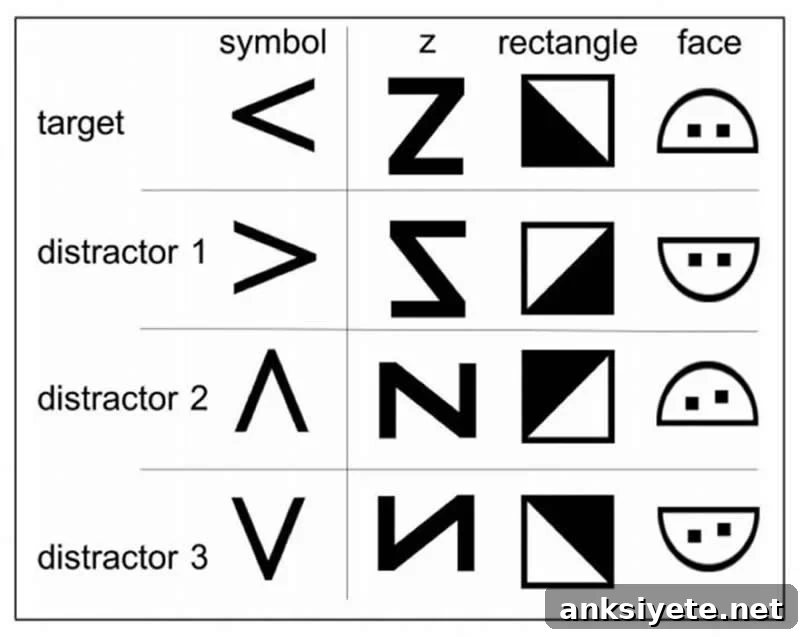
MusVis was designed to measure differences in how children with and without dyslexia interact with auditory and visual stimuli while they play. “Our goal with MusVis was to record interaction patterns as children identify visual symbols and musical cues in a playful environment,” explains Maria Rauschenberger, who completed her 2019 PhD at UPF with a dissertation on dyslexia, supervised by Ricardo Baeza-Yates and Luz Rello. Following this work, Rauschenberger continued her research as a postdoctoral fellow at the Max Planck Institute in Germany.
What sets MusVis apart is its language-independent content. Instead of relying on written or spoken language tasks, the game uses simple visual symbols and sounds so that it can be used with pre-readers and children of any language background. “To our knowledge, this is the first time dyslexia risk has been assessed through a web game that uses language-independent material combined with machine learning,” Rauschenberger notes. Because the test does not depend on literacy or vocabulary, it opens the possibility of earlier screening and intervention, which can reduce the time children struggle before they receive support.
The research team conducted a user study involving 313 children, 116 of whom had a formal diagnosis of dyslexia. Data from gameplay—such as response times, error patterns, and interaction sequences—were used to train machine learning classifiers. Using Random Forest and Extra Trees algorithms, the models achieved classification accuracy of 0.74 for German and 0.69 for Spanish. Corresponding F1-scores were 0.75 for German and 0.75 for Spanish, demonstrating that the approach can effectively distinguish risk profiles across languages even when the content itself contains no language.
While these measures are not a substitute for clinical diagnosis, they indicate that behavioral patterns captured during language-independent game play can provide useful signals about dyslexia risk. The authors emphasize that differences observed in the game are not as obvious as the typical reading and spelling errors used for diagnosis, but they offer a non-invasive, scalable way to flag children who might benefit from further evaluation.
Early identification matters because children with dyslexia often wait years before receiving targeted help. “Children with dyslexia can need around two years to catch up once they receive adequate support,” Rauschenberger explains. “A universal, language-free screening tool like MusVis could help reduce school failure, shorten delays in treatment, and lessen the emotional burden on children and their families.”
The team also stresses the need for larger and more diverse datasets to improve prediction models and generalize findings. “Expanding our sample size, especially among very young children and pre-readers, would strengthen the machine learning models and increase reliability,” the authors add. Collecting more data will help refine the algorithms and validate the approach across different populations and settings.
Families interested in participating in ongoing studies can find information and sign-up options on the developer’s participation page. Participation is voluntary and conducted from home through the study portal provided by the research team.
About this research
Source:
UPF Barcelona
Media contact:
Nuria Pérez – UPF Barcelona
Image credit:
UPF
Original research: Open access. The study, “Screening risk of dyslexia through a web-game using language-independent content and machine learning,” was authored by Maria Rauschenberger, Ricardo Baeza-Yates, and Luz Rello and published in the Proceedings of the 17th International Web for All Conference.
Abstract (summary)
Children with dyslexia are often diagnosed only after they begin to struggle at school, despite dyslexia being unrelated to overall intelligence. This work presents a universal screening approach that uses machine learning trained on data collected from a language-independent web game. The game content was designed by analyzing mistakes commonly made by people with dyslexia across different languages and by incorporating tasks related to auditory and visual perception. In a study of 313 children (116 with dyslexia), predictive models achieved accuracies of 0.74 for German and 0.69 for Spanish, with F1-scores of 0.75 for both languages using Random Forests and Extra Trees. To the authors’ knowledge, this is the first time a language-independent web game combined with machine learning has been used to screen dyslexia risk, enabling the possibility of early screening for pre-readers and facilitating timely intervention.