
Summary: Collaborating with family caregivers and professionals, researchers identified practical characteristics and roles that robots should have to support people with dementia and the families and staff who care for them.
Source: UC San Diego
Overview: Developing robots to assist people with dementia has long been a goal for roboticists. Until now, however, few projects have asked informal caregivers—family members and day-care staff—what features and functions would actually be useful in real home and care settings.
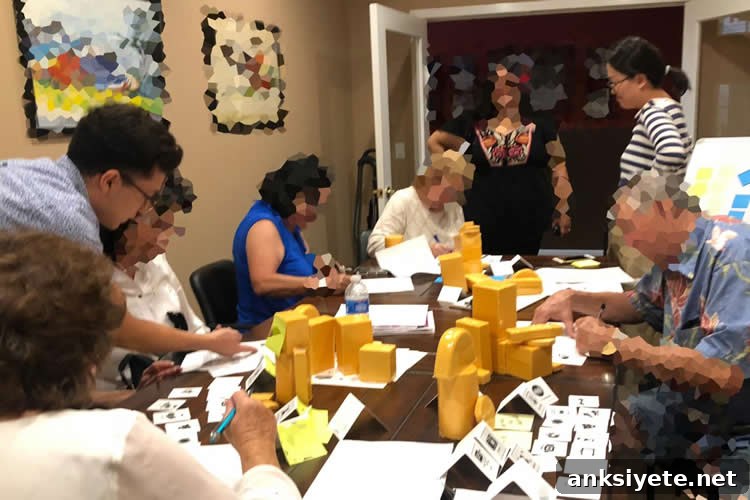
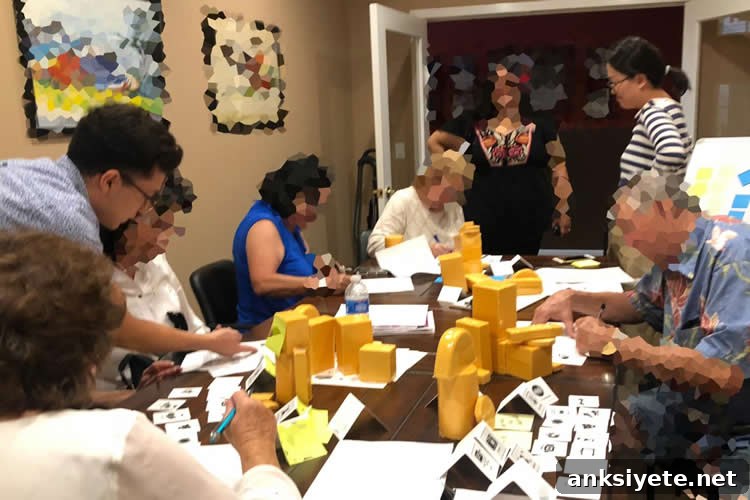
Researchers at the University of California San Diego spent six months co-designing robot concepts with family caregivers, social workers, and geriatric nursing students to capture priorities from those who provide daily care. The team will present their findings at the Human-Robot Interaction conference in March.
The study showed caregivers wanted robots to fulfill two central roles: enrich positive shared moments with people living with dementia, and reduce caregivers’ emotional and physical burden by taking on difficult, repetitive, or risky tasks—such as answering repeated questions, preventing unsafe behaviors, and limiting access to unhealthy foods.
“Caregivers envisioned robots not just as problem-solvers for difficult tasks, but also as companions that could support pleasant activities,” said Laurel Riek, professor of computer science at UC San Diego and senior author of the paper.
Informal caregivers—spouses and adult children—provide roughly 75 percent of dementia care in the United States, amounting to millions of people delivering billions of unpaid care hours each year. These caregivers often lack support and may neglect their own health, which increases stress and risk for both caregivers and those they care for. While many existing technologies focus on education or remote clinician access via phones and computers, caregivers described a need for direct, hands-on assistance in the home.
Homecare robots have the potential to give caregivers the respite they need, but only if robots are designed with caregiver and patient needs in mind. “Researchers must take a community-health approach and listen to stakeholders before building technology,” Riek said. “In healthcare robotics you can’t start with a one-size-fits-all tool.”
Many caregiver-designed concepts focused on easing repetition, especially answering recurring questions that can be emotionally draining. Other common ideas included scheduling reminders, medication management, prompting for hygiene or exercise, and supporting physical therapy routines. As dementia progresses, caregivers wanted robots capable of more active assistance and personalized interaction—sometimes taking on the role of a gentle guide, other times acting as an authoritative “bad guy” who could say “no” to unsafe requests.
The research team is now converting the low-tech prototypes from the co-design sessions into more advanced prototypes that will be tested in real homes over the coming year.
Interviews and hands-on workshops
The project team built long-term partnerships with three dementia day-care centers in San Diego County. Two cognitive science undergraduates and a computer science postdoctoral researcher led interviews and hands-on design workshops with caregivers. In total, 18 people participated: 13 family caregivers, five day-care social workers, and three geriatric nursing students.
From these conversations and sessions the team identified 16 major challenges caregivers face—ranging from accepting the diagnosis to social isolation and difficulty prioritizing self-care. Workshops began with a short overview of existing assistive technologies, including companion robots, household robots, telepresence systems, smart speakers, and wearable devices. Caregivers then selected key problems to address and used pre-cut foam shapes and low-fidelity materials to co-design robot concepts.
Caregivers chose robot functions (such as playing games, reviewing photos, or leading exercises) and interaction modes (voice, touchscreens, or physical prompts). They worked through realistic scenarios provided by researchers and social workers—examples included preventing a person with dementia from driving, encouraging bathing, and deflecting repetitive questions.
Key robot characteristics identified
From the community-centered design process, the researchers derived practical guidelines for robots intended to support dementia care at home and in day programs:
- Robots should help redirect conversations and gently deflect repetitive questioning to reduce caregiver emotional strain.
- Robots should be embedded in or borrow features from everyday objects that the person with dementia already recognizes—televisions, radios, or familiar household devices—to increase acceptance and reduce confusion.
- Robots must be adaptable to changing situations and to the person’s evolving behavior, since dementia progresses differently in each individual and stages present new challenges.
- Robots should learn from users and personalize interactions, tailoring reminders, prompts, and content to the person’s preferences and history.
- Robots should include human-like elements—such as a real human voice or expressive face—to support persuasion, trust, and rapport, without necessarily appearing fully human.
- Voice interaction is essential; caregivers favored voice activation similar to smart speakers, using familiar voices (family members or clinicians) and including features like facial recognition to identify who needs help.
Funding and institutional context
Laurel Riek is faculty at the Contextual Robotics Institute at UC San Diego, a joint effort of the Jacobs School of Engineering and the Division of Social Sciences. The institute supports interdisciplinary work on pressing problems, including healthcare robotics.
Source:
UC San Diego
Media contact:
Ioana Patringenaru, UC San Diego
Image credit:
Healthcare Robotics Lab, University of California San Diego
Original research: Findings will be presented at the Human-Robot Interaction conference in Daegu, Korea.